Old paint protection film should be replaced when damage, lifting, or visible deterioration extends beyond a reasonable local repair. There isn’t one verified age when every film must come off. The right decision comes from inspecting the film, its edges, and the paint beneath it.
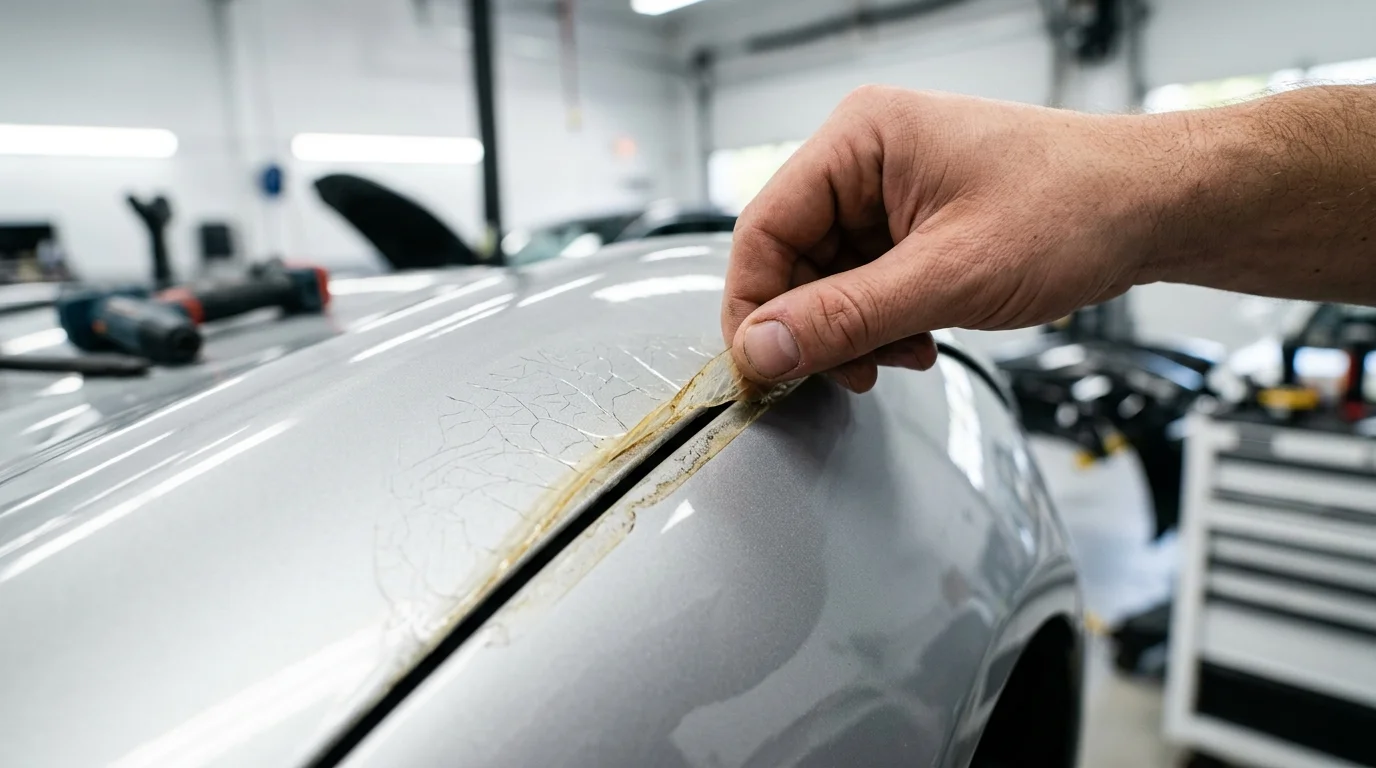
Signs that film needs a closer inspection
Begin with the entire protected area, not its worst corner. Wash the vehicle first so road film doesn’t hide the surface. Then inspect it outdoors and under workshop lighting. Different angles can reveal problems that disappear under flat light.
Look for lifting along panel edges, seams, mirrors, and recessed areas. Note any bubbles, cracks, deep cuts, cloudy patches, or visible color changes. A small mark in one place creates a different decision than repeated defects across several panels.
Pay attention to the boundary between protected and unprotected paint. The difference can help an installer identify where film begins and whether individual pieces have been replaced before. If you aren’t sure what coverage is present, use this guide to check whether your car has PPF.
San Diego exposure isn’t identical across the county. A car parked near Oceanside or Imperial Beach encounters coastal air and frequent marine layers. A vehicle kept outdoors in El Cajon or Santee faces hotter inland afternoons. Garage storage, washing habits, road use, and prior bodywork also vary. Those details belong in the inspection, but they don’t create a universal replacement date.
Photograph each concern before visiting an installer. Include one close view and one wider view showing the panel. That record helps the pro understand whether the issue is isolated or repeated.
A careful PPF installation inspection also gives you a useful checklist. Don’t pull at a questionable edge while checking it. Mark the location, take a photo, and let the installer test it.
Does paint protection film yellow?
Visible yellowing is a reason to inspect the film, not a calendar date. This site does not publish a film thickness or a warranty length. Those come from the product paperwork your installer confirms in writing.
What you can see is color change. Compare the filmed area with an adjacent unfilmed panel in daylight. A yellow cast at the edges is different from discoloration spreading across a hood or bumper face. Photograph both a close view and the full panel.
San Diego sun makes that check more useful on hoods and roofs than on shaded rockers. The installer confirms whether the change is cosmetic, whether an edge can be corrected, or whether that piece should come off. Do not peel yellowed film yourself. Removal can lift failing clear coat, which is why the painted surface belongs in the same inspection.
When an edge repair may be enough
A limited edge problem doesn’t automatically mean every protected panel needs new film. If one short section has lifted while the surrounding piece remains secure and visually acceptable, an installer may recommend a focused correction. The condition of that edge determines whether it can be addressed or whether the panel needs new film.
Location matters. A loose section on an exposed hood edge isn’t the same as movement inside a complex recess. Dirt under the lifted area, a torn corner, or a stretched section can also change the recommendation. The installer should examine how far the separation travels beyond what you can see.
Don’t press a dirty edge back onto the paint. That can trap contamination and make the condition harder to judge. Avoid trimming the film with a blade near painted surfaces. A quick home fix can turn a clear inspection issue into damaged film or paint.
Our guide to PPF edges lifting explains what to document before requesting an assessment. Useful photos show the full panel, the affected edge, and any nearby seam. Tell the installer whether the section changed recently or appeared after washing, bodywork, or another service.
Ask whether the proposed work is an edge correction, a complete panel replacement, or part of a larger replacement plan. Those are different scopes. The written quote should name the exact panel and explain what happens to adjoining pieces.
An isolated problem may stay isolated. Several failing edges across the hood, bumper, mirrors, and fenders point toward a broader inspection. Let the pattern guide the decision, not the size of the most noticeable flap.
When removal should come before new film
New film shouldn’t simply cover old film whose condition hasn’t been assessed. When defects affect much of a panel, removal may be needed before an installer can judge the painted surface and prepare a replacement plan.
Widespread cracking, repeated lifting, torn areas, or an uneven appearance can make a small repair impractical. Film damaged by contact may also require removal from that panel. The installer should determine whether replacement stops at one piece or continues across adjoining coverage.
Panel boundaries are important. A front bumper, hood, fender, mirror, or door may carry its own film section. Replacing one section can create differences in appearance between older and newer pieces. Ask the installer to show you those boundaries before approving the job.
Coverage goals can also change. Someone replacing a damaged hood piece might keep the existing layout. Another owner may use the opportunity to reconsider a partial package. Review the available paint protection film coverage before comparing quotes.
A larger change requires more planning. Moving from selected panels to a full-body PPF package isn’t merely an expanded edge repair. The installer must identify what stays, what comes off, and how the new pieces meet existing film.
Don’t accept a promise that removal can’t affect paint. That result depends on the vehicle’s actual surface condition, prior repairs, and the film being removed. The independent installer should inspect the car and explain the removal approach before starting.
Get that scope in writing. It should identify the old sections being removed, the areas receiving new film, and any point where work pauses for another paint inspection.
What paint condition can change the plan
Film condition is only half the replacement decision. The paint underneath may determine whether new film can be applied immediately or whether another step comes first.
Tell the installer about repainted panels, collision repairs, touch-up work, or clear-coat concerns. Don’t assume a panel is factory-painted because its color matches. Service records and body shop invoices can help identify previous work.
Visible chips, peeling clear coat, deep scratches, and uneven repairs deserve attention before film replacement. The installer should inspect those areas after removal and explain what can be covered. If paint correction is being considered, confirm where it fits in the sequence. This guide explains the questions surrounding paint correction before PPF.
Removal itself also needs a condition-based plan. Ask how the installer will handle a section if paint begins showing signs of trouble. That matters most when the history is uncertain. A written pause point gives both sides a chance to review the surface before new film goes down.
Don’t ask the film to hide a paint defect that needs separate work. Clear protection can preserve the appearance beneath it, but the starting surface still matters. The pro should identify concerns rather than treating every panel the same.
San Diego cars often move between different environments. A vehicle may spend weekdays near a coastal workplace and weekends on inland roads. It may also have dealer-installed film, a body shop repair, or replacement panels from an earlier owner. Share that history when you know it.
If the installer can’t confirm the paint condition before removal, ask what inspection happens afterward. The answer should define who approves the next step and whether the quote changes before replacement continues.
What to confirm in a replacement quote
A useful quote should describe the work clearly enough to compare installers. “Replace PPF” isn’t specific. The document should name each panel, the removal scope, the new coverage, and any preparation included before installation.
Confirm these points in writing:
- Which existing film pieces will be removed
- Which panels will receive new film
- Whether adjoining film stays in place
- How exposed edges, seams, and panel boundaries will be handled
- What happens if paint concerns appear after removal
- Which product tier and film specification are proposed
- What preparation is included before new film is applied
- What the installer confirms about the film warranty
- What care instructions apply after the work
Ask whether removal and disposal are included in the quoted scope. The independent installer sets the price, so don’t assume those steps are bundled. Your installer should confirm the complete written price before work begins.
Keep the film warranty separate from the vehicle warranty. Under the federal Magnuson-Moss Warranty Act, a vehicle manufacturer generally can’t void a warranty merely because an aftermarket product was used, absent a showing that the product caused the failure. The FTC is the federal authority, but that principle doesn’t decide a specific warranty dispute. It also doesn’t tell you what a film warranty covers.
No film lifespan or warranty length has been verified for this page. Ask the installer to identify the proposed film and provide its current warranty terms in writing. Read the exclusions, required care, claim process, and whether coverage transfers to another owner.
Finally, compare the diagnosis behind each quote. One installer may recommend replacing a single panel. Another may see related concerns across several pieces. Ask each pro to show you the evidence. A clear explanation matters more than a vague replacement label.
When to call us
Call when lifted, damaged, or aging film needs a professional inspection before removal or replacement. This kind of work needs a professional Ceramic Coating and Paint Protection Film pro who can assess both the film and the paint beneath it. Call us at (760) 400-6557 and we’ll connect you with a vetted, insured local pro.