PPF edges lifting usually points to three broad causes. The edge lost a clean bond, washing pulled at it, or the film and paint beneath it aren’t staying together. Stop picking at the area, avoid directing water beneath it, and let an installer inspect it.
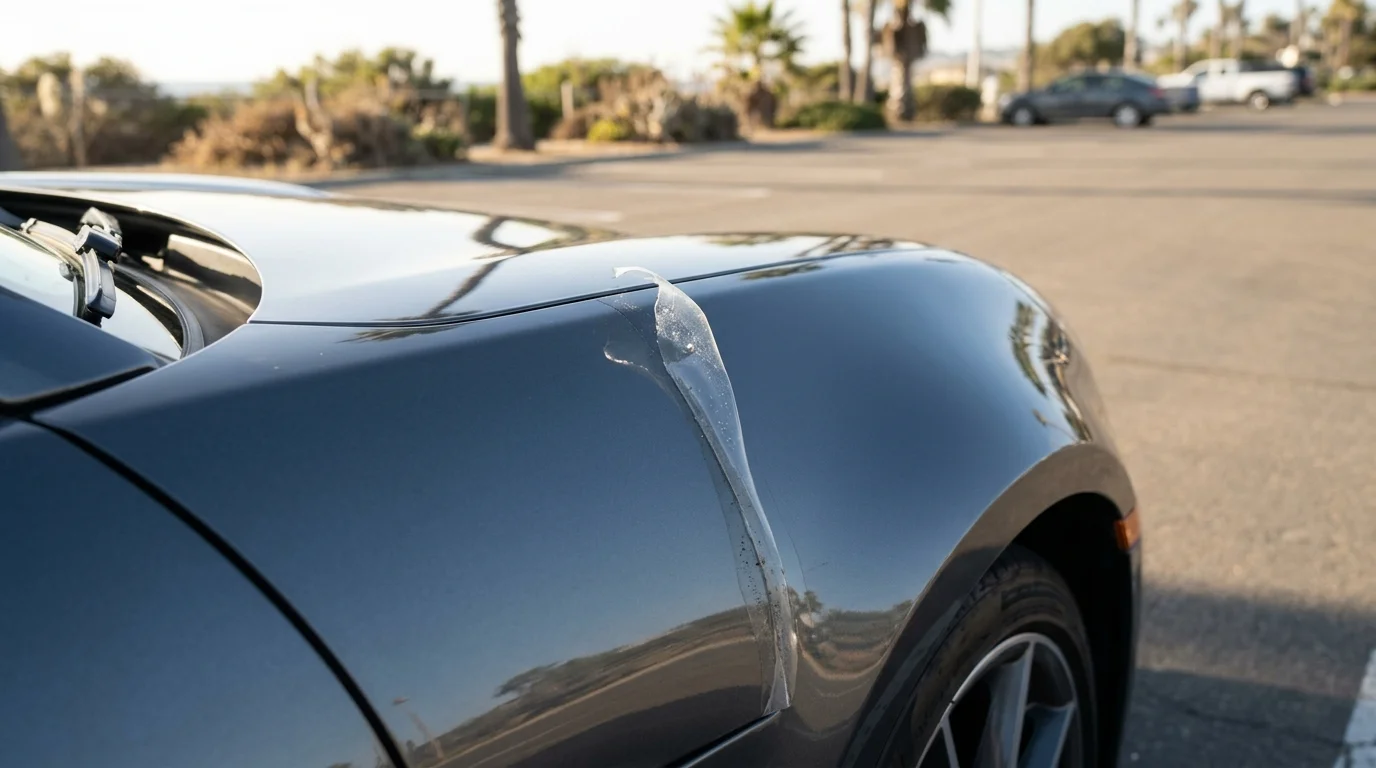
The three reasons film edges lift
Most lifting fits into one of three diagnostic groups. The visible edge may look similar in each case, but the right response can differ.
First, the edge may never have formed a reliable bond. Dust, residue, moisture, or surface treatments near the installation line can interfere with adhesion. Tight corners and complex body lines also demand careful preparation. An installer needs to inspect the film before deciding whether preparation caused the problem.
Second, outside force may have opened the edge. A pressure-washer stream, drying towel, wash mitt, fingernail, or detailing tool can catch an exposed line. Once a small opening appears, repeated contact may make it larger. Don’t keep pressing it down between washes. That can hide the condition without resolving it.
Third, the film or the surface beneath it may have changed. The film might be creased, distorted, torn, or contaminated. Paint and clear coat condition also matter. Film can’t form a dependable edge if the surface below is already unstable. The installer must determine which layer moved first.
Location offers useful clues. A problem beside a mirror, wheel opening, hood seam, or bumper curve may involve repeated contact or a difficult contour. Lifting across several unrelated edges can suggest a broader installation or surface issue. Neither pattern proves the cause from a photo.
Our paint protection film service page explains coverage choices and how we match San Diego drivers with local installers. When requesting an inspection, mention the affected panel and whether the edge is wrapped or exposed. That gives the pro a clearer starting point.
Pressure washing habits that pull an edge open
Pressure washing can turn a minor opening into a larger one. The biggest concern is a concentrated stream aimed toward the exposed edge. Water can reach beneath the film instead of flowing across its surface.
There’s no verified pressure or nozzle-distance figure that fits every machine and film. Equipment, nozzles, panel shapes, and products differ. Follow the washer manufacturer’s directions, then ask your installer for instructions tied to the installed film.
Keep the spray moving across intact film. Don’t direct it into a seam, corner, or lifted section. If an edge is already raised, skip pressure washing that area until a pro examines it. Turning up the pressure isn’t a cleaning solution.
Hand washing also deserves attention. Move a wash mitt or drying towel with the film edge, not against it. Don’t scrape dried debris from a seam. Soften and rinse away road film before wiping the panel. This matters after freeway driving on I-5, I-805, or SR-94, where the front bumper and mirrors may need extra cleaning.
Automatic washes aren’t automatically gentle around exposed lines. Brushes, towels, and concentrated jets may contact the same edge from several directions. Ask the installer which washing method fits the installation.
If lifting appears after a wash, photograph it before touching it. Take one close image and another showing the whole panel. Note the wash method, but don’t assume that it caused the problem. The timing helps the installer evaluate the edge without replacing an inspection.
Avoid household glue, adhesive promoter, heat guns, or knives. These can change the film and make the original condition harder to assess. A clean, untouched edge gives the installer better information.
Heat, age, and the clear coat underneath
San Diego driving exposes a vehicle to different parking conditions. A car garaged near Encinitas has a different routine from one parked outdoors in El Cajon. A South Bay commuter may move between coastal and inland conditions during one day. Those differences matter during inspection, but they don’t prove why an edge lifted.
Panel temperature can make an existing weak spot more noticeable. An installer will want to know whether the edge changes after the vehicle cools. Don’t use a heat gun, hair dryer, or hot water to test it. The product and adhesive are unknown, so improvised heat can complicate the repair.
Age also needs context. There isn’t one approved lifespan figure for every paint protection film. Product, installation, storage, washing, panel shape, and paint condition all affect the decision. An older installation isn’t automatically defective, and a newer one isn’t automatically repairable.
The clear coat beneath the film deserves special care. Peeling, flaking, or questionable paint changes the job. Don’t pull the film to see what comes off. That test may turn a small inspection area into a larger paint problem.
Instead, let the pro examine the boundary between stable and unstable material. If the paint surface needs separate attention, ask what must happen before new film is considered. Paint correction may address correctable surface defects, but the pro must first determine whether the paint is suitable for that service.
Give the installer useful history. Mention prior repainting if you know about it. Share when you first noticed the edge and where the car is usually parked. Facts help. Guesses about heat, age, or paint failure don’t.
What can be re-laid and what has to be replaced
A raised edge isn’t automatically a full-panel replacement. It also isn’t automatically something that can be pressed back into place. The installer needs to inspect the adhesive area, film shape, contamination, panel finish, and location.
A small section may be considered for re-laying when the film remains correctly positioned and the bonding area can be evaluated. The pro still needs to decide whether the edge can form a dependable bond. Pushing it down at home doesn’t answer that question.
Replacement becomes more likely when dirt has moved beneath the film, the material is torn, or the edge no longer matches the panel. Deep creases and visible distortion also change the decision. Unstable paint beneath the film may need separate assessment before any replacement begins.
Some lifting sits near a panel boundary. Other cases appear in the middle of a larger piece or beside a relief cut. That location affects what an installer can do without creating a distracting line. A small patch may introduce another seam, so it isn’t always the cleanest answer.
Ask the installer to explain the proposed scope in writing. The explanation should identify whether the plan is to re-lay an edge, trim material, or replace a section. It should also address the installed film’s warranty. This site doesn’t publish a universal film warranty, so your installer must confirm the applicable terms in writing.
Don’t approve unrelated work just because an edge lifted. Request photos, the proposed remedy, and the written price. If you’re seeking another opinion, our guide to choosing a San Diego coating and film installer gives you a practical way to compare preparation, inspection, and written documentation.
When to go back to the installer
Contact the installer when an edge stays raised after the vehicle cools. Do the same if the opening grows, collects visible contamination, or appears across several panels. A lifting edge beside peeling paint also deserves professional inspection before anyone pulls the film.
Start with clear documentation. Photograph the edge in even light. Include the full panel, the nearby seam, and the close detail. Record when you noticed it and what washing method was used. If you have the original invoice or written film information, keep it ready.
Ask direct questions:
- Is the film lifting, or is the paint beneath it unstable?
- Can the existing edge be inspected and re-laid?
- Would the proposed repair create a visible seam?
- Does the affected area need replacement?
- What warranty terms apply to this specific film and installation?
- What washing instructions should you follow afterward?
Don’t accept a remote guarantee based on one photo. Images can help screen the issue, but the technician may need to inspect the panel in person. Vehicle paint history and film condition aren’t always visible on a phone screen.
A factory vehicle warranty is separate from the installer’s film warranty. The federal Magnuson-Moss Warranty Act is the authority behind the rule that a manufacturer generally can’t void a warranty merely because an aftermarket product was used, absent a showing that the product caused the failure. The FTC provides consumer information about warranty rights. That rule doesn’t decide whether a particular PPF edge qualifies for repair under an installer’s warranty.
If the original installer isn’t available, seek a second assessment before changing the edge. Paint Shield SD can match you with vetted, insured local installers. The pro you choose will inspect the vehicle, recommend the scope, and confirm the written price.
When to call us
Call when an edge keeps opening, has trapped contamination, or sits above questionable paint. We match you with vetted, insured local installers, and getting matched costs you nothing. Call us at (760) 400-6557 and we’ll connect you with a vetted, insured local pro.