A used car can be a good candidate for PPF. Its age and mileage don’t settle the decision. The condition of its paint, old film, and previous repairs matters more.
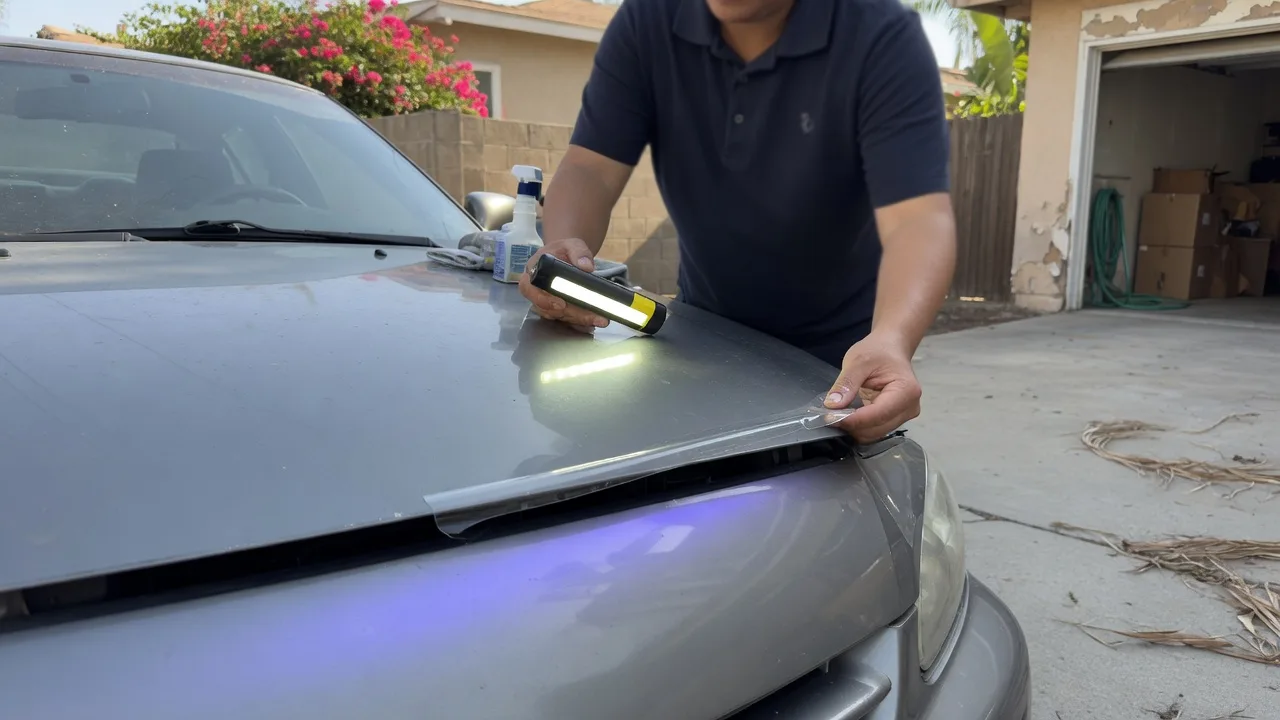
That inspection matters in San Diego County. A car may have spent years near the coast, crossed SR-78 daily, or sat on a dealer lot inland. Its history may include unknown detailing, repainted panels, or protection products the seller can’t identify.
How to tell if film, coating, or neither is already on the car
Start by asking the seller for invoices. Look for the product used, covered panels, installation date, and installer’s name. A vague “paint protection” entry doesn’t confirm PPF. Dealers and prior owners may use that phrase for different products.
PPF is a flexible film placed over painted surfaces. Look closely around hood edges, mirror caps, door cups, fenders, and bumper openings. A visible line across part of the hood can suggest partial coverage. Wrapped panel edges may be harder to spot. Our separate guide explains how to tell if a car has PPF in more detail.
Ceramic coating is different. It’s a liquid polymer that bonds chemically to paint. It creates a hard, water-repellent surface layer, but it doesn’t absorb rock-chip impacts. Water behavior alone doesn’t identify a coating because other products can also change how water sits on paint.
Inspect every panel under bright, even lighting. Compare gloss, texture, and reflections between adjacent areas. Don’t scrape an edge or use strong chemicals to test it. That can damage an unknown surface.
If the protection type remains unclear, ask an independent installer to inspect it. The installer can assess whether the car has film, a coating, both, or neither. Existing wax or coating can interfere with film adhesion, so the installer should specify the preparation before recommending new paint protection film.
What paint condition has to be true before new film
PPF doesn’t repair paint. It physically shields the surface from chips, scratches, and road debris. Because the film is transparent, existing defects may remain visible after installation.
Inspect the car when it’s clean and dry. Look across each panel from several angles. Note rock chips, swirl marks, water spots, light scratches, oxidation, peeling clear coat, and mismatched finishes. Pay close attention to the hood, bumper, mirror caps, rocker panels, and lower doors.
Machine paint correction can improve swirl marks, water spots, light scratches, and oxidation in the clear coat. It isn’t the answer for every defect. The installer must assess the paint and determine what can be polished safely. The guide to paint correction before PPF explains that decision separately.
Previous paintwork deserves special attention. Look for differences in color, texture, or panel-to-panel gloss. Ask whether collision repairs or repainting appear in the car’s records. Don’t assume a clean history report proves every panel has factory paint.
Professional film removal on healthy factory paint is the normal case. Failing paint and previously resprayed panels carry more risk, which is why an inspection comes first. No universal visual test can confirm removal safety from photos alone.
A used car doesn’t need flawless paint to receive film. It does need an honest assessment of what will remain visible and whether the surface is suitable. Ask the installer to separate correctable marks, permanent defects, and areas needing body or paint repair.
When old film should come off first
Existing PPF doesn’t automatically need replacement. It also shouldn’t be covered blindly. The installer needs to inspect the film, its edges, and the paint around it.
Check for lifted edges, bubbles, cuts, deep damage, and areas where dirt has collected along a seam. Compare covered and uncovered panels under the same light. Light surface marks in some PPF can self-heal with heat, but punctures, deep damage, and damage beneath the film won’t heal that way.
Panel coverage also matters. A used car may have film only on the bumper, part of the hood, or several high-impact areas. If you want broader coverage, ask whether the old and new sections can meet cleanly. The installer should explain whether keeping part of the existing film would create visible transitions.
Don’t pull old film from an unknown repaint yourself. Previously resprayed or failing paint is the risk case during removal. An independent installer should inspect the surface and explain the removal plan before work begins.
There isn’t one verified age when every film must come off. Film condition, paint condition, prior repairs, care, and the planned coverage all affect that choice. Your installer should confirm the film warranty in writing rather than promise a universal lifespan.
If the film’s history is unclear, review the warning signs in when to replace paint protection film. Then request an in-person assessment. Photos can start the conversation, but they may not reveal the condition beneath an edge or across a repainted panel.
What a used-car PPF quote should list
A useful quote should identify the exact panels receiving film. “Front end” can mean different coverage from one installer to another. Ask whether the proposal includes the full hood, partial hood, front fenders, bumper, mirror caps, door cups, rocker panels, or other named areas.
The quote should also separate preparation from film installation. Used-car preparation may involve cleaning, removing bonded contamination, stripping incompatible surface products, or paint correction. Clay treatment is a decontamination step, not paint correction. Machine polishing is the step that can improve certain clear-coat defects.
Ask for written notes about existing chips, scratches, old film, and suspected repainting. Those notes help establish what the film isn’t expected to hide or repair. The installer should also state whether old-film removal is included or quoted separately.
PPF pricing on this site’s approved broad market range runs from $800 to $8,000. Coverage, vehicle size, preparation, and paint condition can change the written quote. Your installer confirms the written price after inspecting the vehicle. Don’t treat a broad range as a price for your car.
The quote should identify the proposed film tier without relying on unsupported marketing language. Ask for the product data sheet, care instructions, and written warranty. The installer should confirm who provides the warranty and what it covers.
Finally, confirm the expected job duration. Full-body PPF typically takes three to five days for a standard vehicle, but the installer must confirm the schedule. A used car may need added preparation. Compare that quote with the details covered in protecting a new car in San Diego, but don’t assume a used car needs the same package.
Questions to ask before you book an independent installer
Bring the car, its records, and your coverage goals to the inspection. Explain how you drive. A daily I-5 commute may support a different coverage choice than occasional trips around La Jolla. Regular travel on I-8, SR-94, or SR-78 may put your attention on different panels and impact areas.
Ask these questions before booking:
- Which panels already have film?
- Do you see signs of coating, wax, or another surface product?
- Does any panel appear repainted or unstable?
- Which defects can paint correction improve?
- Which defects will remain visible beneath the film?
- Should the old film stay, or should it come off?
- What preparation is included in the written quote?
- Which exact panels and edges will receive film?
- What care sheet applies after installation?
- Who provides the written film and workmanship warranties?
Ask the installer to mark uncertain findings clearly. A seller’s statement, dealer add-on sheet, or vehicle history report may help, but the person inspecting the paint should distinguish records from direct observations.
You can also ask whether ceramic coating fits the plan. Ceramic coating and PPF serve different purposes. PPF provides a physical barrier against chips, scratches, and road debris. Ceramic coating resists water, UV, and light chemical exposure, but it doesn’t absorb rock-chip impacts. If both are proposed, the quote should state where each product goes.
Don’t choose solely from photos or a phone description. A used car carries an unknown surface history. The best proposal starts with an in-person look and ends with specific written scope.
When to call us
Call when you’re considering a clear bra on a used car but can’t confirm its paint or protection history. We’ll match you with an independent Ceramic Coating and Paint Protection Film pro who can inspect the vehicle and provide a written quote.
Call us at (760) 400-6557 and we’ll connect you with a vetted, insured local pro.