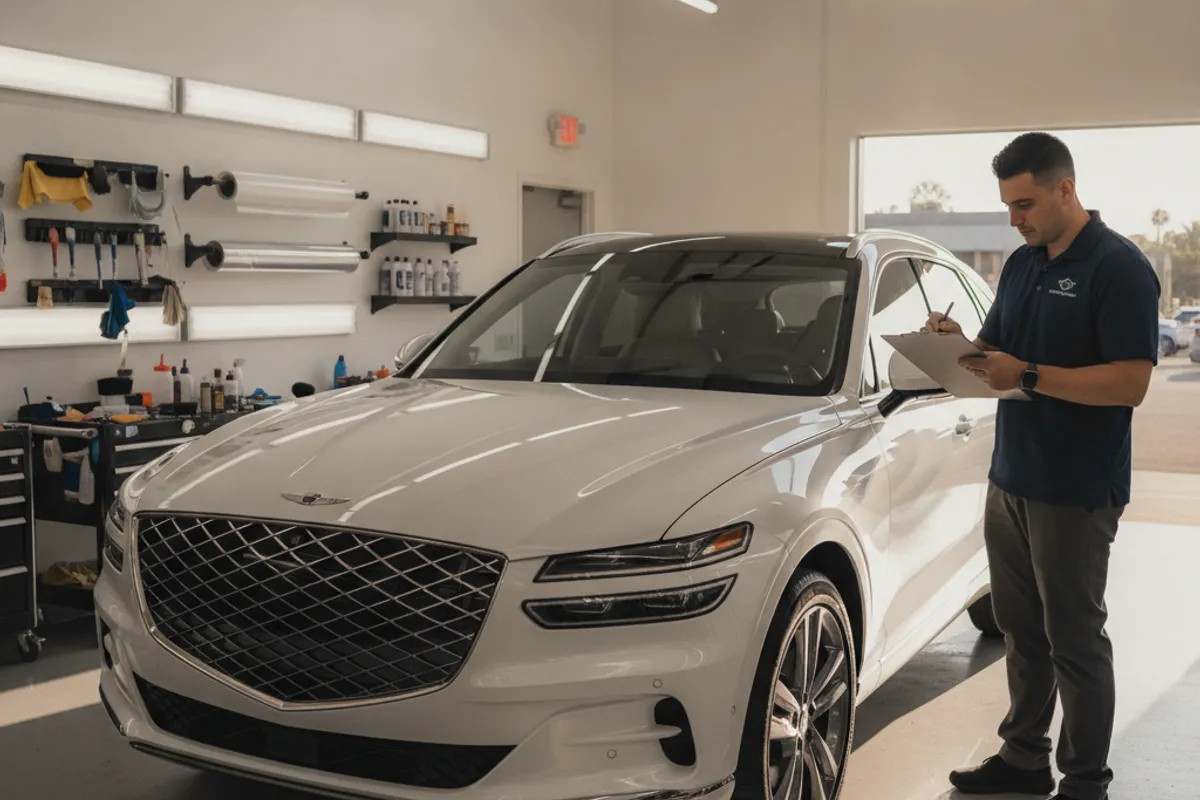
Inspect the paint before you buy protection
The useful time to apply paint protection is before chips, scratches, or etch marks get locked under film or coating. That is an inspection decision, not a calendar rule. Walk the car in daylight, look at the paint at a low angle, and photograph anything that looks like a mark. The installer confirms what is actually on the panels.
New cars can arrive clean. They can also arrive with transport marring, lot contamination, or dealer-prep marks. None of those outcomes is guaranteed. Coating and film follow the surface in front of you, so the first job is to see it.
What to look for at delivery
Look for swirl-direction buffer trails, fine scratches where transit film was pulled, and mineral spotting on cars that sat wet in the sun. Document anything notable on the delivery paperwork and photograph it. If the dealer caused paint issues during prep, ask them to address those marks in writing before you take delivery. Do not accept a verbal “the detailers can fix that.”
A new-car inspection does not prove how fast San Diego freeways will chip the hood. It tells you whether the current paint is ready for film, needs decontamination, or needs correction first.
How to evaluate a dealer protection package
Some dealers sell protection at the desk. Packages range from a surface sealant to film contracted through an outside shop. Ask for the product name, the panels included, who installs it, and the written warranty. If those answers are missing, treat the offer as incomplete.
Get an independent quote for the same written scope before you compare price. This site does not have evidence for a typical dealer markup, and it does not assume dealer staff cannot install film. Compare the itemized scope, the installer, and the paperwork.
A practical protection plan after inspection
Wash without guessing. Follow the product and installer instructions once protection is on. Until then, a careful hand wash or a touchless wash is the conservative choice. This site does not claim that the first automatic brush pass always swirls a new car.
Film on the panels that take impacts. Front-end film (bumper, hood, fenders, mirrors, A-pillars) is the usual chip conversation. The factory paint is an advantage only if inspection finds it ready. Full front PPF runs $1,500-$3,000 in San Diego depending on vehicle size and film tier.
Coating on the rest, and over film when the products are compatible. Coating is chemical and wash help, not a substitute for film. Apply it after the film’s written cure schedule, not after a generic “few days” rule.
Interior protection is optional. Leather or fabric treatments are a different product family. Quote them by surface, not as a default add-on.
Timing and logistics
Book after you have seen the paint and agreed a written scope. Same-week scheduling available for most services. Ask the installer how long the car stays, whether coating and film share one visit, and how you get around without the vehicle. Paint Shield SD does not provide loaner cars.
Two things owners still miss. Glass is not covered by paint products, so a windshield chip is its own repair through windshield chip repair. And the first parking-lot ding is a paintless dent repair question when the paint is still intact.
Frequently asked questions
What should I do to protect a new car in San Diego?
Inspect the paint, then choose film and coating from the actual condition. Film goes on the panels that take chips. Coating goes over compatible film and the remaining paint. A new car may need only decontamination, or it may need correction first.
Should I buy the dealer’s paint protection package?
Get it itemised before you decide. Ask which product line it uses, which panels are covered, who performs the work, and what the written warranty covers. Then compare that same scope with a dedicated installer.
How soon after buying should I get PPF or coating?
As soon as the paint is inspected and the installer can schedule the written job. Waiting does not automatically ruin the paint, but every week of driving can add contamination and light marring that has to be addressed first.
Does a new car still need paint correction?
Only if inspection finds defects that coating would lock in. Many new cars need decontamination. Some need a light polish. Almost always is not a useful rule.
What does new car PPF installation cost?
Full front runs $1,500-$3,000 and full body runs $3,000-$8,000, depending on vehicle size and film tier. Full front vs full body PPF explains what each package covers.
Should I get film, coating, or both?
They solve different problems. Film is a physical layer on impact panels. Coating is chemical and wash help on compatible surfaces. Doing them together can be convenient, but it is not required for every owner.
For detailed information on what PPF installation covers, see the paint protection film service page. For what ceramic coating service involves, see the ceramic coating page. To get matched with a vetted San Diego installer, call (760) 400-6557. Paint Shield SD connects new car owners with experienced, insured local shops.