Window tint removal in San Diego is the work of taking failed or illegal film off the glass. It is not the same job as choosing a new shade. Purple, bubbled, cracked, or too-dark film has to come off before a legal re-tint is a useful conversation. Paint Shield SD matches you with a vetted, insured local installer who inspects the glass, then confirms the written removal scope.
When old film is ready to come off
Film is ready to come off when it has failed as a layer, or when it no longer belongs on that window.
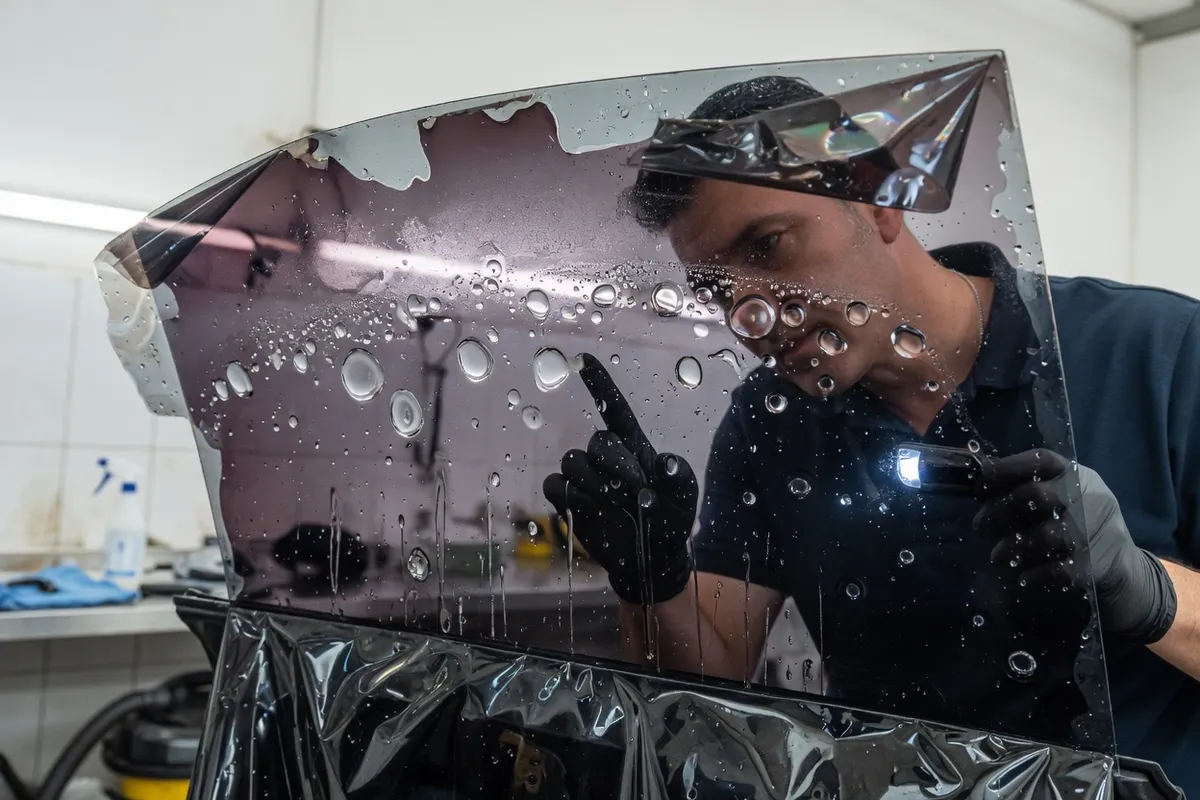
Failed film is visible. Dye-based film can shift color, often toward purple, after years of UV. It can also crack, haze, or lift at the edges. Bubbles along a door edge or the rear-glass grid are another sign the adhesive is done. Not every dyed film fails this way. Color-stable dyed products exist. The installer still has to look at the actual glass.
San Diego does not age film evenly. A car parked on the street in Pacific Beach or Imperial Beach takes salt air and long UV hours, which turns weaker dye layers brittle first. A car that sits uncovered in El Cajon, Santee, or Ramona takes inland heat that cooks adhesive, so bubbling shows up there for a different reason than coastal fade. Tell the installer where the car actually lives.
A used car with very dark front doors can feel fine at noon on I-8 and unsafe after sunset on I-15 or I-805. A roadside meter reads the installed glass, not the shop’s story. If the fronts fail the tests in California Vehicle Code 26708, the film has to come off. New film is a later decision.
Do not confuse aftermarket film with factory privacy glass. Factory rear glass is often dyed in the glass. You cannot peel that. Ask the installer to confirm which you have before anyone starts. Our window tinting service already matches installers who replace old purple or bubbled tint. For how dyed, carbon, and ceramic films differ once the glass is clean, see ceramic window tint vs dyed and carbon film.
What removal has to protect on the glass
Removal is a glass job. The film is easy to see. The hardware in the glass is not.
Rear defroster lines sit in or on the glass. They are thin printed traces, not a part you swap after a scrape. A rushed peel, a blade in the wrong place, or the wrong chemical can open a line. Then the rear window still looks clear and no longer heats. Ask how the installer plans to work around them.
Third-brake glass is the other common trap on hatchbacks and SUVs. Many liftgates have a separate pane around the high brake light. That glass is smaller, often more curved, and easy to treat like a leftover. Tell the installer if that pane has film, cracks, or aftermarket wiring.
Aftermarket electronics change the job too. Glass-mount antennas, alarm sensors, toll transponders, and some rain or camera hardware sit on or near the glass. The installer needs to know what is attached before peeling starts. Do not assume a sedan door and a wired liftgate are the same job.
Interior trim, door seals, and the felt at the bottom of a drop-glass window also take damage if someone yanks film dry. This site does not publish a removal recipe. Shops do not all use the same tools. The independent installer confirms the tools and chemicals for your glass, and whether rear defroster lines, third-brake glass, or aftermarket electronics need extra care.
Why a legal re-tint is a separate decision
Bare glass is not a legal film. Taking the old layer off only returns you to the factory glass. Choosing the next film is a second decision, with its own VLT, window positions, and written price.
California Vehicle Code 26708 is position-specific. On the front side windows, the film itself has to have a minimum visible light transmittance of 88 percent. The glass plus film still has to meet the federal 70 percent minimum. That exception is for clear, colorless, and transparent material. A dark rear film is not a front-door answer.
The windshield is not a four-inch strip. The statute allows transparent material only where the bottom edge is at least 29 inches above the undepressed driver’s seat. That material is not red or amber. Measure from the seat, not from the top of the glass.
Side windows behind the driver are exempt from the obstruction prohibition. The rear window may be tinted only if outside mirrors on both sides give the driver a view at least 200 feet to the rear. That is not a permission slip for any color. This page states the statute. It does not declare a named film legal on your car. See California window tint law in San Diego for the position rules, and what 70 percent window tint looks like for the appearance question.
If you re-tint the fronts, CVC 26708(d)(4) also requires a certificate from the installing company, in your possession or in the vehicle. Ask for that before the new film goes on.
New film and removal are not one market number. Window tinting for new film typically runs $300-$700 ($300-$500 sedan, $400-$700 SUV). Those ranges are for the new install, not for peeling the old layer. Removal has no published dollar figure on this site. Your installer confirms the written price for each part after seeing the glass.
What belongs in the written removal quote
A useful quote names the removal job in writing. A package labeled “tint” is not enough if old film is still on the car.
The document should list every window in the removal, including the rear, the fronts, and any liftgate or third-brake glass. It should describe the current film: purple, bubbled, cracked, peeling, or too dark. Photos help. They do not replace an in-person look.
Ask for adhesive cleanup to be included, not implied. Film that comes off in sheets is a different labor day from film that sheds in flakes. If new film is part of this visit, the quote should say the glass will be cleaned to bare glass first. Some owners only want the old layer gone. That is a complete job.
If you do want new film, split the lines. One line for removal and glass prep. One line for the new film, the VLT at each position, and the construction (dyed, carbon, or ceramic). The new-film ranges above apply only to that second line. Your installer confirms the written price. Getting matched costs you nothing. You contract with and pay the independent pro directly.
The quote should also note extra care for rear defroster lines, third-brake glass, or aftermarket electronics when those are on the car. Photograph those lines in daylight before drop-off.
Warranty language belongs in writing. Paint Shield SD does not warrant the work. The installer confirms the film warranty and the workmanship terms. Same-week scheduling is available for most services. The installer confirms how long the car stays after inspection.
Questions to ask before anyone starts peeling
Ask these before work starts. The answers should match the written quote.
What tools and chemicals will you use on this glass? The independent installer confirms that. There is no single method this site endorses.
Do the rear defroster lines, third-brake glass, or any aftermarket electronics need extra care on this vehicle? If the answer is vague, the scope is not ready.
Will I see the bare glass before any new film goes on? That pause is how you confirm residue is gone and the defroster grid is intact.
Is removal priced as its own line, separate from a new install? If you only need the old film off, say so. If you want a legal re-tint, name the VLT for each window position in writing.
What do you need from me at drop-off? Empty door pockets, working window switches, and an honest list of prior tint work help. Tell the installer whether the car lives at the coast or inland.
Do not start this in a driveway with a razor. Rear-glass traces and drop-glass seals are easy to damage. Call us at (760) 400-6557 and we’ll connect you with a vetted, insured local pro. Getting matched costs you nothing.