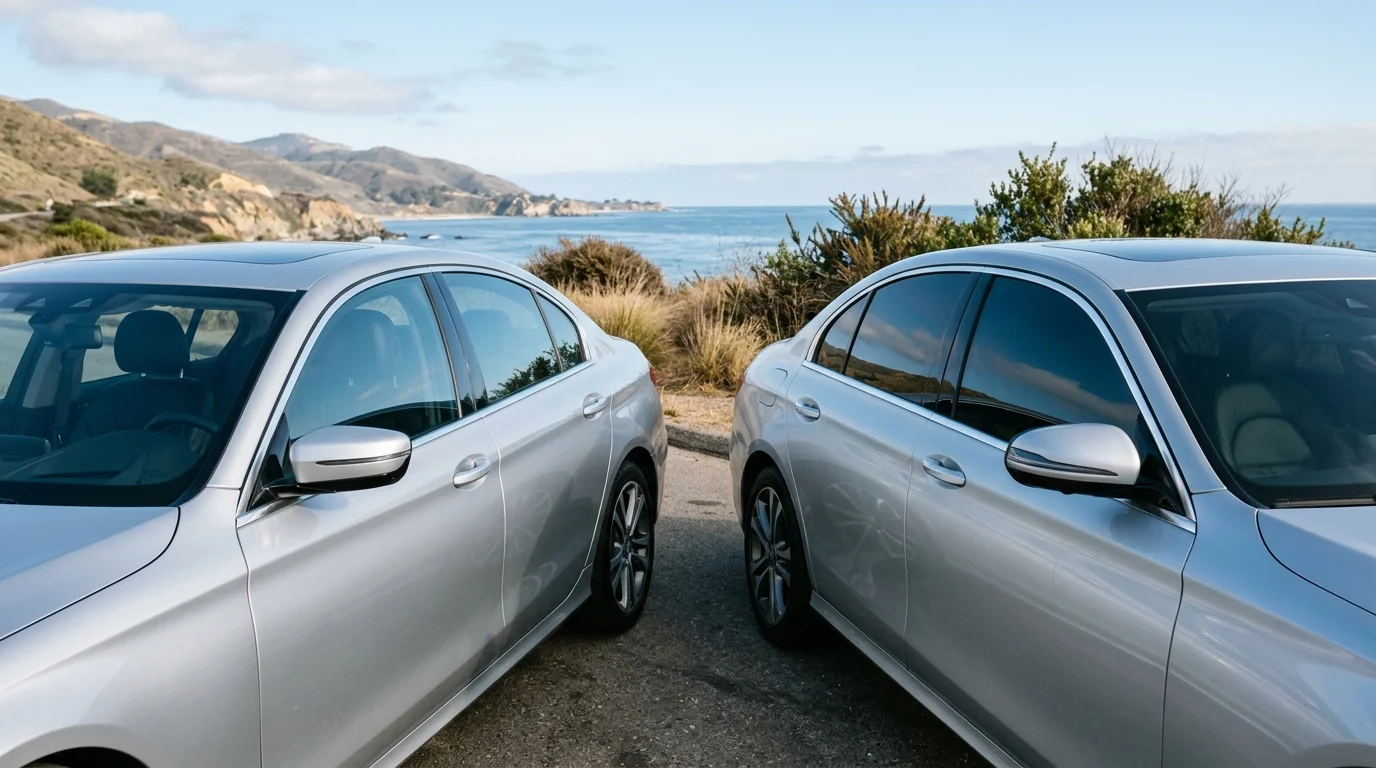
A 70 percent tint can look nearly clear in bright San Diego daylight. From another angle, it may show a soft smoked tone. The vehicle’s existing glass and the viewing conditions both affect that finished appearance.
What 70 percent means on automotive glass
The number refers to visible light transmittance, often shortened to VLT. A 70 percent rating means 70 percent of visible light passes through. It doesn’t mean the glass is 70 percent dark.
That distinction helps explain the appearance. A 70 percent tint sits toward the lighter end visually. In open daylight, many people will still see the seats, dashboard, and cabin through the window. The film may become easier to notice beside an untreated pane or under softer light.
The number alone doesn’t describe every visible quality. It doesn’t tell you the exact color, surface reflection, or finished appearance on your vehicle. Two online photos can also look different because of camera exposure, surrounding buildings, shadows, and reflections.
A photo taken in a Downtown San Diego parking structure may emphasize the tint. The same vehicle in open daylight near Mission Valley may look much clearer. Reflections from the sky can also make a window appear darker from certain angles.
Treat the percentage as a measurement, not a paint color. It gives you a useful starting point, but it isn’t a complete visual preview.
In California, 70 percent is also the glass-plus-film floor on the front side windows, not the whole legal story. Front film still has to be an 88 percent product, and that exception is for clear, colorless, and transparent material. A 70 percent look on the rear sides is a different rule than a 70 percent look on the front doors. See California window tint percentages by position before you treat a photo as a statewide spec.
Our window tinting service connects San Diego County drivers with vetted, insured local pros who can show actual samples.
Before choosing, compare the sample while looking through it and at it. Those are different views. Ask to see it in sunlight, shade, and against the vehicle’s interior. That simple comparison provides more useful context than a heavily edited photo.
How factory glass changes the finished appearance
Aftermarket film goes over the glass already installed in the vehicle. The result is therefore a combination of the film and that existing glass. A loose film sample can’t reproduce every part of the finished look.
Start by comparing the untreated windows on your own car. Look at the front side glass, rear side glass, and rear window separately. If those panes don’t look identical before installation, the same film may not make them look identical afterward.
The cabin matters too. Light seats may remain more visible from outside. A dark dashboard, dark seats, deep shadows, and a large roof can change the visual impression. Glass angle and nearby reflections add more variation.
This is why 70 percent tint on side windows can look different between two vehicles. The percentage may match while the completed windows don’t. Even two windows on one vehicle can appear different when one faces the sun and the other faces a shaded building.
San Diego gives drivers plenty of changing viewing conditions. Compare a sample under coastal cloud cover, then again in direct inland daylight. A window viewed near Encinitas may photograph differently than the same window in El Cajon at another time. That doesn’t mean the film rating changed.
Ask the installer whether the stated percentage applies to the film alone or the completed glass-and-film combination. The distinction also matters when the installer checks the finished glazing. Don’t rely on a product name, marketing photo, or unlabeled swatch.
The clearest preview uses your vehicle, the proposed film, and consistent lighting. Stand straight in front of the window, then move to an angle. View it from inside as well. That sequence reveals more than a single close-up image.
What drivers may notice from inside and outside
From outside, 70 percent tint usually reads as a light treatment. The glass may keep a mostly clear appearance while gaining a restrained smoked tone. It isn’t a dependable choice for creating a dark privacy look.
From inside, the change may feel less dramatic. You may notice a mild reduction in brightness instead of a heavily shaded view. The effect can be easier to spot when an untreated window sits beside the tinted one.
Your surroundings can change that impression quickly. Open sky often reflects across the exterior surface. Trees, buildings, and parking-garage shadows can make the cabin appear less visible. When the viewing angle changes, those reflections move too.
Check the appearance during conditions that match your normal driving. Someone commuting from Chula Vista to Downtown may see bright open roads, shaded streets, and covered parking in one trip. A single showroom view won’t represent all those settings.
Window tint can reduce interior heat and glare while cutting UV exposure. Those benefits stay qualitative here. A 70 percent label doesn’t establish a verified heat or UV performance percentage. Ask the installer for the product documents if those details will guide your purchase.
Photos require similar caution. A phone may brighten the cabin or darken a reflective window automatically. Compare images taken from the same position and under the same light. Avoid using a dramatic promotional image as your only reference.
Your best shopping question is specific: “What will this film look like on my existing glass?” Ask the installer to show a sample on the vehicle when possible. Then compare interior visibility, exterior tone, and the difference between adjacent windows. You’re choosing the completed look, not merely the number on a label.
Why windshield and side-window choices need separate checks
Appearance doesn’t decide whether a tint choice fits California’s rules. Window position matters, and a percentage used in casual shopping language may not answer the legal question.
California Vehicle Code 26708 says aftermarket film on front side windows must itself have at least 88 percent visible light transmittance. The glazing with the film applied must also meet the 70 percent minimum light-transmittance requirement in FMVSS 205. That’s why a product described simply as “70 percent tint” shouldn’t be treated as an automatic answer for front side glass.
The same statute handles other windows differently. Side windows behind the driver are exempt from the obstruction prohibition. A rear window may be tinted only when the vehicle has outside mirrors on both sides, positioned to provide a view at least 200 feet behind the vehicle.
For the windshield, the statute describes transparent material only on the topmost portion. Its bottom edge must sit at least 29 inches above the undepressed driver’s seat. The statute doesn’t describe this as a universal four-inch strip.
These details are summarized in our California window tint law guide. You can also review the current text through California Legislative Information. Rules and vehicle details deserve a separate check before installation.
Don’t ask an appearance photo to answer a legal question. Ask which window the film is intended for, what its stated VLT describes, and how the completed glazing will be checked. A responsible comparison separates the windshield, front side windows, rear side windows, and rear window.
No specific film should be declared legal based only on its name or a web listing. The installer should explain how the current rule applies to the proposed placement. If the answer remains unclear, check the current statute before booking.
What to confirm with an installer before booking
Bring the decision back to your own vehicle. A useful consultation should connect the number, the existing glass, and the window position. Start with these questions:
- Does 70 percent describe the film or the completed glass?
- Can I see the film against my vehicle’s existing window?
- How does it look from inside and outside?
- Can I compare it in direct daylight and shade?
- Which windows are included in the written quote?
- How will each proposed window be checked against current California rules?
- What film warranty will be provided in writing?
Ask for a side-by-side comparison when appearance matters most. View the sample against a clear section of glass. Then step back far enough to see the whole vehicle. A close-up may reveal color, while the wider view shows whether the windows look balanced.
Tell the installer what you’re trying to achieve. “A light, factory-like appearance” gives better direction than asking for a percentage alone. If you want a darker cabin appearance, say that plainly. The pro can explain which available options fit the requested windows without treating appearance as a legal conclusion.
Also discuss the other work planned for the vehicle. Tint affects the glass, while ceramic coating and paint protection film address different surfaces. If you’re considering several services, our guide to window tint and ceramic coating together explains how to organize that conversation.
Get the final scope and price in writing. The installer should confirm the selected film, covered windows, finished appearance expectations, and applicable warranty terms. Don’t assume a sample board represents every pane on the car.
A careful choice takes only a few comparisons. Look through the film, look at the film, and compare it with the untreated glass. Then confirm the rules for each window separately. That process gives you a clearer expectation than choosing from a percentage alone.
When to call us
Call when you want an installer to inspect your factory glass and compare tint samples. If tint is part of a ceramic coating or paint protection film plan, a local pro can confirm the written scope before booking. Call us at (760) 400-6557 and we’ll connect you with a vetted, insured local pro.