Choosing auto tint in Escondido starts with your actual driving and parking habits. Compare heat management, glare, night visibility, film construction, legal requirements, and the written quote before choosing a shade.
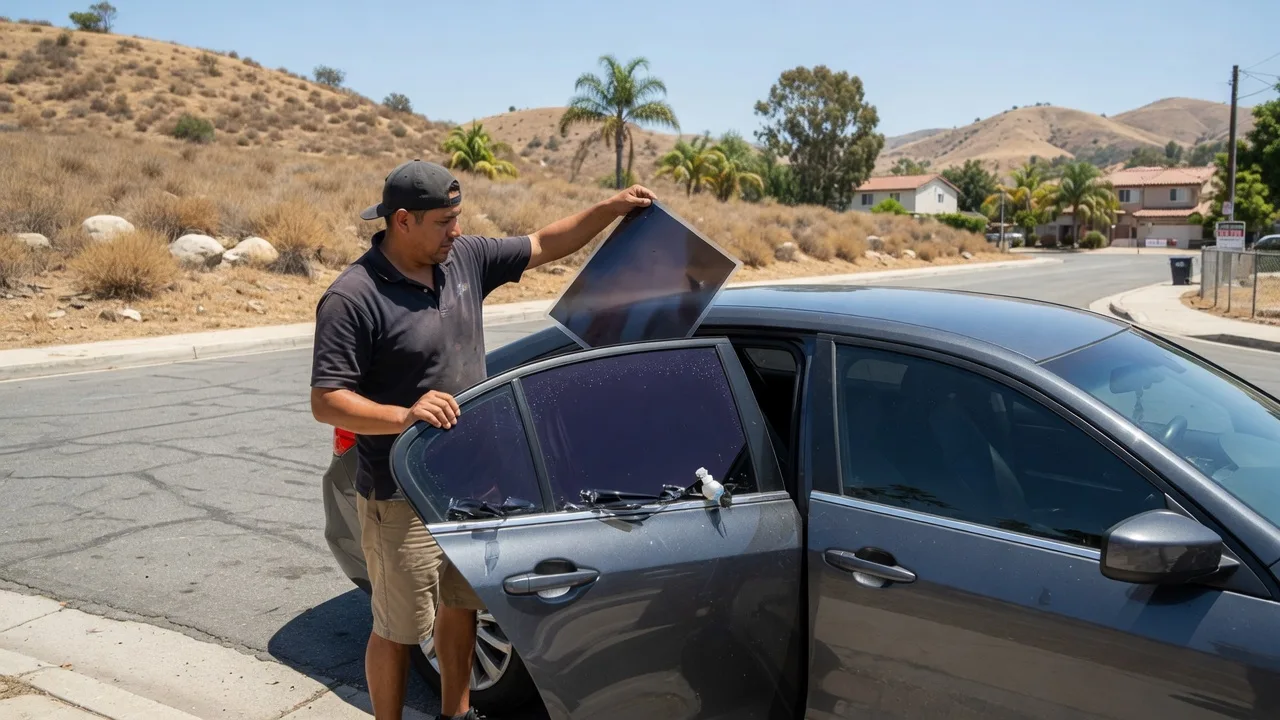
Start with where you drive and how the car is parked
A car parked outside near Valley Parkway has different needs from one kept in a garage. Start by telling the tint pro where the vehicle spends most weekdays. Mention outdoor work lots, uncovered residential parking, or regular garage storage.
Your normal route matters too. An I-15 commute can expose you to low-angle sun during parts of the day. SR-78 travel may put the sun through a side window during another part. Note which window causes the most discomfort, and at what time. That information is more useful than simply requesting the darkest available shade.
Think about who uses the car. A driver who travels after dark may value a lighter appearance and clearer outward visibility. A vehicle used mainly during daylight may place more weight on glare and cabin heat. Rear-seat passengers, child seats, and pets may also affect the coverage you want discussed.
Don’t assume every window needs the same film or shade. California treats window positions differently, and your visibility needs may differ between the front and rear cabin. Ask the pro to show samples against the actual glass. Factory glass color can change how a film looks once installed.
If you’re comparing broader exterior protection, review the local Escondido ceramic coating service page. Coating protects painted surfaces, while tint addresses glass, glare, UV exposure, and cabin heat. They solve different problems.
How inland heat, glare, and night driving differ from the coast
Escondido sits inland from San Diego County’s coastal communities. A tint decision here often centers on uncovered parking, bright afternoon light, and repeated inland driving. Coastal advice focused mainly on appearance may miss those daily conditions.
Film darkness and heat management aren’t the same measurement. A dark-looking sample shouldn’t automatically be treated as the strongest option for heat. Ask for the specification sheet covering the exact film and shade in your quote. Compare products at the shade you’re actually considering.
Ceramic tint can use ceramic particles to manage heat and UV. Carbon-based and nonmetal carbon films also exist. Dyed film uses dye for appearance and privacy. Those construction labels don’t establish one universal performance level, so compare the quoted specifications instead of relying on category names alone. Our ceramic, dyed, and carbon tint comparison explains these distinctions.
Signal behavior is another comparison point. Ceramic film avoids the signal interference metalized films can cause. If your vehicle depends heavily on navigation, phone connectivity, or other wireless functions, ask whether the quoted product contains metal.
Night visibility deserves a separate check. Look through sample film from inside the vehicle, not only from outside. Consider dim streets, parking structures, rain, and turns across poorly lit intersections. If possible, inspect a completed vehicle with similar glass.
For a countywide comparison, read the San Diego window tint guide. Escondido drivers should still weigh inland parking and their I-15 or SR-78 schedule more heavily than coastal examples.
What California rules require you to verify
California’s window tint rules depend on where the glass sits. Don’t accept a quote that describes one darkness percentage as legal everywhere on the vehicle.
Under California Vehicle Code section 26708, the front-side-window exception applies to clear, colorless, transparent material. The film must have at least 88 percent visible light transmittance. The glazing and film together must meet the 70 percent minimum light-transmittance standard in FMVSS 205.
The statute also requires a certificate from the installing company. If the owner installed the material, the certificate comes from the material manufacturer. The driver must keep that certificate in their possession or inside the vehicle.
Side windows behind the driver are exempt from the obstruction prohibition. That exemption doesn’t mean every tint color is permitted in every position. The rear window may be tinted only when the vehicle has outside mirrors on both sides. Those mirrors must give the driver a view at least 200 feet behind the vehicle.
Windshield material has another position-specific rule. Transparent material may be placed on the topmost portion, with its bottom edge at least 29 inches above the undepressed driver’s seat. The material there can’t be red or amber. The statute doesn’t create a general “top four inches” rule.
Read the fuller California window tint law guide before approving coverage. You can also check the current text through the California Legislature. If a proposed shade, color, exemption, or configuration isn’t addressed there, ask the California Highway Patrol to confirm the current rule. Don’t rely on a sales label stating that a film is legal.
What a written film quote should identify
A useful quote should name the work clearly enough for direct comparisons. It should identify every window included, the film construction, the selected shade, removal work, and preparation. If the windshield or a sunroof is included, that should appear separately.
Ask for the exact product specification sheet without assuming the brand name proves performance. It should correspond to the film tier and shade being quoted. Ceramic, carbon, and dyed labels cover different products. Compare actual specifications at the chosen shade.
The quote should also explain how existing tint will be handled. Removing old film is separate work from installing new material. Ask whether the quoted amount includes removal, adhesive cleanup, and inspection of the glass. If rear-window defroster lines or embedded electronics affect the approach, the installer should address that before work begins.
Window tint in San Diego typically falls between $300 and $700. Existing approved ranges are $300 to $500 for a sedan and $400 to $700 for an SUV. Those are broad market ranges, not a price promise. Vehicle size, glass shape, coverage, film tier, and removal needs can change the written amount. Your installer confirms the final written price.
Warranty language also belongs in writing. Ask what comes from the film manufacturer and what comes from the independent installer. Confirm the covered conditions, exclusions, claim process, and required care. Don’t accept an unspecified “lifetime” promise without the actual terms.
A nearby comparison can help expose missing details. Review the Poway window tint guide, then bring the same quote checklist back to your Escondido driving conditions.
Questions to ask an independent tint pro
A short list of specific questions makes estimates easier to compare. Start with your route, parking, and visibility needs. Then ask each independent pro the same questions:
- Which film construction and exact shade are included?
- Which windows does this written quote cover?
- What specification sheet applies to that film and shade?
- How will the film look through my factory glass?
- Can I inspect samples from inside the vehicle?
- How does this choice affect outward visibility after dark?
- Does the product contain metal that may affect signals?
- Is existing film removal included?
- What preparation and adhesive cleanup are included?
- What certificate will I receive for front-side material?
- What written manufacturer and installation warranty terms apply?
- What care instructions should I follow after installation?
Ask the pro to inspect the vehicle before settling on coverage. Glass shape, existing film, factory tint, defroster lines, antennas, cameras, and other embedded components can affect the installation plan. The installer should explain anything that changes the quote.
Be cautious when a recommendation rests only on appearance. A sample held outside the car doesn’t show how it will look from the driver’s seat. It also doesn’t answer whether the film meets your priorities for heat, glare, UV exposure, and night driving.
Paint Shield SD is a referral service. We match car owners with vetted, insured independent local pros, and the selected pro performs the work. You’ll contract with and pay that pro directly. For more detail about the referred service, see our window tinting page.
When to call us
Call when you want a professional to compare tint with ceramic coating or paint protection film as part of a wider vehicle protection plan. The independent pro can inspect the vehicle, explain compatible options, and provide written terms.
Call us at (760) 400-6557 and we’ll connect you with a vetted, insured local pro.