Mobile window tint means the installer films the glass at your home or workplace instead of a shop bay. The film and the law do not change. The workspace does. Dust, wind, and poor light are the usual reasons a driveway is a bad tint booth.
Paint Shield SD matches you with vetted, insured local installers. We do not tint the glass. Ask the matched pro whether they offer mobile tint at your address. This site does not assert that every referred pro will.
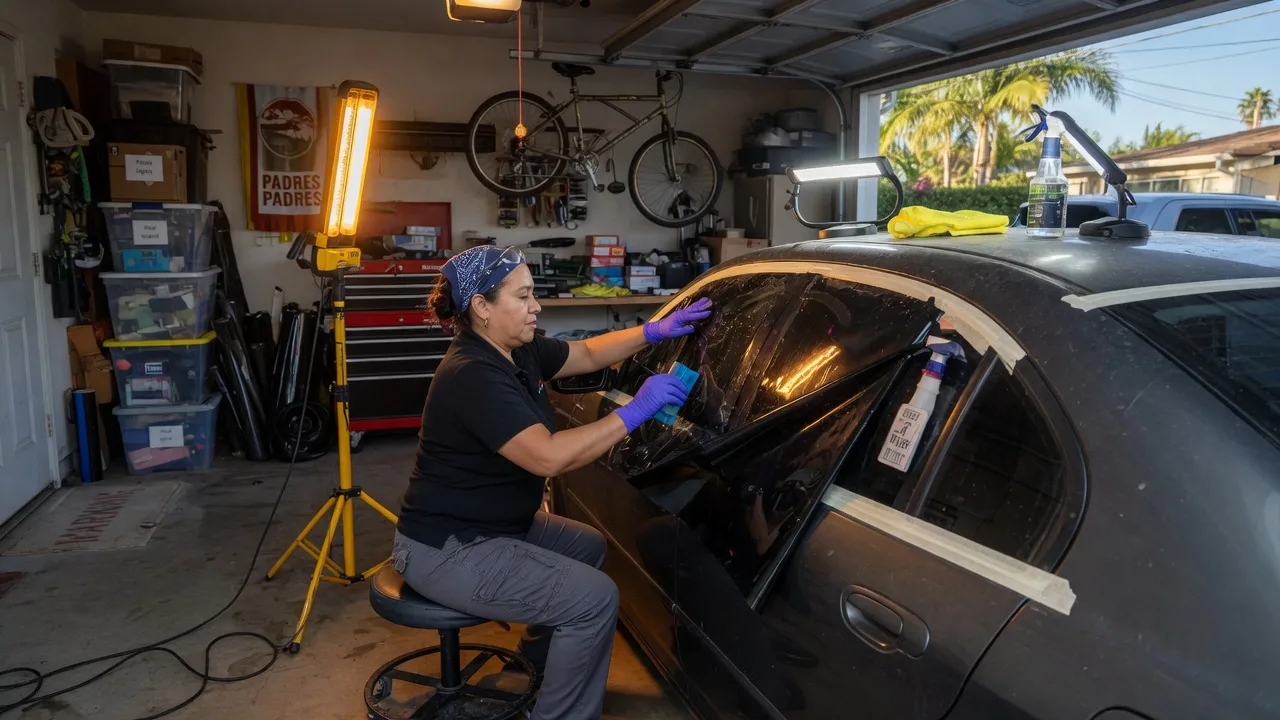
Why tint is picky about the room
Window film is a wet, trimmed sheet. Lint, pet hair, and drywall dust read as specks for as long as the film is on the glass. An enclosed garage with the door down, a clean floor, and room to open the doors is a different job than an uncovered Clairemont driveway.
Coastal marine layer leaves glass damp. Inland heat in Escondido or El Cajon can make film harder to control. Neither climate is a reason to skip the clean-room question. Tell the pro where the car will sit, including ceiling height and whether the garage is a workshop.
Mobile PPF installation has the same contamination problem on painted panels. Do not assume a pro who tints mobile also films bumpers in that garage, or the reverse.
California rules still apply in a driveway
California Vehicle Code 26708, verified at leginfo.legislature.ca.gov, is the statute. Front side windows: the film itself must have a minimum visible light transmittance of 88 percent, and the glazing with film applied must meet FMVSS 205’s 70 percent minimum light transmittance (CVC 26708(d)(1)-(2)). The front-side exception also requires the driver to have, in their possession or in the vehicle, a certificate from the installing company, or from the material manufacturer if the owner installed it (CVC 26708(d)(4)).
State that the statute requires the certificate. This site does not invent a certificate template or name a shop that issues one. Ask the mobile installer how they provide that certificate when the work happens in your garage.
Rear window may be tinted only if the vehicle has outside mirrors on both the left and right sides positioned to give the driver a view at least 200 feet to the rear (CVC 26708(b)(8)). Side windows to the rear of the driver are exempt from the obstruction prohibition (CVC 26708(b)(4)). Do not turn that exemption into “any color is legal on the rear.”
Windshield: transparent material only on the topmost portion, with the bottom edge at least 29 inches above the undepressed driver’s seat. Do not claim a “top four inches” strip. That material is not red or amber in color (CVC 26708(c)(2)).
The full statute walkthrough is on California window tint law in San Diego. This page does not replace it.
What to ask before they arrive
- Do you tint in this garage, or does the car need a bay?
- How do you control dust with the door open for access?
- Which VLT are you quoting for front sides, rears, and windshield strip, and how does that map to CVC 26708?
- How will I receive the installing-company certificate?
- What is in the written price? This site’s published tint range is $300 to $700 ($300 to $500 sedan / $400 to $700 SUV), installer confirms.
Ceramic film is often chosen to avoid the signal interference metalized films can cause. Heat and UV claims stay qualitative: film can cut UV exposure and reduce interior heat and glare. No invented percentage performance numbers.
If you want the booking path, start with window tinting. City compare pages such as window tint in San Diego cover local quotes. This page stays on whether mobile is even a fit.
Getting matched costs nothing. Call (760) 400-6557 or request a quote. The installer you meet confirms the written price after inspecting the glass.