A fresh door ding can turn a routine Poway errand into a repair decision. Before booking car dent removal in Poway, compare the paint, panel access, proposed method, and written scope.
Start with the dent, the paint, and panel access
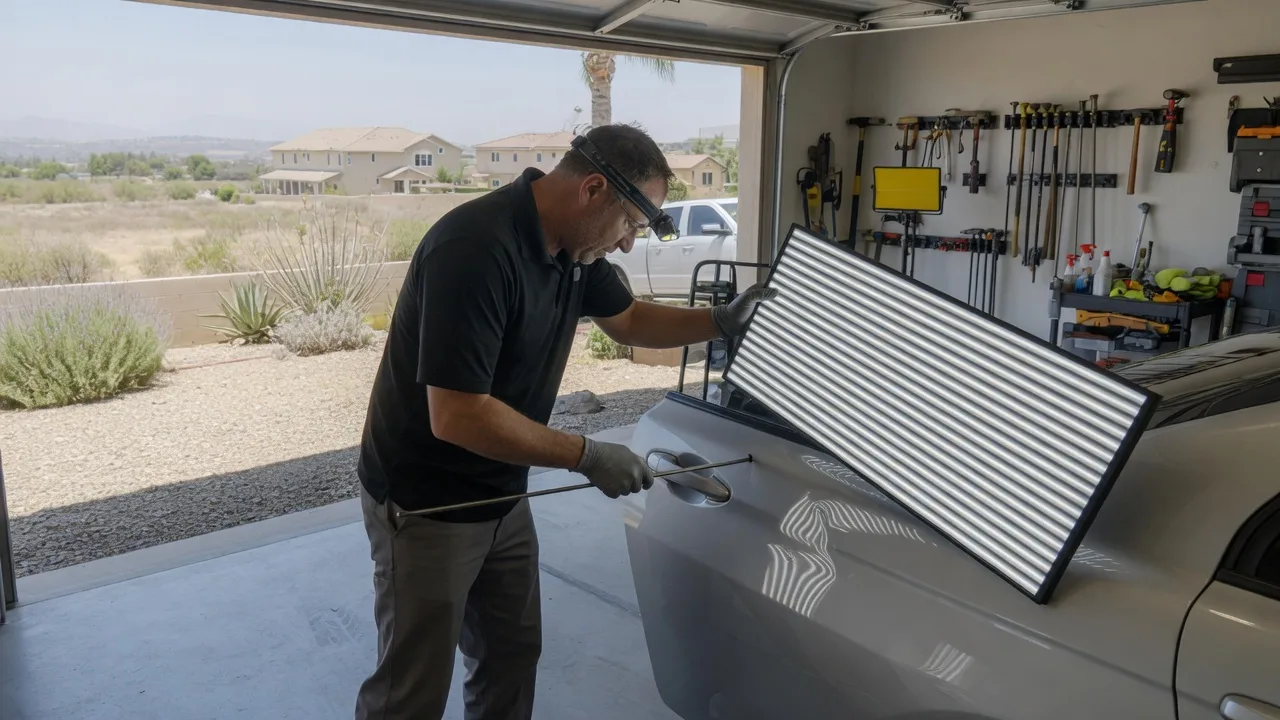
Paintless dent repair works on dents and dings where the paint remains intact. The damaged metal must also be accessible to the technician. Those two details matter more than whether someone calls the damage small.
Check the dent under soft light from several angles. Look for chipped paint, cracks, scraping, exposed material, or a sharp fold. Don’t press the panel to test it. A photo can document the damage without changing its shape.
Next, note where the dent sits. A mark in the open center of a door differs from one near an edge. Reinforcement, wiring, brackets, and trim can sit behind the visible panel. A technician needs to assess that access before confirming the repair method.
Plastic bumper scuffs aren’t the same problem as a dented metal panel. Paintless repair may not address the scraped finish or damaged plastic. A dent beside a body line can also require a closer inspection than a shallow door ding.
Our guide to paintless dent repair candidacy explains the basic screening points. Still, photos don’t replace an in-person assessment. The pro decides whether the paint, metal, and access suit the method.
Paint Shield SD doesn’t perform the repair. We match Poway car owners with vetted, insured independent pros. The owner contracts with and pays the chosen pro directly.
How Poway parking lots and I-15 debris differ
Poway drivers often notice damage after parking along Poway Road or near the Twin Peaks Road shopping areas. A neighboring door or cart can leave a concentrated ding on a side panel. That scenario differs from damage noticed after an I-15 drive.
Parking-lot dings usually direct attention toward doors, fenders, and quarter panels. The exact location still matters. A shallow mark may sit over internal bracing, while a similar-looking dent may have clear rear access. A pro needs the vehicle details and a wider panel photo to compare them.
Road debris presents another pattern. Damage found after an I-15 trip may include a dent, chipped paint, or both. Don’t assume every impact can be handled without refinishing. Paintless dent repair is intended for suitable metal damage with intact paint. Chipped or cracked paint changes the repair conversation.
The time and place you noticed the damage can help, but they don’t diagnose it. Tell the pro whether the car was parked, driven, or recently washed when you found the mark. Also mention any scrape, paint transfer, or chip near it.
For a broader comparison of methods and quotes, read our San Diego paintless dent repair guide. Poway’s inland setting shapes daily driving and parking, but the same core checks apply. The pro must inspect the finish, panel material, dent shape, and access.
If you’re also reviewing local finish-care options, the Poway ceramic coating service page explains that separate service. A coating doesn’t remove existing dents or repair damaged paint.
When paintless repair is not the whole job
Paintless repair isn’t a universal answer for every dent. Cracked paint, stretched metal, and plastic bumper scuffs typically need conventional repair and refinishing instead. Your pro should assess which method fits before work begins.
A crease requires special attention. Its length alone doesn’t settle the question. Paint condition, depth, location, and access all affect the assessment. Our article about whether a crease dent can be fixed without paint covers those distinctions without promising a result.
Chipped paint creates another decision. The metal shape and the damaged finish are separate concerns. Even if a technician can address some panel distortion, paintless work alone won’t restore missing paint. Read more about dents with chipped paint before comparing repair scopes.
Watch for quotes that blur those separate tasks. A written scope should state whether the proposed work covers only the dent, includes finish repair, or refers that portion elsewhere. It should also identify any trim removal or access work included.
Don’t rely on promises that a dent will simply “pop out.” Some suitable dents are worked gradually by a trained technician using access behind the panel or another chosen approach. The technician should explain the proposed method after inspecting the vehicle.
The goal isn’t to force every Poway dent into a paintless category. It’s to choose the repair path that matches the actual damage. If the finish has failed or the metal no longer suits paintless work, a conventional repair recommendation can be the clearer answer.
What photos and notes to send a pro
Good photos help a pro decide whether an in-person assessment makes sense. They may also expose details that a tight close-up hides. Send clear, unedited images in even light.
Start with one photo showing the full affected panel. Take another closer image from an angle that reveals the dent’s shape. Add a third view from the opposite angle when the reflection changes. Include a close photo of any chip, crack, scrape, or paint transfer.
Avoid heavy glare and dark shadows. Don’t circle the dent with a marker or place tape on damaged paint. If reflections hide the shape, move the car or change your camera angle. Keep the original files available because compressed screenshots can lose surface detail.
Your note should include:
- The vehicle’s year, make, model, and body style
- The exact panel, such as the driver-side front door
- Whether the paint looks intact
- Any nearby chip, crease, edge, body line, or scrape
- Whether you know how the damage happened
- Whether the panel has previous paint or repair, if known
- Your Poway location and preferred scheduling window
State what you don’t know. Don’t label a panel steel or aluminum unless that information is confirmed. Don’t guess about hidden braces or wiring. The technician can assess the vehicle construction and access needs.
Photos support a preliminary conversation, not a guaranteed diagnosis. Ask whether the pro needs an in-person look before confirming the method and written price. Mobile dent repair exists in the San Diego market, but network availability hasn’t been confirmed. Ask the individual pro whether mobile service is offered for your location and repair.
What a written repair scope should include
A useful quote identifies the vehicle, damaged panel, proposed method, and included work. It should be specific enough to compare with another quote. A one-line total without a repair description leaves too much unclear.
Ask the pro to identify whether paintless dent repair is the complete recommendation. If paint damage needs separate work, that distinction should appear in writing. The scope should also note expected trim removal, access steps, or other related work included in the price.
Paintless dent repair pricing varies with the damage. Approved broad market guidance places single door dings from $75 to $350. Larger or multiple dents typically range from $300 to $900. These aren’t Paint Shield SD prices or a quote for your vehicle. Your installer confirms the written price after reviewing the actual dent.
Compare the scope, not only the total. Check whether two pros are proposing the same repair method. One may be quoting dent work alone, while another includes access or related steps. Ask what happens if the in-person inspection changes the recommendation.
The written scope should also identify who performs the work and who receives payment. Paint Shield SD is a referral service. We don’t repair vehicles, set the pro’s price, or provide the workmanship warranty. The car owner hires and pays the independent pro directly.
For a service overview, visit our paintless dent repair page. Getting matched and receiving the in-person assessment and written quote costs the owner nothing. Any repair agreement should come directly from the selected pro.
When to call us
Call when a Poway dent needs a professional assessment before coating, film, or other finish work. Paint Shield SD can match you with a vetted, insured local pro who can inspect the panel and confirm the appropriate repair scope.
Call us at (760) 400-6557 and we’ll connect you with a vetted, insured local pro.