Oxidized gelcoat should be inspected and, when the pro says it is safe, corrected before a marine coating goes on. A coating is not a repair product. It will not rebuild chalked resin or restore a finish that has already failed.
Paint Shield SD matches you with vetted, insured local installers. We do not apply marine coatings. The pro identifies the surface, the prep, and the written price after looking at the hull or sidewall.
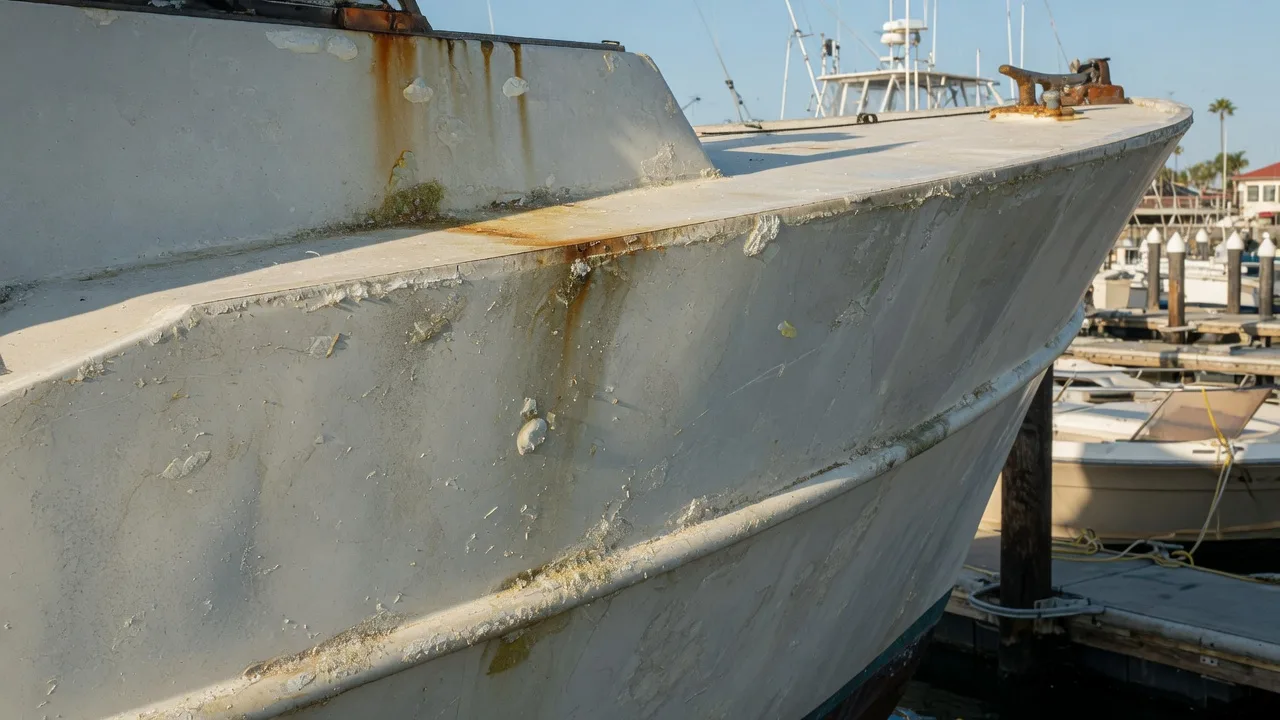
What oxidation on gelcoat actually looks like
Gelcoat is a resin-based surface over fiberglass, common on boats and some RV sidewalls. Long outdoor storage leaves the outer layer dull or chalky. A wipe with a clean, damp cloth that picks up white residue is a common field clue. It is not a lab test, and it does not tell you how deep the change goes.
Dark streaks, mineral spots, and faded graphics can sit on top of that chalk. Cleaning can make a neglected hull look better. Cleaning is not the same as restoring the resin.
Boats around Oceanside Harbor, Mission Bay, and San Diego Bay mix sun, moisture, and salt residue. Rigs stored inland in Escondido or Fallbrook add heat. The address does not diagnose the surface. The pro still has to name each material: gelcoat, painted fiberglass, metal, plastic, vinyl graphics, and sealants.
Why coating first is the wrong sequence
A ceramic or marine coating is a liquid layer over a prepared surface. On chalked gelcoat, that layer sits on a surface that is still shedding. The coating cannot glue failed resin back together.
If the pro recommends compounding or polishing, that work should appear as its own line. Ask what they expect the correction to change, and what will still look tired afterward. Do not approve a coating solely because the hull looks dull in a listing photo.
The broader RV and trailer coating conversation lives on ceramic coating for RVs, trailers, and boats. The wax-versus-coating care choice lives on ceramic coating vs wax for boats. This page stays on the oxidation fork: fix the chalk, or do not coat yet.
What the inspection should name
Ask the pro to walk the sunward side, the waterline, the transom, and any graphics. Those areas age at different rates.
Useful questions:
- Is this gelcoat, paint, or a mix?
- Is the chalk in a removable oxidation layer, or is the gelcoat thin or cracked?
- Which areas can be polished, and which should be left or repaired another way?
- Which product data sheet applies to this exact material?
- What written care instructions come with the coating, if you still recommend one?
This site does not publish a hardness rating, a year lifespan, or a salt-spray percentage for marine coatings. Tint and coating heat claims stay qualitative. Ask for the product sheet and the written warranty.
Marine and RV coating is the service match when the surface is a candidate. Paint correction is the automotive analog; gelcoat work is assessed on its own materials.
Storage and wash after the fact
A coating, once it belongs on the surface, can make routine washing easier. It does not stop oxidation from returning if the rig lives outside without care. Follow the installed product’s soap, chemicals, and timing. Avoid brush tunnels on coated vehicles. Ask whether a touchless wash or a pH-neutral hand wash is listed.
If the pro says the gelcoat is too far gone, believe the inspection. A new coating on a failing surface is a shine that peels with the resin.
Getting matched costs nothing. Call (760) 400-6557 or request a quote. The installer you meet confirms the written price after inspecting the boat or RV.