A door ding in a UTC lot and a crease from debris on I-15 are both dents, and they book as two different jobs. Auto dent repair in San Diego CA comes down to paint, panel access, and a written scope you can compare, with an independent pro inspecting the metal in person.
Start with the dent, the paint, and panel access
Three checks decide the booking. The dent’s shape. Whether the paint is still sealed. Whether a technician can reach behind the panel or work the face of it.
Start with the paint. Paintless dent repair works on dents and dings where the paint is intact and the panel is accessible. Cracked paint, stretched metal, or plastic bumper scuffs typically need conventional repair and refinishing instead. Your pro assesses which method fits. Full sun on a phone photo can hide a hairline crack in the clear coat. An in-person look settles it.
Then look at the dent. A round, shallow ding from a neighboring door is a different job than a long fold. Sharp creases and stretched crowns change the work even when the color still looks good. If you still need a candidacy filter, read whether your dent is a paintless dent repair candidate. This page is the compare-and-book step after that.
Panel access is the part most ads skip. Inner bracing, impact beams, and double-skin doors can block a push from behind. Face-of-panel methods exist, and they are not a fit for every finish. Hoods, roofs, fenders, and quarter panels each have their own structure. Aluminum is a separate comparison. A truck hood that bakes in El Cajon heat is not the same panel as a steel door in North Park. For that metal, use our aluminum dent repair San Diego notes.
San Diego parking makes the paint-and-access check local. Tight rows at Fashion Valley, Mission Valley, and Chula Vista grocery lots tend to leave shallow door dings. Coastal cars in Encinitas, Pacific Beach, and Point Loma sit in salt air, so the paint around the ding matters. Inland cars in Escondido, El Cajon, and Santee take more heat and freeway grit. Encinitas lots and El Cajon lots do not produce the same wear.
How shopping-lot dings differ from freeway debris
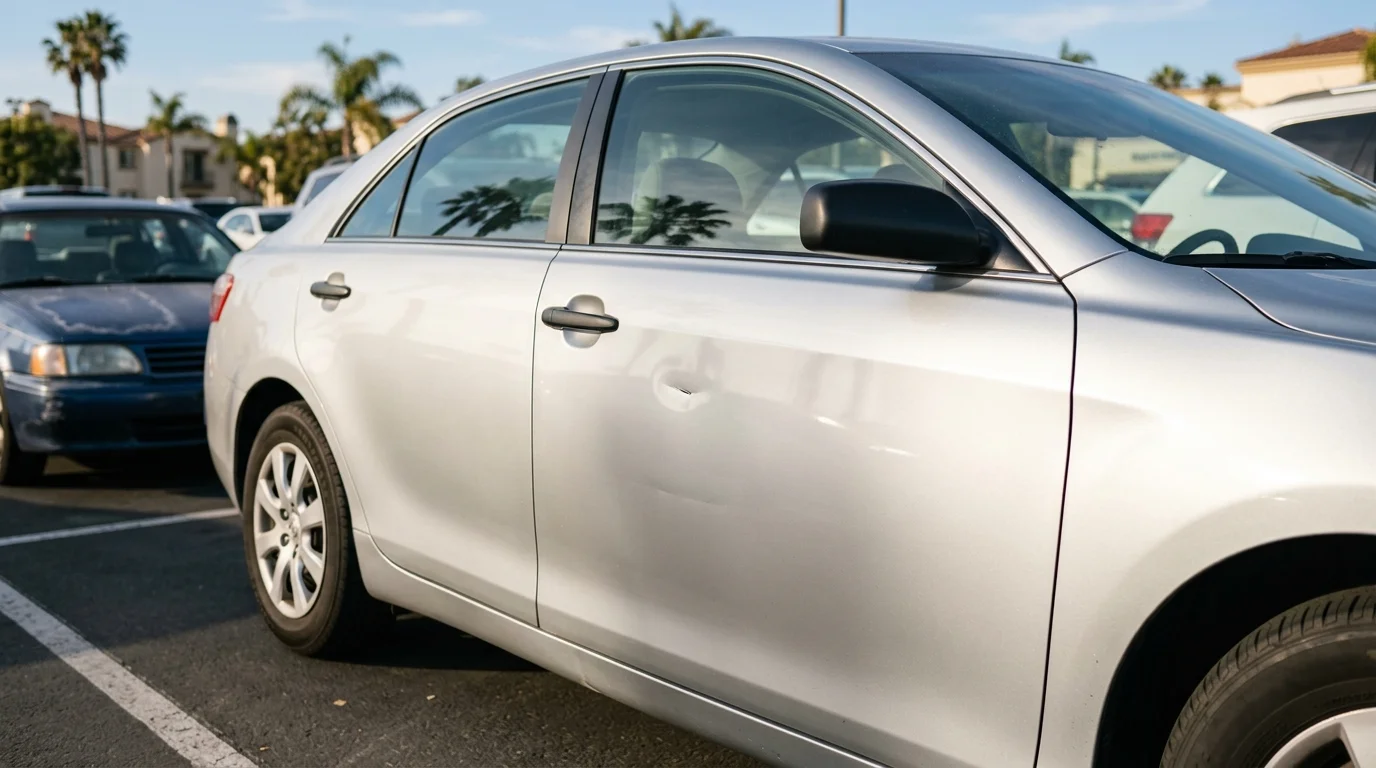
Shopping-lot dings are usually low-speed and round. A cart. A door edge. A bump in a Costco row in Kearny Mesa. Paint often stays intact. The metal is pushed in, not folded. Those are the jobs people mean when they search auto dent removal San Diego CA after a Saturday errand.
Freeway debris is a different hit. I-8 through Mission Valley and out toward El Cajon throws rocks and road junk. I-15 through Mira Mesa, Rancho Bernardo, and Escondido does the same at higher speed. Canyon roads in East County and along SR-67 add gravel and uneven pavement. Those impacts can be sharper. They can crease a panel, break paint, or stretch the crown of the metal so it will not sit flat with paintless methods alone.
None of that diagnoses your car. Two Honda doors from the same lot can need two different repairs. A crease on a quarter panel is not automatically a refinish. A round ding is not automatically a short visit. Independent pros inspect. They decide. Paint Shield SD refers. If the line in the metal looks like a fold, read whether a crease dent can be fixed without paint before you compare PDR-only quotes.
Where the work happens is a comparison point too. Mobile dent repair is a common service model in the San Diego market. That does not mean every pro works in a driveway in La Jolla or a workplace lot in Sorrento Valley. Ask your pro whether they offer mobile service. Confirm light, weather, and setup with them. Coastal marine layer and inland afternoon heat both change how a panel is read. A dim garage and a bright lot are different inspections.
Bring the driving story with the car. “UTC parking, passenger door, Tuesday” helps. “I-15 north of Pomerado, hood, heard a hit” helps. “Canyon road, rear quarter, paint looks cracked” helps. Those notes do not set the method. They help the pro show up ready to quote the right scope.
When PDR is not the whole job
Paintless work is one method. It does not cover every dented panel in San Diego County.
If the paint is already chipped, PDR will not put color back. Dents with chipped paint need a body and refinish conversation. Plastic bumper scuffs are usually conventional work too. Stretched metal can look small and still refuse to return. Your pro assesses which method fits, and they should say so in writing.
Some jobs mix methods. A door might take PDR on one ding and filler and paint on a second hit. A hood might take PDR on a round dent and blending if a crease broke the film of paint. Ask how they will isolate the PDR work from any refinish so you are not comparing a full paint quote against a single-ding line.
Insurance is a separate conversation. Many body repair pros work with insurance claims. Ask your pro. Coverage, deductibles, and whether the carrier wants a body-shop estimate are their process.
After the metal is straight, some owners want protection on that panel and the rest of the car. That is a later booking. Ceramic coating in San Diego is the compare path for a liquid layer on healthy paint. It resists water, UV, and light chemical exposure. It does not absorb rock-chip hits. If you want a film shield after a debris dent, that is paint protection film, quoted per panel. Do not coat or film over failing paint. The installer inspects first.
Factory warranty questions are fact-specific. A vehicle manufacturer generally cannot void a warranty merely because aftermarket work was done, absent a showing that the work caused a failure. That is the federal Magnuson-Moss rule the FTC enforces. It is not a promise that your warranty is protected. Do not ask us to referee a claim.
What photos and notes to send a pro
A good photo set saves a wasted visit. It does not replace an in-person look.
Shoot the whole panel first, then move in. One wide shot of the door, fender, hood, or quarter so the pro sees where the dent sits. Then two or three close shots from different angles. Take one with the sun at a low angle, the way morning light hits a Point Loma driveway or late light in an El Cajon lot. Raking light shows depth better than a flash at noon.
Leave the dent alone. Do not polish it, press it, or heat it. DIY kits can stretch paint and make a paintless path harder. Send the panel as it is.
Write four notes with the pictures. Where on the car. What you think hit it (lot, cart, freeway, canyon gravel). Whether you see cracked paint, primer, or bare metal. Panel material if you know it: steel, aluminum, or a plastic bumper.
Add the city and how you park. A car that lives on the street in City Heights or Barrio Logan picks up different door traffic than a garage-kept car in Rancho Santa Fe. A truck that runs I-8 to Alpine sees more debris than a sedan that stays in Coronado. That context is for the quote.
Ask whether they need the car at a shop or can look at it where it sits. Ask for a written scope after the look, not a number from one blurry story. Getting matched costs you nothing. The owner pays the installer they choose for the work. Same-week scheduling is available for most services. That is a scheduling statement, not a promise that a specific ding will be finished on a set day.
If several dents share a door, say so. Single dings and multiple hits are quoted differently. A bumper scuff in the same photo should be called out so it does not hide inside a PDR line item.
What a written repair scope should include
Compare paper. A listing that says auto dent repair San Diego CA without a panel list is not a quote.
A useful written scope names the panels, the method on each one, and what is out of scope. PDR on the driver door. Visual check on the rear door. Conventional repair on the bumper scuff, quoted after photos or an in-person look. If aluminum is involved, it should say so. If paint is cracked, it should say PDR will not restore color.
Ask the scope to state access. Can they reach behind the panel. Will they remove a taillight, a door panel, or a brace. Will they work from the face of the metal. Removal and reinstall of interior trim should be on the page.
Time on site is an expectation, never a guarantee. PDR on a simple ding is typically 1-3 hours on site. Your installer confirms. Larger or mixed jobs run longer. Same-week scheduling is available for most services.
Price belongs on the written page, with the installer confirming it. In this market, single door dings typically run $75-$350. Larger or multiple dents typically run $300-$900. Conventional bumper and scratch work is quoted after photos or an in-person look. Those are broad ranges. Vehicle size, panel, paint, and access all move the number. Your installer confirms the written price. We do not set it.
Check what “done” means. Sighted in shop light. Sighted in sun. High spots and low spots called out. Paint still intact, with no promise that every crown returns to factory-flat. If they will blend or refinish, that is a different line. If they will not touch a crease, that should be explicit so you can keep shopping.
Then compare two or three scopes the same way. Same panels. Same method language. Same exclusions. That is how you book paintless dent repair in this county. Paint Shield SD matches you with vetted, insured local pros. The brand does not pull dents or own a yard. No California contractor license exists for automotive dent repair referral. The car owner contracts and pays the pro directly.
When to call us
When a parking-lot ding or a freeway hit sits on a panel you still plan to coat or film, get the metal assessed first. A professional Ceramic Coating and Paint Protection Film pro needs intact, stable paint before protection goes on. Call us at (760) 400-6557 and we’ll connect you with a vetted, insured local pro.