For paint chipping, paintless dent repair only addresses part of the damage. PDR may restore a suitable panel’s shape, but it can’t replace cracked or missing paint. The complete repair may require both dent work and refinishing.
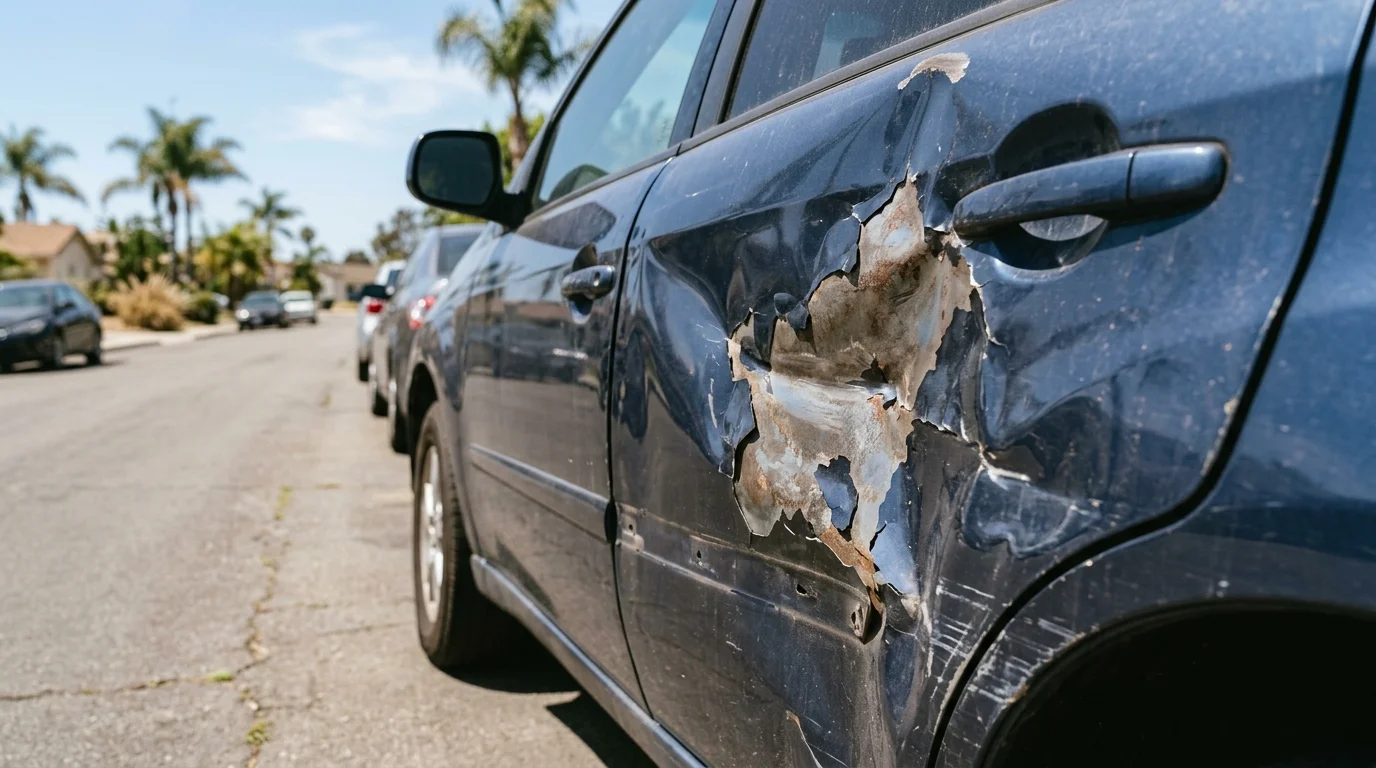
The line between a dent and a damaged finish
A dent changes the panel’s shape. Chipped paint damages the finish covering that panel. Those problems can happen together, but they aren’t the same repair.
Paintless dent repair works on dents and dings where the paint remains intact. The affected panel also needs to be accessible. A shallow door ding with unbroken paint may fit that description. A dent with cracked paint, stretched metal, or missing finish usually doesn’t.
Start by examining the area in clean, even light. View it straight on, then from both sides. Reflections help reveal the dent’s shape. A close view shows whether paint has separated around the impact.
Look for chips, fine cracks, loose edges, or missing color. Don’t assume a tiny mark is only dirt. Don’t pick at a loose edge to test it. That can change the condition before a pro sees it.
San Diego drivers encounter both kinds of damage in different settings. A door edge can leave a compact ding in a North Park parking space. A stone dent picked up along I-8 or SR-78 may leave a small impact with a broken finish. The dents might appear similar from several feet away. Up close, their repair paths can be different.
Photos help with the first conversation, but they don’t settle every question. Glare can hide a crack, especially on metallic or light paint. The pro still needs to assess paint condition, metal stretch, and panel access.
Our guide to PDR candidate signs in San Diego explains the basic screening points. The final method should come from the pro who inspects the vehicle.
Why pushing metal out does nothing for cracked paint
PDR is a shape repair. The technician works the dented area toward its original contour without treating it as a conventional paint job. That approach depends on the existing finish staying intact.
Cracked or missing paint creates a separate problem. Moving the metal won’t put that finish back. A panel may look straighter after PDR while the chipped area remains clearly visible.
That distinction matters when you review a quote. “PDR” shouldn’t be read as shorthand for every repair around the dent. Ask whether the quoted scope covers only the panel shape. Then ask how the broken finish will be handled.
A stone dent can make this confusing. The depression may be small enough for PDR, yet the impact may have chipped the paint. In that case, the dent and the finish need separate decisions. Your pro might recommend PDR for the shape and conventional repair for the surface. If the metal is stretched, the whole area may need a different method.
Paint correction is also easy to confuse with paint repair. Ask the pro whether correction can address the visible defect or whether refinishing is required. Missing paint shouldn’t be treated as an ordinary polishing issue.
Plastic bumper damage follows another path. Plastic bumper scuffs and cracked finishes typically need conventional repair and refinishing instead of PDR. The material, paint condition, and damage pattern all need an in-person assessment.
When comparing options, focus on the result each line item covers. One line may address shape. Another may address color and finish. A clear written scope prevents a straightened dent from being mistaken for a finished paint repair.
What a two-stage repair looks like
A two-stage repair separates panel shaping from finish restoration. The exact order depends on the damage, so the pro should confirm it after inspection.
The first stage addresses the dent. If the paint is sufficiently intact around the working area and the panel is accessible, PDR may be suitable. The technician evaluates the dent’s shape, the condition of the metal, and access behind the panel. Cracked paint or stretched metal can change that recommendation.
The second stage addresses the damaged finish. That may involve conventional preparation and refinishing rather than PDR. The repairer should identify how much of the affected panel is included. They should also explain whether the chipped spot, nearby cracking, and surrounding finish belong in the quoted scope.
This division becomes important when two businesses are involved. A PDR specialist may handle the shape while a body repair provider handles the finish. Another provider may coordinate both parts. Don’t assume either arrangement. Ask who will perform each stage and who takes responsibility for the completed result.
Document the original damage before work begins. Take one close photo, one angled photo, and one image showing the whole panel. For a rear-quarter dent, include nearby body lines. For a door dent, include the handle and panel edges. Those wider images give the repairer useful context.
Ask what happens if the first stage reveals stretched metal or wider paint damage. The written quote should explain whether the provider will pause and request approval before expanding the work.
Protection products come later. If you’re considering film or coating, tell the repair provider before scheduling. The installer should confirm when the refinished panel is ready. Don’t guess at that timing or apply a general waiting period to every paint system.
You can also review the site’s paintless dent repair service before requesting a match. It explains where PDR fits and when conventional repair may be the better route.
Cost difference between PDR and refinishing
PDR and refinishing aren’t priced as one interchangeable service. Each addresses different work, so a combined repair can include separate line items.
For approved broad market ranges, single door dings typically run $75-$350. Larger or multiple dents typically run $300-$900. Your installer confirms the written price after reviewing the actual damage.
Those figures apply to paintless dent repair. They shouldn’t be stretched to cover chipped paint, scratches, bumper repair, or refinishing. Conventional bumper and scratch work is quoted after photos or an in-person look.
We couldn’t confirm an approved San Diego refinishing range for this page. That figure shouldn’t be guessed. The repair provider sets the price after reviewing the panel and finish damage.
Ask for a quote that separates the work clearly:
- Dent reshaping through PDR, if the panel qualifies
- Conventional repair or refinishing for the chipped area
- Any work that isn’t included
- Conditions that could change the scope after inspection
- The written total approved before work begins
This format helps when comparing two proposals. A lower PDR-only quote may exclude the paint damage entirely. A higher combined quote may cover both stages. The totals don’t mean much until you compare their scopes.
Avoid choosing solely from a close-up photo estimate. A photo can start the conversation, but the pro may need to see panel access, paint cracking, and the dent’s full shape. Ask whether the initial number can change after inspection and what would trigger that change.
You contract with and pay the matched pro directly. Paint Shield SD doesn’t set the repair price. Your installer should confirm every amount and included service in writing.
How to get one quote that covers both
Begin by saying the dent has chipped or cracked paint. Don’t request only “dent removal,” because that wording may produce a PDR-only estimate. Ask for a combined assessment of the panel shape and finish.
Send several useful photos. Include the complete panel, the dent from two angles, and a close view of the paint damage. Add one image from farther back so the provider can identify the panel and nearby body lines. Shade is often easier than harsh glare for showing the surface.
Provide a short description of what happened. A door impact near University Heights presents differently from a stone strike noticed after driving I-5. You don’t need to diagnose it. Just describe the location, visible paint condition, and when you noticed the damage.
Then ask five direct questions:
- Is PDR suitable for any part of this damage?
- Does the quote include repair of the chipped finish?
- Will one provider handle both stages?
- What conditions could change the written scope?
- What warranty, if any, does the pro provide for each stage?
The brand doesn’t provide the workmanship warranty. Ask the matched pro to put any coverage and exclusions in writing.
If two specialists are needed, ask whether one can coordinate the complete estimate. If that isn’t available, request separate written quotes before approving either stage. Confirm that each provider understands the complete plan.
Protection should be discussed separately from the repair. If you want paint protection film or ceramic coating afterward, ask when the restored finish will be ready for inspection and protection. The installer should confirm that timing.
Factory warranty concerns sometimes arise when aftermarket protection is added. The Federal Trade Commission is the federal authority on this subject. A vehicle manufacturer generally can’t void a warranty merely because an aftermarket product was used, absent a showing that the product caused the failure. Causation is fact-specific, so this isn’t advice about a particular warranty dispute.
The best quote isn’t merely one total. It’s a written plan showing who handles the dent, who handles the paint, and what each stage includes.
When to call us
A dent with chipped or cracked paint needs a pro who can assess both panel shape and refinishing. After that repair, a professional ceramic coating or paint protection film pro can assess whether the restored panel is ready for protection. Call us at (760) 400-6557 and we’ll connect you with a vetted, insured local pro.