Yes, PPF can sometimes be installed at a home or workplace. However, an open driveway is rarely the preferred workspace. Before booking a mobile PPF installer, confirm how the installer will control dust, wind, moisture, lighting, and access around your car.
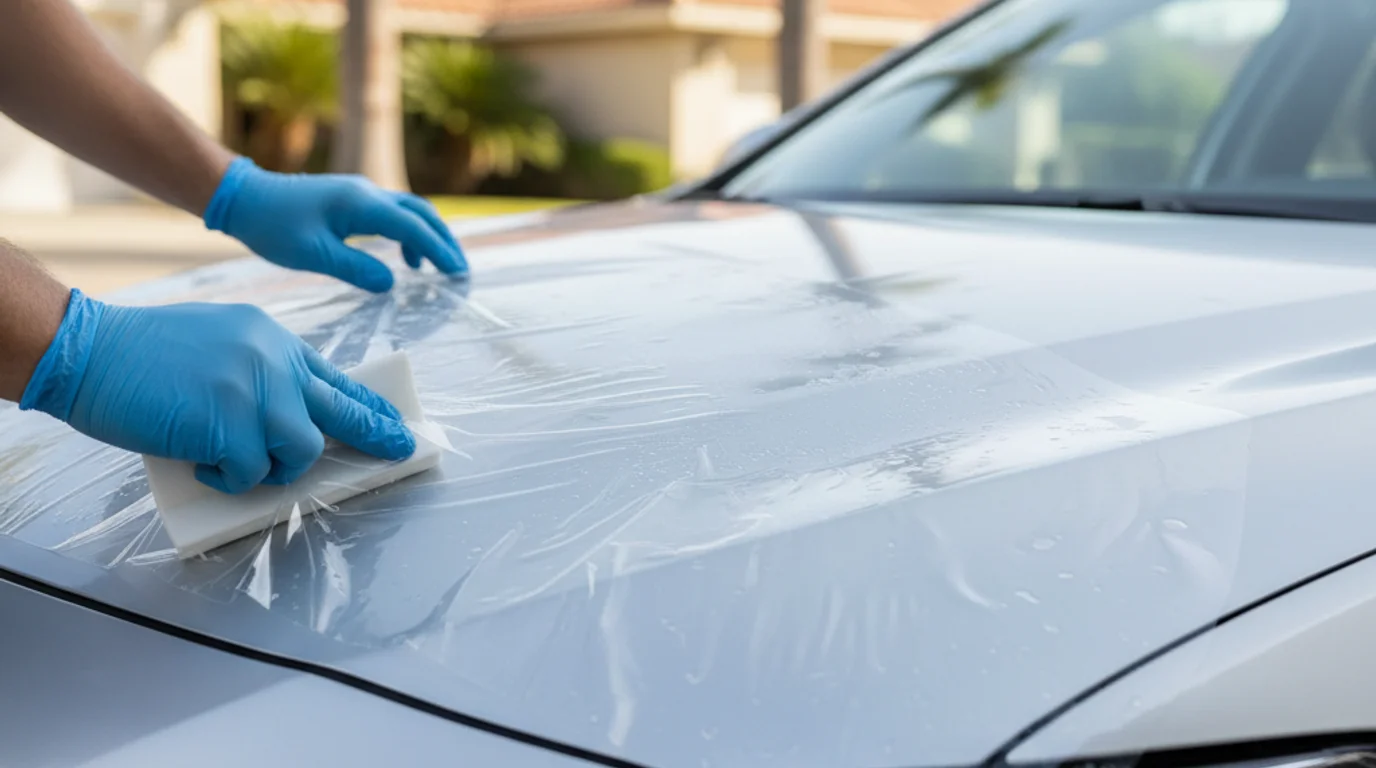
Mobile PPF availability isn’t confirmed across our referral network. Tell us where the vehicle is parked, then ask the matched pro whether your location works for the requested coverage.
Why the installation setting matters
Paint protection film must sit closely against a prepared painted surface. The installer needs room to clean the panel, position the film, work out moisture, and inspect the finish. Airborne debris can interfere at several points.
A closed installation room gives the pro more control. Doors limit moving air. Clean floors reduce tracked dirt. Fixed lighting makes trapped particles, edges, and surface marks easier to see. The installer can also move around the bumper, mirrors, fenders, and hood without fighting a narrow parking space.
A driveway changes those conditions. Landscaping crews may be working nearby. A delivery vehicle can stir up grit. Someone may open a garage or drive past halfway through the application. Even a light breeze can move a large sheet of film while the installer positions it.
That doesn’t mean every mobile installation will fail. It means the workspace matters as much as the street address. A clean enclosed garage is different from an uncovered driveway beside a busy road. A sheltered commercial bay is different from a workplace parking lot.
Coverage also changes the difficulty. A small, accessible piece gives the installer fewer panels to manage. A full front includes several shaped surfaces and edges. Full-body coverage increases the need for space, lighting, and contamination control.
Review the available paint protection film options before discussing location. Tell the pro which panels you want covered. Photos help with the first conversation, but the installer should confirm whether the space and paint condition suit the job.
Dust, wind, and the coastal marine layer
The installer should assess the actual outdoor conditions at the proposed workspace. The problem is not the neighborhood name. It is what reaches the panel while the film is being placed.
If a parked hood feels damp, it needs proper preparation before film touches it. If wind carries dust from a nearby road, open lot, or landscaping project, particles can settle during the work. An installer can clean the panel again, but repeated contamination makes an outdoor setup harder to control.
Direct sun and changing shade are conditions the installer should evaluate for the quoted film and application process.
Ask the installer to look beyond the weather forecast. The immediate setting matters more. Note nearby sprinklers, leaf blowers, construction, trees, traffic, and exposed soil. Mention whether the garage door closes and whether there’s clear space on every side.
A canopy may block direct sunlight, but it doesn’t turn a driveway into a clean room. Side wind can still enter. Dust can still rise from the pavement. Loose canopy material can also move overhead. The pro should decide whether that setup provides enough control.
Don’t pressure an installer to continue when conditions change. A weather delay is inconvenient. Contamination trapped beneath clear film may stay visible after the vehicle leaves.
What genuinely does travel well
Some vehicle-care work fits mobile service much better. Washing, interior cleaning, vacuuming, and many surface-care tasks don’t involve positioning a large adhesive sheet over prepared paint. That’s why mobile auto detailing commonly takes place at a driveway or workplace.
Water and power needs vary by pro. Confirm both when booking. Also ask where runoff, equipment, and open doors can be managed without blocking neighbors or workplace traffic.
A mobile visit can still help with a future PPF project. A pro may be able to inspect visible paint damage, identify the panels you want protected, or discuss coverage. Whether that assessment is offered at your location must be confirmed directly.
Photos also travel well. Send clear images taken in daylight. Include the full vehicle, front bumper, hood, mirrors, fenders, and any damaged areas. Close photos show defects, while wider photos provide context. Photos don’t replace an in-person inspection, but they can make the first conversation more useful.
Paint preparation is another point to discuss. Film follows the surface beneath it. Existing chips, scratches, failing clear coat, or poorly repaired paint may affect the result. Ask what must happen before installation and where that preparation would occur.
If you’re comparing installers, read our guide on how to choose a coating installer in San Diego. Its questions about inspection, preparation, written scope, and final review also apply to PPF. The location may change, but the need for clear answers doesn’t.
Questions to ask if someone offers mobile film
Start with the exact location. Don’t settle for “mobile installation available.” Ask whether the installer has reviewed your driveway, garage, workplace bay, or parking structure. Share photos showing the floor, ceiling, doors, lighting, and space around the vehicle.
Then cover the working conditions:
- Does the vehicle need to be inside an enclosed garage?
- How much clear space is needed around each panel?
- What happens if wind, moisture, or dust increases?
- Will the installer bring lighting for the final inspection?
- Does the area need water or electrical access?
- Who confirms that the paint is ready for film?
- Where will preparation happen if defects need attention?
- Which edges will be wrapped, and which will remain visible?
- How will contamination or an imperfect edge be handled?
- Can you inspect the finished work before accepting it?
Get the coverage and price in writing. Approved PPF market ranges span $800 to $8,000, depending on coverage and vehicle details. Your installer confirms the written price. Ask whether the quoted amount changes if the vehicle must move to an indoor installation space.
Request written warranty terms too. Paint Shield SD doesn’t issue the installer’s warranty. The installer should identify what covers the film, what covers workmanship, and how a concern gets inspected. Your installer confirms the film warranty in writing.
Aftermarket products raise occasional factory-warranty questions. The federal Magnuson-Moss Warranty Act generally means a manufacturer cannot void a warranty merely because an aftermarket product was used, absent a showing that it caused the failure. The FTC provides consumer guidance, but any individual dispute is fact-specific.
Finally, confirm who will perform the work. We match car owners with vetted, insured local pros. The car owner contracts with and pays the independent pro directly.
Where mobile service is the better fit
Mobile service is attractive when the vehicle can’t easily leave home or work. It also makes sense for services designed around a driveway visit. Detailing is the clearest example because the work can often be organized around the parked vehicle.
PPF needs a more selective answer. A clean, enclosed residential garage may be workable for certain coverage. An open curbside space beside traffic is a different setting. A workplace garage may look protected but still have moving vehicles, overhead dust, limited lighting, and access rules.
Smaller film areas may be easier to discuss for mobile work. Headlights, door cups, or another limited section involve less material than a full front or full body. That doesn’t guarantee the location will qualify. The installer still needs to inspect the vehicle, surface, and workspace.
Mobile service can also be useful before the installation. A consultation or paint assessment at the vehicle’s location may prevent an unnecessary trip. Confirm whether the individual pro offers that option. Our network’s mobile PPF capability hasn’t been verified as a universal service.
Choose the workspace based on the finish you want, not convenience alone. If an installer recommends moving the car indoors, ask why. A clear explanation should connect the location to cleanliness, access, preparation, lighting, or the requested coverage.
The right mobile PPF installer won’t treat every driveway the same. Coastal air near La Jolla, exposed soil in East County, and a closed garage in Chula Vista present different working conditions. The pro should evaluate the actual space before accepting the job.
When to call us
Call when you need help comparing PPF coverage, preparation, or installation settings. Describe the vehicle and workspace so the matched pro can decide whether mobile work fits.
Call us at (760) 400-6557 and we’ll connect you with a vetted, insured local pro.