You can ask an independent pro to ceramic-coat a vinyl wrap, but compatibility is not automatic. Paint Shield SD could not confirm a stacking rule that covers every film and every coating. The wrap installer and the coating installer inspect the vinyl, name both products, and check the makers before anyone starts.
What coating and vinyl are each meant to do
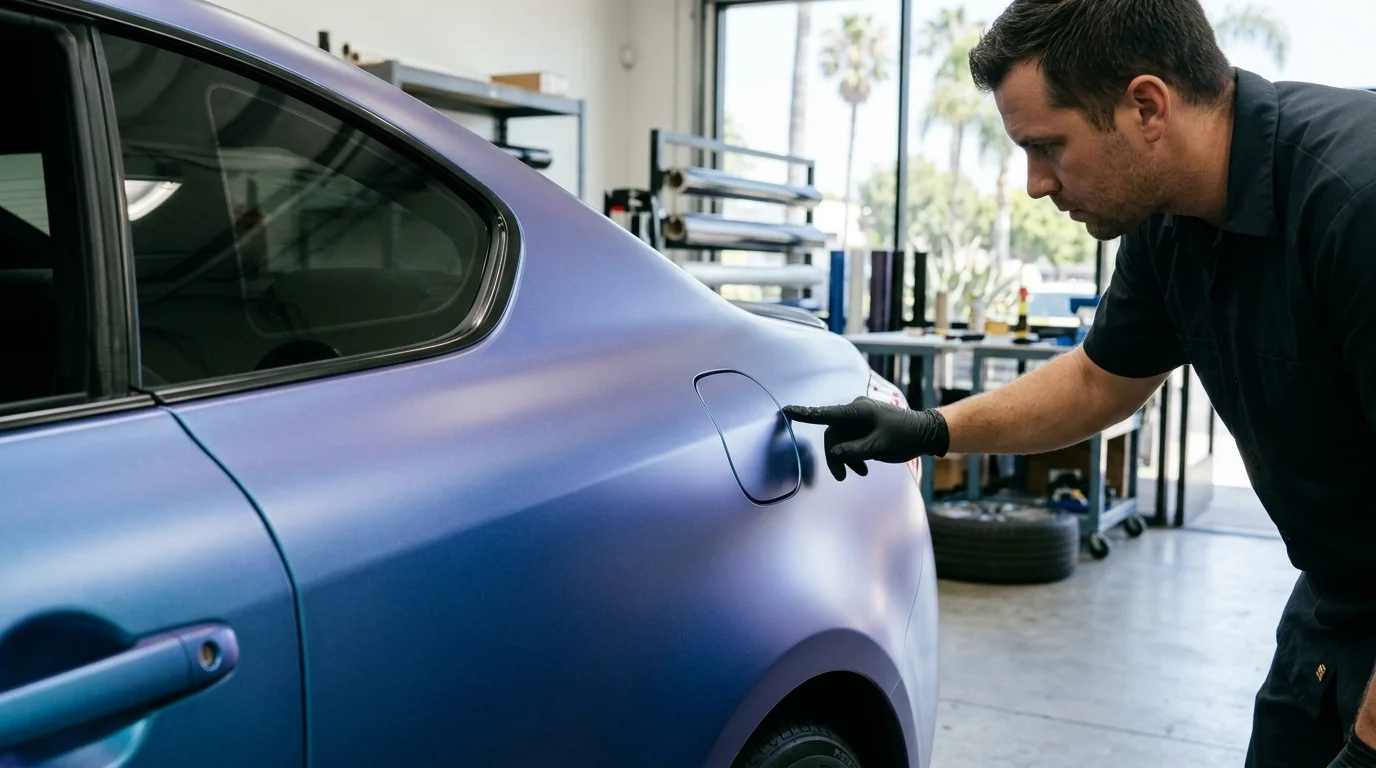
A vinyl wrap and color change is a removable film. It sits on the factory paint and changes the color or the finish. The wrap protects the paint beneath while it is on the car. The quality of that outcome depends on the paint underneath. Wrap adhesion can lift failing clear coat, so the wrap pro inspects first. Chrome delete is vinyl over factory brightwork. Fleet graphics and lettering are the commercial version of the same film. Your installer confirms the film warranty in writing.
A ceramic coating is a liquid polymer. On paint, it bonds chemically and leaves a hard, hydrophobic surface layer. It resists water, UV, and light chemical exposure. It does not absorb rock chip impacts. That last point is the one San Diego commuters mix up. A coating is a care layer. It is not chip armor on the I-15, the I-8 grade, or a gravel turnout off the 67.
These two products do different jobs. The wrap is the color and the removable skin. The coating, when it is used at all, sits on whatever surface the coating pro accepts. This site could not confirm that every coating bonds to every vinyl the way a coating bonds to factory paint. Treat “ceramic coating over vinyl wrap” as a product-by-product call, not a default stack.
Paint protection film is a third product. If you are choosing wrap versus clear film, that is vinyl wrap vs. PPF. If the question is a coating on film, that is ceramic coating over paint protection film. A color-change wrap is also a different fork from a respray. Color-change wrap vs. a repaint covers that choice. This page stays on one search: can you coat a car wrap that is already the outer surface.
San Diego County is not one climate for either product. A wrapped SUV that lives near Coronado or Imperial Beach sits in salt air. A wrapped sedan that commutes El Cajon or Santee into Kearny Mesa sits in inland heat. The coating, if the makers accept that vinyl, is still a hydrophobic layer. It is still not a substitute for film that takes a hit.
When a wrap is a poor candidate for coating
Coating a tired wrap does not make the vinyl new. If the film is already faded, stained, or chalky from outdoor parking, a coating will sit on that condition. It will not rewind the sun. Owners who want a wrap to look new again start with a wash that matches the wrap care sheet, then an edge-and-finish inspection. If the film is spent, the wrap pro talks about repair or a new wrap. They do not hide a dying film under a liquid layer.
Lifting edges are a stop sign. So are tunnels, fish-eyes, and open seams around mirrors, badges, and bumper returns. A coating will not glue those down. It can make a later peel messier because now two products have to come off. Have the wrap installer sign off on the install before the coating installer is even booked.
Unknown toppers are another stop. If someone already put a spray sealant, a wax, or a mystery bottle on the vinyl, the coating pro needs to know. Compatible maintenance toppers belong on a coated surface only when the installed product care sheet lists them. Do not assume carnauba wax is suitable on a coating, and do not assume it is suitable on vinyl either. The wrap pro and the coating pro name what is already on the car.
Paint condition under the wrap still matters. If the clear coat was already failing when the film went on, the wrap can lift. Coating the vinyl does not fix that bond. The wrap pro assesses the paint before a color change. If that inspection never happened, it happens now.
Matte and satin vinyl need a slower look. Ranking pages talk as if a coating always preserves a flat finish, or always adds gloss. This site could not confirm a universal sheen rule. Ask for a test area on a spare piece of the same film, or on a low-visibility panel the wrap pro approves. Look at it in sun, not only under shop lights.
Skip DIY coating kits on a wrap. This site cannot confirm a safe home method, a wait time after wrapping, or a clay-bar step on vinyl. Clay bar is a decontamination step on paint, not paint correction, and not a wrap recipe we can publish. The independent pro specifies prep. If the wrap is a commercial fleet wrap, seams, door edges, and lettering get their own inspection. A coating over a graphic that is already peeling at a door cup is wasted money.
How sun, washing, and San Diego parking change the risk
Coastal north county and the South Bay punish vinyl with salt and moisture. Cars that sit at Mission Beach, Ocean Beach, or the Imperial Beach lots pick up spray and mineral spotting. Inland north county and East County punish vinyl with heat. El Cajon, Escondido, Ramona, and Alpine bake a dark wrap in a way Encinitas does not. A page that treats those parking days as the same climate is guessing.
Sun is the wrap’s long problem. How long a wrap lasts outdoors is its own decision, and it is not a number this page will invent. Read how long a car wrap lasts outdoors for that care picture. How long a ceramic coating lasts on vinyl wrap is also unconfirmed here. Ceramic coating durability in years is not something this site can state. Your installer confirms the coating warranty in writing, on that product, on that film.
Washing is where stacked jobs fail in public. Avoid brush tunnels. A wrapped car and a coated car both take damage from spinning brushes and dirty felt. Follow the installed product care sheet for soap, chemicals, timing, and whether a touchless wash or a pH-neutral hand wash is listed. Automatic washes and ceramic coating and how to wash PPF and ceramic coating walk through that care without turning it into a kit tutorial.
Bird droppings, fig mess around Balboa Park, and tree sap in Mission Valley still need a prompt rinse. A coating on paint is sold as a layer that resists light chemical exposure. On vinyl, confirm that claim on the product data sheet. Do not leave contaminants to bake on a black wrap in July inland heat while you wait for the weekend.
Parking is the local fork of “should I ceramic coat my wrap.” A garage-kept car in Rancho Santa Fe lives a different week than a street-parked daily in City Heights or a beach-lot convertible in Pacific Beach. If the car lives outside, washing habits matter more than a product label. If the car already sees a careful hand wash, a coating is a narrower add-on, and only after both makers say the stack is accepted.
Rock chips stay a film problem. Coastal I-5, inland I-15, and the I-8 into East County throw debris. Coating over vinyl does not absorb those hits. If chip protection is the real goal, you are back on wrap versus PPF, not on coating the wrap.
What a written scope should confirm before anyone starts
Get the stack in writing before anyone opens a bottle. The wrap installer names the film and the finish. The coating installer names the coating. Both names go on the quote. This site stays brand-agnostic, so we will not pick a product for you. The product tier your installer recommends is the one that has to survive contact with that vinyl.
Ask for the maker guidance, not a hallway opinion. If the wrap maker or the coating maker has nothing in writing for this pair, that is your answer. Paint Shield SD could not confirm a county-wide stacking rule, and a shop slogan is not a substitute. A test panel belongs in the scope when the finish is matte, satin, printed, or textured.
Split the warranties. The wrap warranty and the coating warranty are separate documents. Confirm what happens to the wrap warranty if a coating is added, and what happens to the coating warranty if the wrap is later removed. Your installer confirms each warranty in writing. Do not treat a verbal “it should be fine” as coverage.
Prep, cure, and wash instructions come from those sheets. Duration estimates for a ceramic coating are typically 1 to 2 days, with extra days when other work is included. Those are expectations, never a scheduling promise. Same-week scheduling is available for most services. Same-day arrival language is not how this work is booked.
Price the two jobs as two jobs. Full color-change wraps in this market typically run $2,500 to $6,500 depending on vehicle size and film. Partial wraps and chrome delete typically run $250 to $1,500 by scope. Ceramic coating typically runs $500 to $3,000. Your installer confirms the written price. Getting matched costs you nothing. You pay the installer you choose.
Factory paint warranty is a separate question from wrap warranty. The federal Magnuson-Moss Warranty Act, enforced by the FTC, is the authority for the rule that a vehicle manufacturer generally cannot void a warranty merely because an aftermarket product was used, absent a showing that the product caused the failure. That is not the same sentence as “your warranty is protected.” Causation is fact-specific. Never treat a wrap, a coating, or the stack as a warranty shield.
If the car is already coated and you now want vinyl, stop and ask both pros. This page does not confirm that wrap adhesive will grab a coated panel. Hold the coating if a wrap is still in play. Coat after the wrap only when both independent pros agree.
Questions to ask the independent wrap and coating pros
Ask who owns the stack. One person may wrap. Another may coat. Paint Shield SD matches you with vetted, insured local installers and does not do the physical work. You contract with the pro. If two shops are involved, get both names on the sequence: wrap complete, wrap inspected, coating only after that sign-off.
Ask whether this coating is specified for this vinyl. Not “we do this all the time.” The data sheet. If the coating pro cannot show maker language for flexible film, you do not have a confirmed stack. Graphene on a label is a marketing name, not a second chemistry this site can specify. Ask for the product data sheet and the written warranty, then stay with what those pages actually say.
Ask what the finish will look like on your exact film. Gloss, satin, matte, and printed vinyl can respond differently. This site could not confirm a universal gloss or color-depth claim. A sample is cheaper than a surprise on a full color change.
Ask how you will wash it. You want the care sheet in your phone before the car leaves. Soap, chemicals, drying, and whether a brush tunnel is banned should be in that sheet. If the answer is “just take it through the regular wash,” keep asking.
Ask what happens when the wrap comes off. Wraps are removable. A coating on top does not change that purpose. You want to know whether removal is still a normal peel on healthy factory paint, and who you call if the film or the coating fights the other product.
Ask about the real parking week, not a brochure week. Tell them if the car sits at the beach, in East County sun, under trees, or in a downtown garage. A coating over vinyl is a maintenance decision. It is not required for every wrap in San Diego County. If the wrap pro would rather you maintain the film with the wrap maker’s own care steps, listen. Should you ceramic-coat the wrap. Only when both independent pros put the pair, the prep, and the warranties in writing.
When to call us
Call when you already have a wrap, or you are about to book one, and you want an independent coating pro to inspect the film before anyone stacks products. This is not a DIY coating job, and it is not a same-visit add-on you invent in the driveway. Call us at (760) 400-6557 and we’ll connect you with a vetted, insured local pro.