Choose a color change wrap when you want a reversible new look over sound paint. Choose repainting when the existing finish is failing, damaged, or ready for permanent restoration. The right answer starts with the paint you have now.
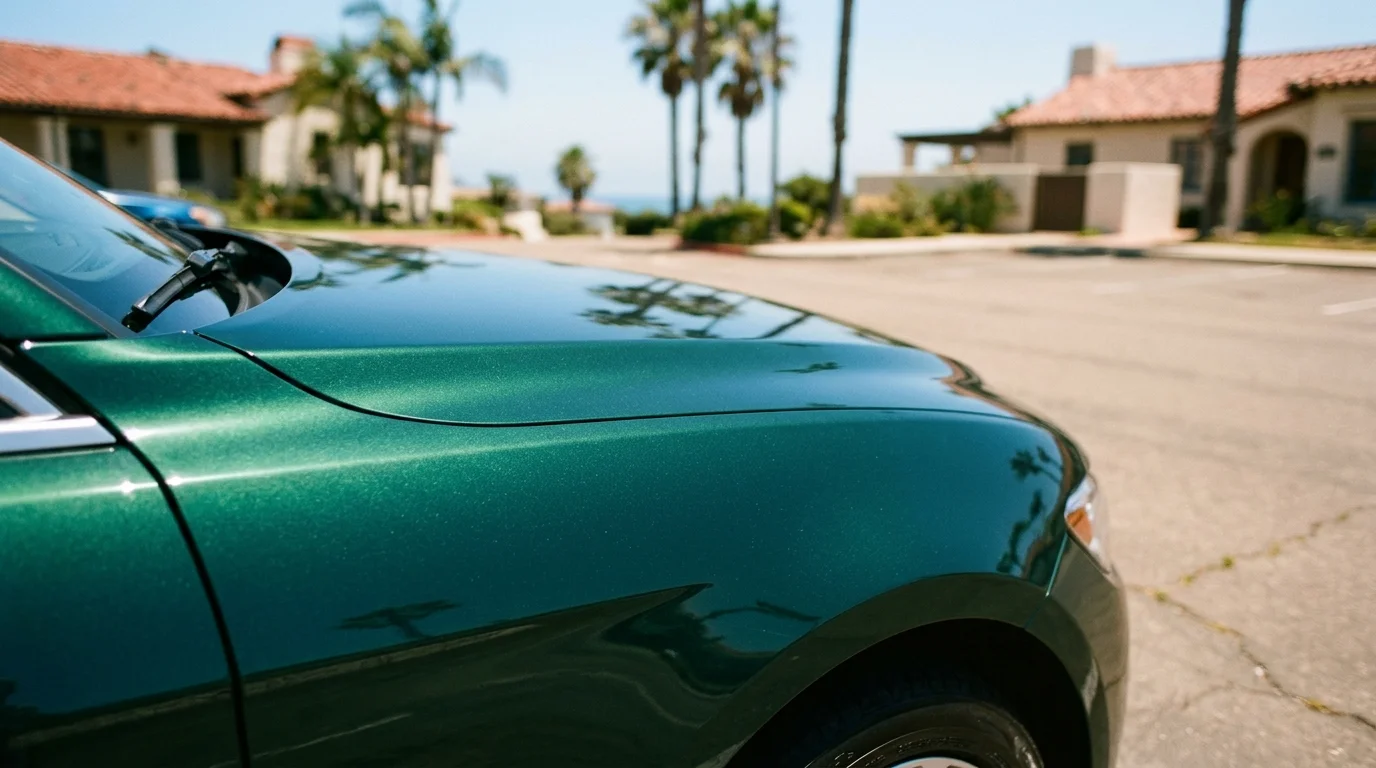
Reversibility is the whole argument
A color change wrap lets you change the car without committing forever. The vinyl covers the existing finish and protects the paint beneath. When you’re ready for another look, a professional can remove it and assess the paint below.
That flexibility matters for leased vehicles, newer cars, and unusual color choices. You might enjoy satin green now but prefer the factory color later. A wrap gives you that option. Repainting replaces the visible finish, so reversing the decision means another paint job.
Paint condition sets the limit. Wrap adhesion can lift failing clear coat during installation or removal. Peeling paint, exposed substrate, and unstable repairs aren’t sound foundations for vinyl. A wrap installer should inspect those areas before recommending coverage.
Think about how you’ll use the vehicle around San Diego County. A daily driver moving between Chula Vista and Kearny Mesa may need a practical finish that’s easy to live with. A weekend car in Encinitas might support a bolder visual choice. The installer’s samples will look more useful against your actual body lines and trim.
Full color change wraps in San Diego typically run from $2,500 to $6,500. Vehicle size and film choice affect that range. Partial wraps and chrome delete work typically cost $250 to $1,500 by scope. Your installer confirms the written price after inspecting the vehicle.
Start with the dedicated vinyl wrap and color change service if reversibility drives your decision. Share photos of every side, plus close views of chips, peeling clear coat, and prior repairs.
What each does to resale
Neither option guarantees a higher resale value. Buyers, dealers, and appraisers may judge the same modification differently. The quality of the work and the condition underneath often matter more than the color choice alone.
A wrap keeps the original paint beneath the vinyl. That can appeal to an owner who wants a temporary change without replacing the factory finish. It can also give a future buyer another option, assuming the underlying paint remains sound. Removal and inspection are the only ways to confirm its condition later.
Repainting can make sense when the existing finish is already beyond preservation. It also creates a permanent result for an owner committed to the new color. However, a repaint changes the car’s finish history. Some buyers may welcome a well-executed restoration, while others may want details about why it was painted.
Keep records whichever route you choose. Save the written quote, invoice, material information, before photos, and care instructions. Ask the installer to put the film warranty terms in writing. If repainting, ask the body shop to document its preparation, repair, and finish process.
An aftermarket product doesn’t automatically erase every factory warranty. Under the federal Magnuson-Moss Warranty Act, a manufacturer generally cannot void a warranty merely because an aftermarket product was used, absent a showing that the product caused the failure. The FTC is the federal authority, but causation depends on the specific dispute. Review your written warranty and speak with the manufacturer about your vehicle.
For a lease, read the return standards before changing anything. Don’t assume that removable automatically means acceptable. The leasing company sets its own return conditions.
Finishes paint can’t easily do
Wrap makes experimentation easier. Installers can show you gloss, satin, matte, color-shifting, and textured options without changing the underlying paint color. Availability varies, so choose from physical samples your installer can actually source.
Curves and lighting change how a finish reads. A satin sample can look restrained indoors and much brighter outside. View it in direct sun and shade before deciding. San Diego’s coastal light near La Jolla can present a color differently than a shaded garage in El Cajon.
Paint can create many of these appearances too. The difference is commitment and process. A custom repaint may require specialized preparation, color work, and clear-coat decisions. Wrap gives you another path when the current paint is stable and the desired look may not be permanent.
Coverage details matter as much as color. Ask how the installer handles door jambs, mirrors, spoilers, badges, sensors, and tight panel edges. A body shape with deep recesses needs a different plan than a flatter sedan. Get those decisions written into the scope before approving the job.
Chrome delete is a narrower version of the same idea. It places vinyl over factory brightwork instead of changing the whole vehicle. That can be enough when the paint color already works but the trim doesn’t.
Don’t confuse color change wrap with paint protection film. They can overlap in appearance, but they’re different service choices. If protection matters more than a dramatic color change, ask the pro to compare suitable coverage options for your priorities.
Lead time and how long the car is down
A color change wrap can typically take 1-2 days. That’s an expectation, not a scheduling promise. Your installer must confirm timing after seeing the vehicle, its paint, and the requested coverage.
Preparation affects the schedule. The pro needs to inspect the paint and plan around trim, badges, mirrors, edges, and body contours. Existing vinyl, adhesive, failing clear coat, or prior repair work can change the scope. Sending detailed photos helps, but it doesn’t replace an in-person assessment.
A complete repaint follows a different workflow. Inspection, disassembly, surface preparation, repairs, paint application, and curing may all affect how long the vehicle stays at the shop. We couldn’t confirm one defensible San Diego repaint timeframe from the approved sources. The body shop performing the work sets that schedule after inspecting the car.
Your own logistics matter too. Giving up a commuter car is different from leaving a weekend vehicle. A driver using I-805 between National City and Sorrento Valley may care more about downtime than someone with another car available. Ask whether the quoted schedule includes preparation and final inspection.
Same-week scheduling is available for most services, but it isn’t guaranteed. Availability depends on the independent pro, material selection, vehicle condition, and current bookings. Don’t choose solely by the earliest opening.
Get the timing in writing with the work scope. Confirm when the vehicle must arrive, when work is expected to finish, and what could change that estimate. Do the same with a paint shop so you’re comparing real proposals.
When repaint is genuinely the right call
Repainting is the stronger choice when the existing finish can’t support vinyl. Failing clear coat may lift with wrap adhesion. Widespread peeling, unstable prior work, or exposed areas need a paint professional’s assessment before any film goes over them.
A permanent color decision can also favor repainting. If you plan to keep the vehicle in one color and want painted jambs or other areas beyond a standard exterior wrap scope, discuss that goal with a qualified body shop. Ask exactly which panels, edges, openings, and removable parts its quote includes.
Not every tired-looking finish needs either option. Light surface defects may call for paint correction instead. Paint correction works with the existing finish rather than covering it or replacing it. The detailing specialist should inspect the paint before deciding whether correction fits its condition.
Damage changes the conversation. A color change wrap isn’t a substitute for fixing unstable paint or body damage. It can follow suitable repair work, but the repair provider and wrap installer should agree that the surface is ready. Don’t use vinyl to hide a problem that may keep developing underneath.
Cost alone won’t settle the comparison. The approved San Diego market range for a full color change wrap is $2,500 to $6,500, with the installer confirming the written price. We couldn’t confirm a defensible repaint range from approved sources. Paint shops set their own quotes based on the vehicle and requested work.
Paint Shield SD can match you with a vetted, insured local pro for the wrap side of the decision. The car owner contracts with and pays the independent pro directly. For repainting, request an itemized body shop quote and compare both scopes line by line.
When to call us
Call when your paint is stable and you want a professional opinion on wrap, paint correction, or paint protection film. Photos help the matched pro prepare, but the vehicle still needs a condition check.
Call us at (760) 400-6557 and we’ll connect you with a vetted, insured local pro.