A shop in Kearny Mesa will show you two rolls that both look like film. One is a color-change wrap. The other is clear paint protection film. They sit on the same table, and that is where the mix-up starts.
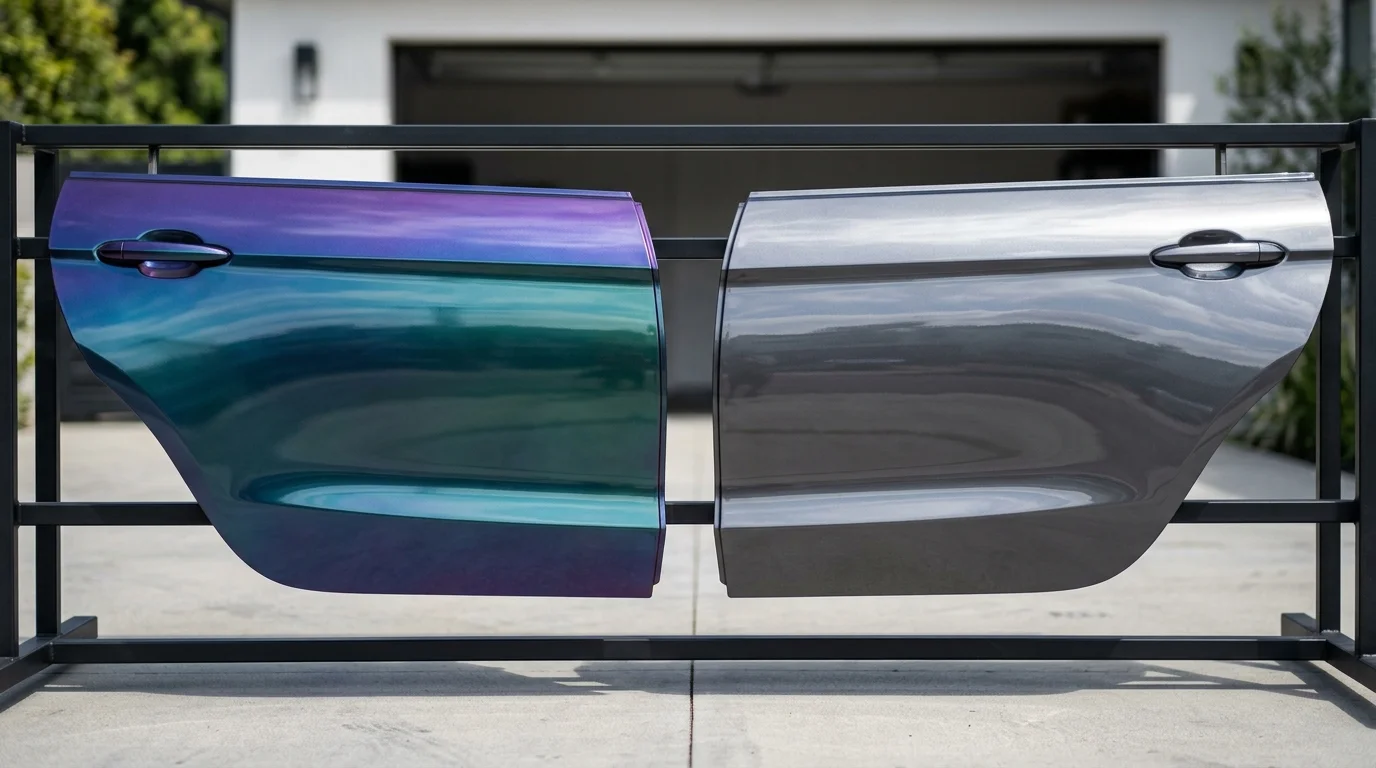
How wrap and film are built for different jobs
A vinyl wrap vs PPF choice is a job choice, not a thickness contest. Wrap exists to change how the car reads on the street. Clear paint protection film exists to sit on factory paint and take chips, scratches, and road debris.
The wrap is a color or finish layer. Gloss, matte, satin, chrome-look, and printed graphics all sit in wrap territory. Chrome delete is vinyl over factory brightwork, not new plating. Fleet lettering and decals are the commercial cousin of the same idea.
PPF is a flexible thermoplastic film. Some of it uses a urethane build with a self-healing top coat for light surface scratches. Heat can help those light marks settle. It doesn’t heal punctures, deep damage, or the paint under the film. That limit matters on I-15 gravel and on canyon roads east of Poway.
People also type vinyl ppf like it is one product. It isn’t. Vinyl restyles. PPF protects. Colored film is a third conversation, covered in colored PPF vs vinyl wrap. This page stays on clear film versus a color-change wrap.
Paint Shield SD matches you with vetted, insured local installers. The brand doesn’t install film. The pros we send confirm the film, the coverage map, and the written warranty.
Shops will quote mils, year counts, and self-healing with no limit. We couldn’t confirm thickness numbers or a universal lifespan from a primary spec we can publish. Ask the independent pro for the product data sheet. Get the film warranty in writing.
San Diego County isn’t one climate. A wrap at Mission Beach takes salt and sand. A truck on SR-78 through San Marcos takes rock spray. El Cajon and Alpine cook hoods. Match the film to the route.
When appearance is the main goal
If the factory color is the problem, wrap is the tool. You want a different color, a matte finish, or a two-tone without a respray. That’s vinyl wrap and color change work.
A wrap is removable. It also protects the paint beneath while it is on the car. That’s a cover, not chip armor. Light scuffs sit on the vinyl instead of the clear coat. A highway stone can still punch through and mark the paint. If chips are the fear, wrap is the wrong primary product.
Color-change wrap is the usual path when the alternative is a full respray. A respray is paint. A wrap comes off later if the original paint is healthy. We break that fork down in color-change wrap vs a repaint. Leases and short ownership lean wrap. Don’t treat a wrap as a permanent paint job.
Clear PPF won’t give you a new color. Printed graphics, fleet names, and chrome delete are wrap jobs. Downtown and Little Italy parking structures scuff doors. A wrap can hide a tired color. It won’t hide a dent.
Partial wraps and chrome delete typically run $250 to $1,500 by scope. Full color-change wraps typically run $2,500 to $6,500 depending on vehicle size and film. Your installer confirms the written price.
Wrap adhesion can lift failing clear coat. Edges can pick at door cups if wash technique is sloppy. Inspect paint first.
A wrapped car and a car wash is a common search. We can’t publish a universal yes or no. Some manufacturer care notes for protection film discourage pressure and automatic washing because edges can lift. Wrap care is product-specific too. Ask the pro what the sheet allows.
When paint protection is the main goal
If the factory color is the one you want to keep, ppf vs wrap isn’t close. You want the paint. You want chips to land in film.
Clear PPF physically shields paint from chips, scratches, and road debris. Ceramic coating is a liquid polymer that bonds to paint. It resists water, UV, and light chemical exposure. It doesn’t absorb rock chip impacts. Coating after film is a separate quote.
I-15 through Escondido picks up gravel. I-8 into Alpine throws grit. Trucks on I-805 and Otay Mesa hit open bumpers. Clear film on the front is the usual answer, not a color wrap on the doors.
Full-front packages cover the panels that take the spray. Full-body PPF typically takes 3 to 5 days for a standard vehicle. Your installer confirms the schedule. Same-week scheduling available for most services.
Paint protection film in San Diego is typically quoted from $800 to $8,000 depending on coverage, vehicle size, and film tier. Your installer confirms the written price. Weigh the spend with is PPF worth it in San Diego, then get a panel map.
How the film looks after five years has no universal answer we can publish. Ask for the written warranty and what it covers. Parked in El Cajon isn’t a covered stall in La Jolla.
Some PPF can self-heal minor surface marks with heat. Swirl marks in the top coat are the usual case. A puncture from a rock isn’t. Deep scratches that reach paint aren’t.
Under the Magnuson-Moss Warranty Act, enforced by the FTC, a vehicle manufacturer generally cannot void a warranty merely because an aftermarket product was used, unless that product caused the failure. Causation is fact-specific. Don’t treat this page as dispute advice.
How existing paint condition changes the choice
Film doesn’t fix paint. It covers it, or it shields it. The condition of the clear coat decides whether either job is safe.
Wrap adhesion can lift failing clear coat. If the factory paint is chalking, peeling, or already resprayed, a wrap can pull that finish when it comes off. It can also fail while it is on. Professional removal on healthy factory paint is the normal case for protection film too. Failing or previously resprayed paint is the risk case. That’s why the installer inspects first.
A dark sedan in Clairemont looks different from a white SUV at Coronado. Oxidation shows on hoods first. East County hard water spots the clear coat. Brush-wash scratches on El Cajon Boulevard sit in the clear, not the color. Paint correction is machine polishing that can improve swirl marks, water spots, light scratches, and oxidation. The installer quotes the safe stage before film.
Don’t wrap over open chips and hope they disappear. A wrap over broken paint is a cover on a wound. The film will telegraph edges. If the goal is protection, those chips need a real look first.
Previous work matters. Old vinyl, a dealer protection package of unknown film, or a driveway coating: the next installer has to know. Existing wax or coating can interfere with film adhesion. The film installer specifies prep. Clay is a decontamination step, not paint correction. Don’t clay a coated car without the installer’s advice.
Leases and resale both want healthy factory paint. A clean removal is the point of a reversible wrap and of protected original paint. Nobody can promise a perfect peel on a panel that was already failing. Bring the car into the sun. The written quote should rest on an in-person inspection.
What to compare in a written quote
A useful quote names the job, the film category, and the panels. Full wrap and full PPF aren’t interchangeable. One is a color change. One is clear film on painted panels.
Ask for the product tier in plain language, not a brand name. This site is brand-agnostic. Professional-grade film, or the product tier your installer recommends, is the honest wording. Get the data sheet. Get the film warranty in writing. If the shop won’t put coverage, exclusions, and care in writing, keep shopping.
Price is the next line. Full color-change wraps typically run $2,500 to $6,500 depending on vehicle size and film. Partial wraps and chrome delete typically run $250 to $1,500 by scope. PPF typically runs $800 to $8,000 depending on coverage and the car. Those are market ranges. Your installer confirms the written price. Getting matched costs you nothing. You pay the installer you choose.
Compare the coverage map. Wrap quotes should list every panel, the finish, and whether bumpers, door jambs, and mirrors are included. PPF quotes should list bumper, hood, fenders, mirrors, and whether the roof, rockers, or full body is in.
Prep should be on the page. Wash, decontamination, and any paint correction need a line. Full-body PPF typically takes 3 to 5 days for a standard vehicle. The pro confirms that window.
Care belongs in the packet. What soap. Whether a touchless wash is listed. Whether pressure at the edges is a problem. Compatible toppers only. Don’t assume carnauba wax belongs on a coating.
If you still want color and chip protection, that’s two jobs or a colored-film conversation. Don’t let a quote blur them.
When to call us
Call when you know the goal: a new color, or factory paint that has to survive I-15 and beach parking. You need a vetted, insured local pro to inspect the clear coat and quote the right film. Call us at (760) 400-6557 and we’ll connect you with a vetted, insured local pro.