The honest answer is sometimes. Ceramic coating may go over paint protection film, but you shouldn’t assume every coating works with every film. Confirm the exact product pairing, preparation, care instructions, and written terms before approving the work.
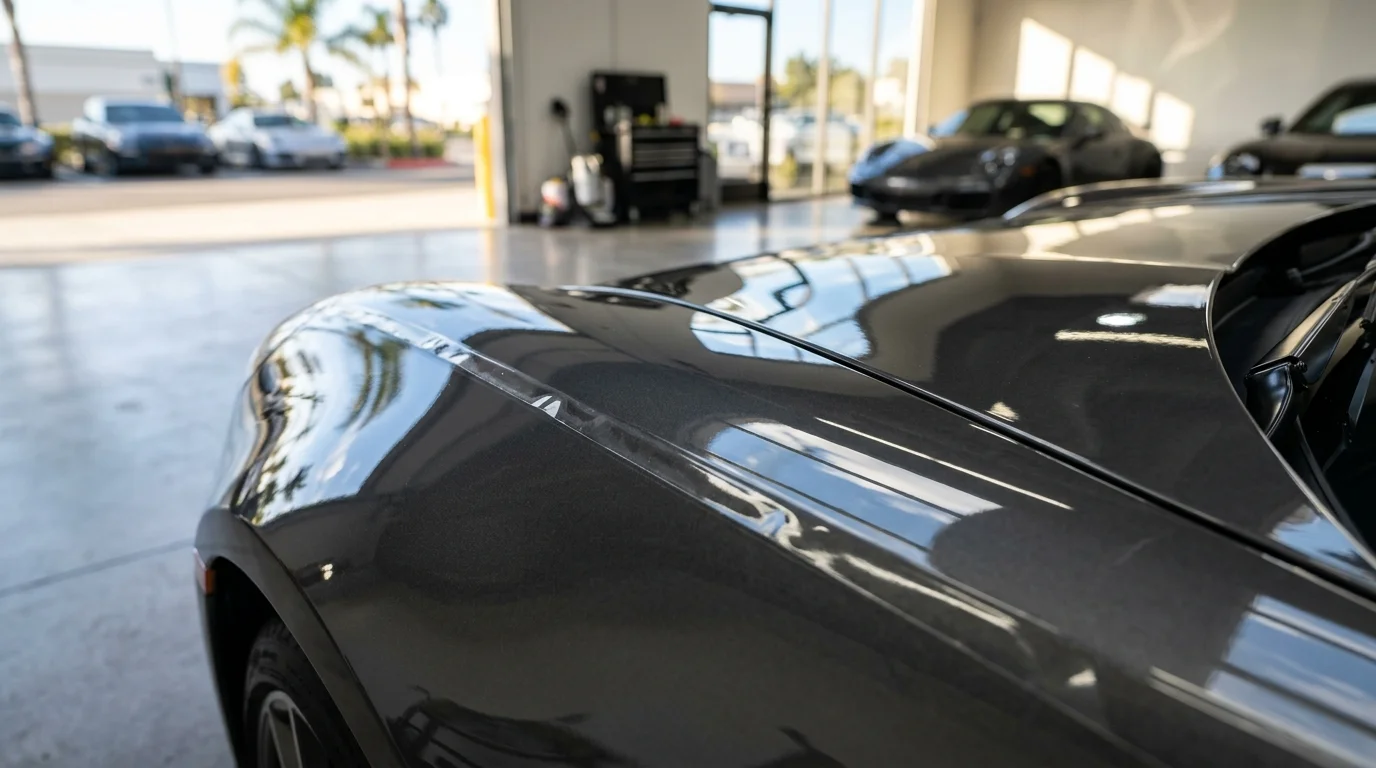
How coating and film serve different purposes
Paint protection film and ceramic coating aren’t interchangeable products. Film is a physical layer fitted over selected painted panels. Ceramic coating is a liquid product applied and cured on an exterior surface.
That difference matters when you combine them. The coating doesn’t expand the film’s coverage. If PPF covers only the bumper, hood, and mirrors, those remain the protected film areas. Coating over that package doesn’t turn it into full-body film.
Drivers also choose the two products for different reasons. PPF places material between the road and the painted panel. A ceramic coating changes the exposed surface and how it behaves during routine washing. Review our separate ceramic coating service and paint protection film service pages for a closer look at each option.
Think about the actual vehicle and its use. An Oceanside driver commuting on Interstate 5 may focus on the front-facing panels. Someone keeping a weekend car in La Jolla may care more about consistent appearance across painted and filmed sections. An East County owner may have another mix of parking, driving, and washing conditions.
Those scenarios don’t create one correct package. They help define which panels need film and which surfaces may receive coating. Our ceramic coating versus PPF guide explains the basic choice. Stacking the products is a separate decision involving exact materials and written instructions.
When applying coating over film may be considered
Coating over PPF may be considered when the installer confirms that the exact products belong together. A general statement that a coating is “safe for film” isn’t enough. Ask for the coating name, the film description, and the product maker’s current application guidance.
This approach can make sense during a coordinated protection package. The installer can identify which panels receive film, which painted areas remain exposed, and where the coating will go. That keeps “coating over PPF” from becoming a vague line on an estimate.
Another situation involves a vehicle with existing film. Perhaps a previous owner installed PPF, or a dealer arranged it before delivery. The film’s identity and history may be unclear. In that case, inspection comes before product selection. The pro should determine whether the film is in suitable condition and whether compatibility can be confirmed.
Don’t treat stacking as an automatic upgrade. More products don’t always mean a better fit. The useful question is whether each layer has a defined purpose on that particular vehicle.
San Diego driving patterns can shape that scope. A full-front package may suit one daily commuter, while another owner wants broader coverage. The right answer depends on the vehicle, existing surfaces, and intended care routine. Our full car protection package guide shows how coating and film can be discussed within one organized plan.
Before booking, ask the independent installer for a panel-by-panel scope. It should distinguish bare paint, existing film, new film, and coated surfaces.
Why film condition and product fit matter
Existing PPF needs a close inspection before anything goes over it. Look for lifting edges, trapped contamination, discoloration, surface damage, or sections that no longer sit cleanly. These observations don’t diagnose the cause, but they help the installer decide what needs attention first.
A coating shouldn’t be presented as a way to hide failing film. It won’t restore a loose edge or correct damage beneath the material. If the film has a visible problem, ask whether that section should be addressed before coating begins.
Product fit is just as important. PPF surfaces aren’t all identical, and ceramic products aren’t one universal formula. We couldn’t confirm one coating that’s appropriate for every available film. The installer and product makers should confirm the exact pairing.
Ask these questions before approving the scope:
- What film is installed on each panel?
- Can its identity be confirmed from prior paperwork?
- Which coating will be applied over the film?
- Does the coating maker provide instructions for that use?
- Does the film maker allow that coating or product category?
- Are any edges, seams, or damaged sections excluded?
- Will bare paint and filmed panels receive different preparation?
Get the answers in writing when possible. If the film can’t be identified, ask the pro how that uncertainty changes the recommendation. A small test area may be discussed, but it shouldn’t replace manufacturer guidance or written responsibility for the work.
This step is especially useful on used cars. Clear film can be difficult to notice during a quick walkaround. Inspect panel edges, door openings, mirrors, and transitions under clean lighting. Then let the independent pro assess the material in person.
What preparation should appear in the scope
Preparation should be specific enough to review before work begins. “Prep vehicle and apply coating” leaves too much unanswered. The scope should identify the surfaces, their condition, and the steps planned for each material.
Start with a panel map. It should show existing PPF, new PPF, exposed paint, and anything excluded from the job. This matters when coverage changes around hood edges, fenders, mirrors, bumpers, or doors.
The scope should also explain how the vehicle will be cleaned before application. Ask how the pro will handle residue, embedded contamination, seams, and film edges. If an existing protectant may be present, ask how that will be identified and handled.
Paint correction needs separate wording. A process intended for bare clear coat shouldn’t automatically be treated as suitable for film. Ask what correction, if any, is proposed for the painted areas. Then ask what preparation is planned for the PPF.
The order of work should be clear too. When new film and coating are included together, the installer should state which product goes on first. The written plan should also identify any required waiting stages. We don’t have one confirmed timing rule that applies to every film and coating combination, so the exact product instructions control.
Finally, request a handoff inspection. Check the vehicle under useful lighting before accepting it. Review seams, edges, transitions, and differences between filmed and painted panels. Note any concerns while the surfaces and written scope can be compared directly.
A detailed scope protects the decision from guesswork. It also gives the pro a clear record of what you approved.
What to confirm about care and written terms
Care instructions should match the installed products. Don’t rely on a generic ceramic coating sheet if some panels have PPF underneath. Ask for instructions covering both filmed and unfilmed areas.
Confirm the recommended washing method, cleaning products, and any restricted products or tools. Ask what should happen if an edge lifts, a panel needs body work, or one piece of film must be replaced. The installer should explain whether follow-up work changes the coating plan for that panel.
Written terms deserve the same attention. No universal film warranty length or ceramic coating lifespan has been confirmed for every product pairing. Your installer should identify the applicable written terms and explain who provides them.
Ask for these items:
- The exact coating and film used
- The panels covered by each product
- Product-specific care instructions
- Written product and workmanship terms
- Exclusions related to existing film
- The process for reporting a concern
- Any inspection or maintenance conditions
Keep the estimate, final invoice, product details, and care instructions together. Photos of film edges and panel coverage can also help document the finished scope.
Aftermarket products raise vehicle-warranty questions for some owners. Under the federal Magnuson-Moss Warranty Act, a manufacturer generally cannot void a warranty merely because an aftermarket product was used, absent a showing that it caused the failure. The FTC provides consumer information about warranties and aftermarket parts. That rule doesn’t decide a specific dispute, and causation remains fact-specific.
If a dealership, film maker, or coating maker gives different guidance, request it in writing. Don’t rely on a verbal assurance that every warranty remains unchanged.
When to call us
Call when you need an independent pro to inspect existing film, confirm product fit, or prepare a clear coating and PPF scope. Paint Shield SD matches San Diego County car owners with vetted, insured local pros.
Call us at (760) 400-6557 and we’ll connect you with a vetted, insured local pro.