Choosing car tint in Rancho Santa Fe takes more than picking a shade. Compare visibility, glare control, heat reduction, film construction, and the written quote. California also has different rules for each window position.
How Rancho Santa Fe driving and parking shape the choice
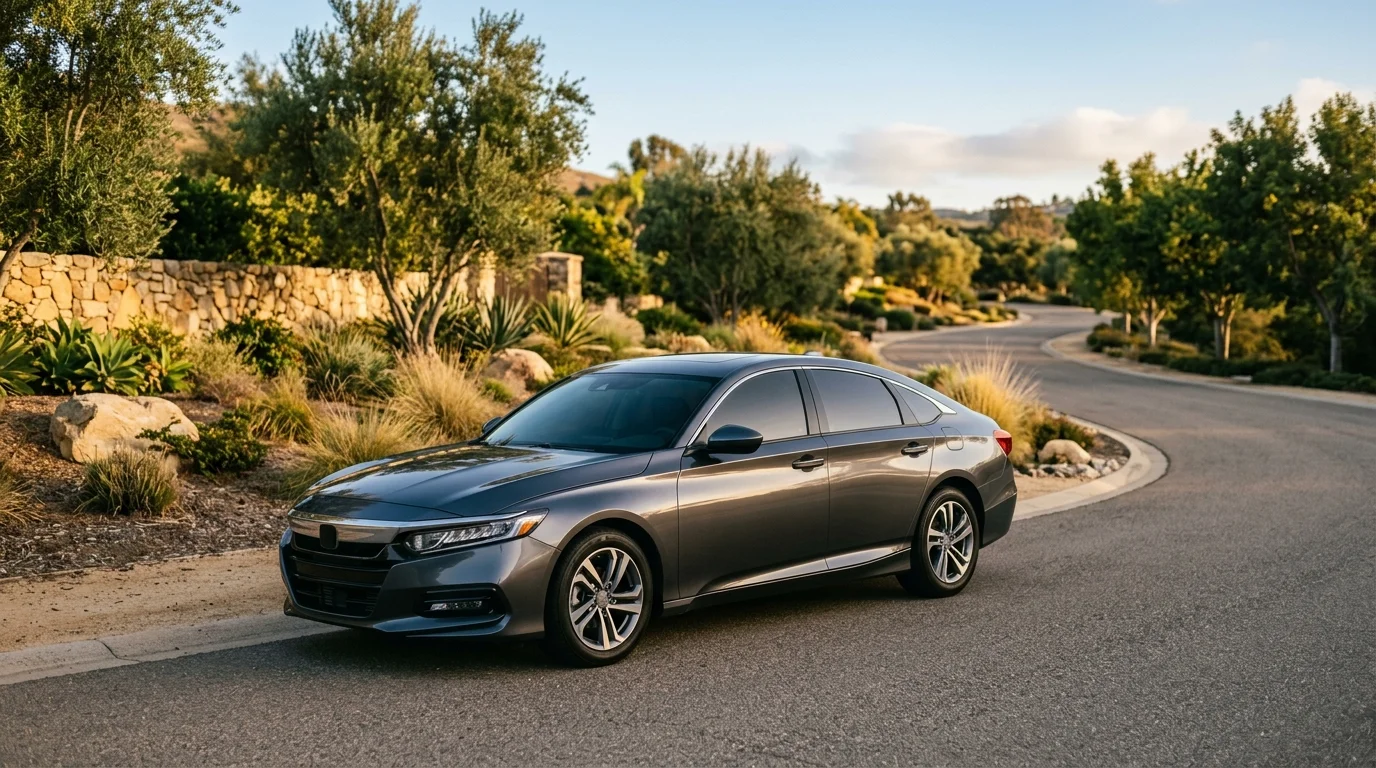
Start with how you actually use and park the vehicle. A car stored inside most days has different exposure than one parked in an open residential driveway. Note which windows receive direct sun and when the cabin feels hottest.
Driving patterns matter too. Trips along Via de la Valle can expose one side of the cabin to low-angle light. Del Dios Highway can bring changing glare as your direction and surroundings shift. Tell the installer when glare bothers you, rather than asking only for “dark tint.”
Also consider who drives the vehicle. A driver who regularly returns after dark may value a clearer view through the side windows. Someone making daytime trips may place more weight on heat and glare control. The right comparison starts with those routines.
Take a few photos of the car where it usually sits. Include the windshield, both front doors, and rear glass. These photos help the pro understand the vehicle before inspecting it. They don’t replace an in-person look, but they can make the first conversation more useful.
Window tint addresses the glass and cabin experience. It doesn’t replace exterior protection. If you’re considering several upgrades, compare tint with ceramic coating options in Rancho Santa Fe as separate parts of the plan. You can also review how window tint and ceramic coating work together before requesting quotes.
Paint Shield SD doesn’t install tint. We match Rancho Santa Fe drivers with vetted, insured independent local pros who assess the vehicle and perform the work.
How darkness, glare, and heat rejection differ
Darkness describes appearance and visible light transmission. It doesn’t tell you everything about heat control, glare, or film construction. Two samples that look similar may be presented for different performance goals. Ask the installer to explain each option without relying on shade names alone.
Start by viewing physical samples from inside a vehicle. Look through them toward bright pavement, shaded landscaping, and other cars. A wall-mounted sample can show color, but it can’t reproduce your driving position. Ask to compare the same samples from both inside and outside.
Glare is also personal. One driver may dislike sharp afternoon reflections. Another may care more about maintaining a lighter cabin. Explain where and when the problem occurs. Mention Via de la Valle, Del Dios Highway, or another route you use often. That gives the installer a real situation to work from.
Heat rejection isn’t the same as darkness. Tint can reduce interior heat and glare, but percentage performance claims aren’t approved for this site. Request the product documentation for the exact film being quoted. The installer should explain what its specifications mean for your vehicle.
Film construction matters when comparing options. Ceramic film avoids the signal interference that metalized films can cause. If your vehicle relies on connected devices, discuss that concern directly. Don’t assume every nonmetal option is otherwise identical.
Ask how each sample may affect your view after sunset. Sit in the driver’s seat if possible. Look toward mirrors, cross traffic, and unlit areas through the proposed shade. The goal isn’t simply the darkest appearance. It’s a combination you’re comfortable using during your normal Rancho Santa Fe driving.
For a broader overview of materials and the referral process, visit our window tinting service page.
What California rules require you to verify
California regulates window tint by glass position. Don’t treat one percentage as a rule for the entire vehicle. Don’t accept a shop’s “California legal” label without asking which window it describes.
Under California Vehicle Code section 26708, aftermarket film on the front side windows must have at least 88 percent visible light transmittance. The glazing and film together must also meet the 70 percent minimum light-transmittance standard in FMVSS 205. Those are separate measurements.
The rear window may be tinted only when the vehicle has outside mirrors on both sides. Those mirrors must be positioned to give the driver a view at least 200 feet behind the vehicle. Side windows behind the driver are exempt from the statute’s obstruction prohibition.
The windshield rule has its own wording. Transparent material is allowed only on the topmost portion. Its bottom edge must be at least 29 inches above the undepressed driver’s seat. The statute doesn’t state a general “top four inches” rule, so don’t use that shortcut.
These rules describe the statute, not whether a specific film is lawful on your car. Film, factory glass, application location, and the combined result all matter. Ask the installer how the proposed configuration will be measured. Request the measurement in writing when possible.
Rules and official interpretations can change. Check the current text through the California Legislative Information website before booking. For a closer explanation, read our guide to California window tint law in San Diego.
Be cautious with medical exemptions, certificates, or other exceptions mentioned during a sales conversation. This site hasn’t confirmed those details in its approved source record. Verify any claimed exception with the appropriate California authority before relying on it.
What the written quote should identify
A useful quote names the exact work. “Tint package” isn’t enough. It should identify every included window, the film construction, the selected shade, and the price for that scope.
Ask whether the windshield, front side windows, rear side windows, and rear glass are listed separately. This prevents assumptions about what a package name includes. It also makes competing quotes easier to compare.
The quote should address old film when applicable. Ask whether removal is included and what happens if adhesive or damaged film requires additional work. Don’t assume removal, cleaning, or disposal is part of the quoted installation.
For planning, approved tint ranges on this site are $300 to $700. Sedans generally fall within $300 to $500, while SUVs fall within $400 to $700. Vehicle size and the selected scope can affect the quote. Your installer must confirm the written price before work begins.
Ask for the exact film warranty in writing. Don’t rely on a spoken lifespan estimate or a product nickname. The document should identify who handles a claim, what conditions apply, and whether labor is addressed. Paint Shield SD doesn’t issue the warranty.
Look for practical details too. The quote should state the vehicle, glass areas, film selection, total price, and payment terms. It should also identify any exclusions discussed during the inspection.
Scheduling should be confirmed by the installer. Same-week scheduling is available for most services, but it isn’t guaranteed for every vehicle or film choice. Ask how long the installation is expected to take and when windows can be operated normally. The pro should confirm those instructions for the specific film.
Finally, compare identical scopes. A lower total may cover fewer windows or a different film construction. A clear line-item quote gives you a better basis than package names alone.
Questions to ask before booking
Bring the conversation back to your vehicle and driving habits. Good questions produce specific answers. They also reveal whether the recommendation fits Rancho Santa Fe use or follows a standard sales script.
Ask these questions before choosing an installer:
- Which windows are included in this quote?
- What film construction are you recommending, and why?
- What visible light transmission applies to each window?
- How will you check the factory glass and finished combination?
- Can I view the proposed film from the driver’s seat?
- How does this option address heat and glare without relying only on darkness?
- Could this film interfere with signals or connected devices?
- Is removal of existing film included?
- What preparation will the glass receive?
- Who confirms that the proposed placement follows current California rules?
- What warranty terms will I receive in writing?
- What aftercare instructions apply to this exact film?
- What could change the written price after the inspection?
Listen for answers tied to the actual glass position. Front doors, rear doors, rear glass, and windshield material don’t share one legal rule. A careful pro should distinguish them.
You should also ask who performs the installation. Paint Shield SD refers drivers to vetted, insured independent local pros. The car owner contracts with and pays the selected pro directly. Confirm the scope, price, scheduling, and warranty terms with that installer.
Don’t let a single shade sample decide the project. Review the legal measurements, film construction, included windows, and written terms together. That comparison gives you a clearer choice for car tint in Rancho Santa Fe.
When to call us
Call when you want a professional to compare tint with ceramic coating or paint protection film for the same vehicle. We’ll help match you with an independent local specialist who can inspect the car and confirm the written scope.
Call us at (760) 400-6557 and we’ll connect you with a vetted, insured local pro.