Window tinting and ceramic coating can fit into one appointment when the same specialist offers both. The important decision is how that specialist sequences the work, manages cure time, and writes the scope. Get those details before leaving your car.
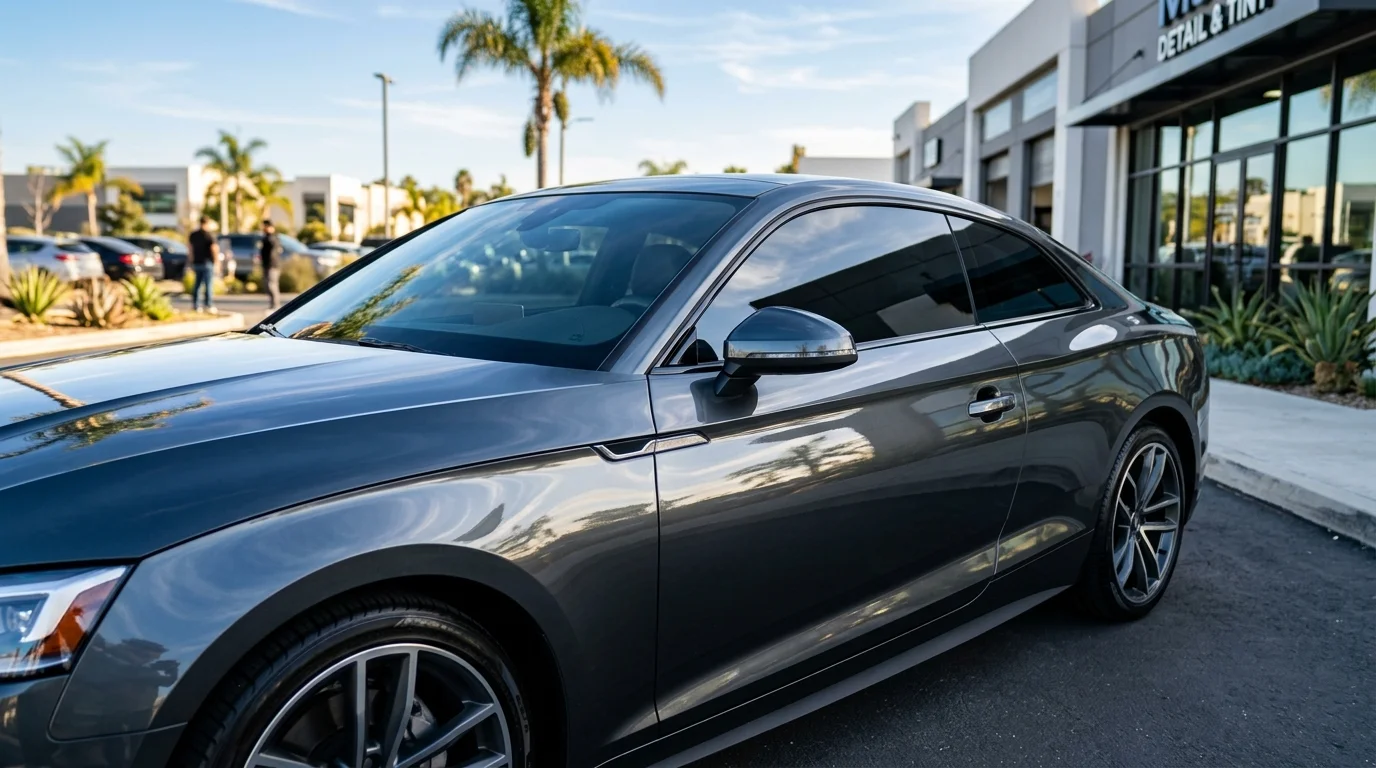
Why shops like doing both at once
Tint and coating protect different parts of your car. Window tinting addresses the glass and can reduce interior heat, glare, and UV exposure. Ceramic coating is applied to exterior surfaces under the scope agreed with your installer.
A shop offering both may prefer one coordinated appointment. The car can move through one intake, one condition review, and one written service plan. You also avoid arranging two separate drop-offs with different businesses.
That convenience matters across San Diego County. Someone commuting between Chula Vista and downtown may want fewer vehicle handoffs. The same applies to drivers traveling from Oceanside or Escondido for specialized work. A combined visit can simplify the logistics, provided the schedule is clear.
The services don’t automatically need to be bundled. A tint specialist may offer different film choices than a detailing specialist who focuses on paint preparation. The better option depends on the proposed products, the car’s condition, and the written scope.
Ask whether one specialist performs both services or whether separate technicians handle them. Confirm who will inspect the completed work and answer follow-up questions. Paint Shield SD matches car owners with vetted, insured local pros, but the car owner contracts with and pays the independent pro directly.
A combined visit should make the plan easier to understand. It shouldn’t make the details disappear inside one package name.
Cure times that decide the order of operations
There isn’t one confirmed cure schedule for every tint film and ceramic coating. Product instructions, shop conditions, preparation needs, and the chosen service scope can change the sequence. Your installer should confirm the order and cure guidance in writing.
Tint is installed on the inside surface of the glass. Ceramic coating work occurs on the exterior surfaces listed in the quote. Because the work areas differ, either service may appear first in the shop’s plan. The installer should explain why that order fits the products being used.
Ask how the specialist separates paint preparation from tint installation. The quote should also identify any waiting period between stages. Don’t rely on a general statement that the car will be “done” at a certain time. Ask what done means for pickup, washing, window operation, and normal driving.
The installer should provide product-specific aftercare instructions. Those directions matter more than a generic timeline found online. They also give you something concrete to follow after pickup.
Film choice and placement need attention before installation begins. Under California Vehicle Code 26708, aftermarket film on front side windows must have at least 88 percent visible light transmittance. The glazing and film together must also meet the 70 percent minimum light-transmittance standard stated in the law.
The rear window may be tinted only when the vehicle has outside mirrors on both sides. Those mirrors must give the driver a view at least 200 feet behind the vehicle. Side windows behind the driver are exempt from the obstruction prohibition.
Windshield material has a different rule. Transparent material is allowed only on the topmost portion, with its lower edge at least 29 inches above the undepressed driver’s seat. Our guide to California window tint law in San Diego explains these positions in more detail.
How long the car is actually out of your hands
A combined appointment may be planned across one to two days. That’s a general duration estimate, not a scheduling promise. Your installer must confirm the vehicle’s actual drop-off and pickup window.
The written plan should separate active work from waiting time. Ask how much time is assigned to vehicle intake, surface preparation, tint installation, coating application, inspection, and the initial cure period. If paint correction is proposed, that should appear as its own step.
Paint condition can change the scope. A clean-looking car may still need preparation before coating. The specialist should inspect the finish and explain what’s included before work starts. Don’t assume coating application and paint correction are the same service.
Pickup timing also needs a clear definition. The car may reach the shop’s pickup standard before every product reaches its final cured state. Your pro should explain any restrictions that continue after you receive the vehicle. Ask for those instructions in writing.
San Diego geography can turn a vague pickup estimate into a practical problem. A driver coming from Encinitas, El Cajon, or the South Bay needs a firm handoff plan before arranging transportation. Confirm whether the quoted timeframe starts at drop-off, after inspection, or after you approve any revised scope.
Same-week scheduling is available for most services, but it isn’t guaranteed for a particular car or package. Availability depends on the matched pro. Confirm the appointment date, expected return window, and any conditions that could extend the work.
What bundling does and does not save you
Bundling can save coordination. It can mean one appointment, one vehicle handoff, and one written plan. It doesn’t automatically mean a lower price.
No verified standard bundle discount applies across San Diego County. If a shop offers one, the quote should show exactly how it changes the price. Don’t accept an unexplained package total as proof of savings.
Approved market ranges provide a useful starting point. Window tinting typically runs $300-$700. The range is $300-$500 for a sedan and $400-$700 for an SUV. Ceramic coating typically runs $500-$3,000. Your installer must confirm the written price for your vehicle and chosen scope.
Those ranges shouldn’t be combined into a promised package price. The final quote can vary with vehicle size, tint coverage, film selection, exterior surface coverage, paint condition, and preparation. The pro needs to inspect the requested work and write the actual total.
Ask for separate tint and coating line items. The tint portion should identify every window included. The coating portion should identify covered surfaces and preparation. Any correction work should have its own description and price.
A clear breakdown also makes competing quotes easier to compare. One proposal may include paint preparation that another leaves out. Another may cover different windows or exterior surfaces. Package names alone won’t reveal those differences.
Ceramic tint can avoid the signal interference that metalized films can cause. However, don’t accept unsupported percentage claims for heat or UV performance. Ask the installer for the product information tied to the film in your quote.
Bundling works when the schedule and scope fit your car. A discount, if offered, should be a secondary consideration.
What to confirm in the written quote
Start with the tint scope. The quote should list the windows being treated and the film selected for each position. It should state the film’s visible light transmittance where applicable. That gives you something specific to compare with California’s position-based rules.
Don’t accept a blanket promise that every film is legal everywhere on the vehicle. CVC 26708 treats the windshield, front side windows, rear side windows, and rear window differently. The vehicle’s existing glazing also matters for the combined front-window result.
Next, review the coating scope. Ask which exterior surfaces are included. Confirm whether the proposed price includes cleaning, paint preparation, or correction. If the specialist recommends added preparation after inspection, request a revised written quote before approving it.
The schedule should name the planned order of operations. It should also state the expected drop-off and return window. Ask the installer to distinguish the pickup point from any product-specific curing or aftercare period.
Look for these details before signing:
- Tint film type and every covered window
- Ceramic-coated surfaces
- Paint preparation and correction, if included
- Separate prices for tint, coating, and added preparation
- Work order and estimated vehicle return window
- Written aftercare instructions for both services
- Any product or workmanship warranty offered by the installer
- The installer’s process for documenting a scope change
Your installer should confirm any film warranty in writing. Paint Shield SD doesn’t issue the warranty or perform the installation. The independent pro remains responsible for the work described in your agreement.
Photos can also help define the starting condition. Ask the specialist to document visible paint defects, glass damage, and existing film before work begins. That keeps the conversation focused on your actual car rather than a generic package.
A useful quote answers three questions: what’s being installed, what preparation is included, and when the car can be collected. If any answer remains vague, ask for clarification before approving the appointment.
When to call us
Call when you want a professional ceramic coating and paint protection film pro to review your paint, tint placement, and combined service scope. Call us at (760) 400-6557 and we’ll connect you with a vetted, insured local pro.