The better choice depends on whether protection coverage or visual change leads your project. Colored PPF combines a selected finish with PPF coverage, while color-change vinyl centers the appearance change and also protects the paint beneath. Compare the same panels, preparation, edge treatment, product details, and written price before deciding.
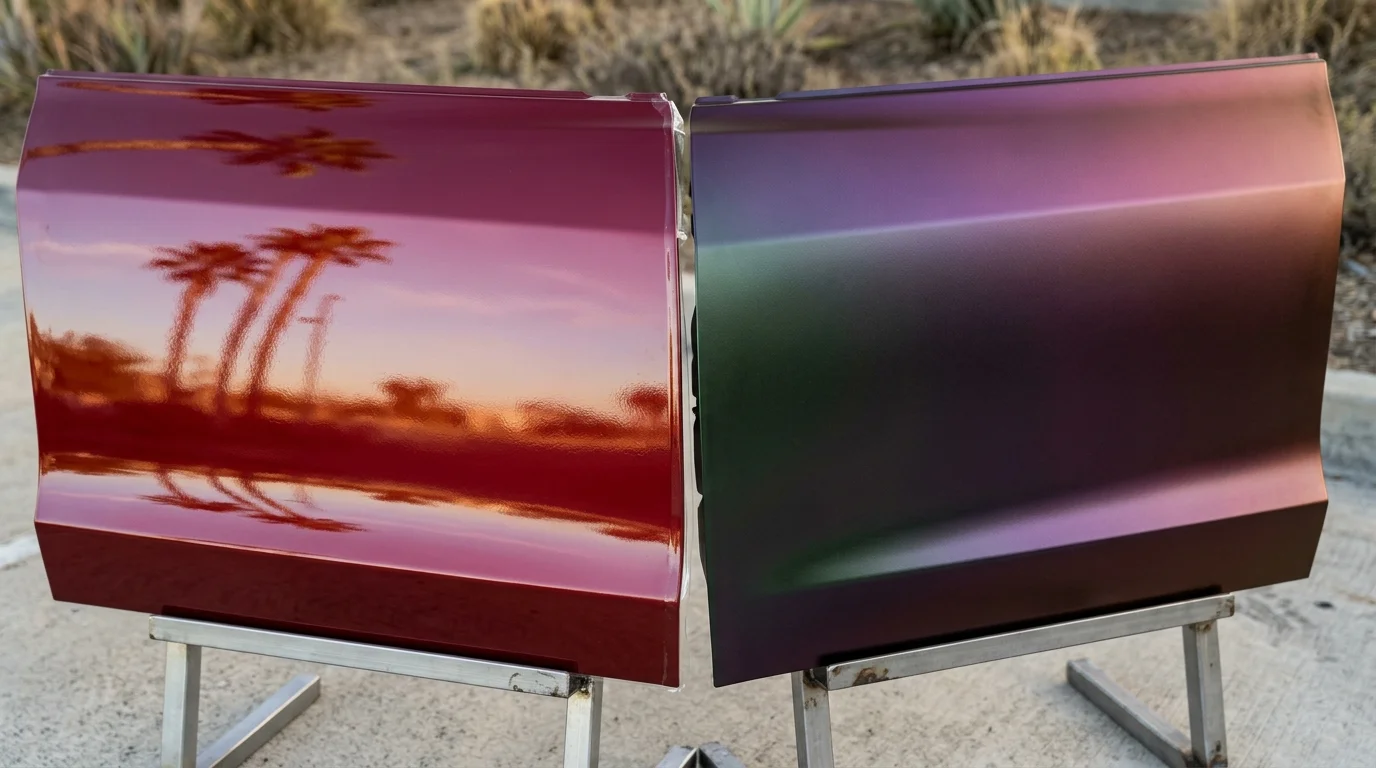
How colored film and vinyl wrap differ
Colored PPF and color-change vinyl can produce a similar first impression. Both place a new finish over the vehicle’s existing paint. Their project goals, however, aren’t identical.
Colored PPF is the protection-led option. You’re choosing PPF coverage and a visible finish together. The important decision isn’t only the color. It’s also which panels receive film, where the edges end, and how uncovered areas meet the new finish.
Vinyl wrap is the appearance-led option. It changes the visible color while protecting the paint beneath. Wraps are removable, but the existing paint still matters. Failing clear coat can lift when wrap material is removed. The installer should inspect the vehicle before recommending a plan.
That distinction helps narrow the first conversation. Start with paint protection film coverage if exposed painted panels are your main concern. Start with vinyl wrap and color change if the new appearance is driving the project.
Don’t compare two quotes using only their final totals. One may cover the full vehicle, while another excludes jambs, trim, or certain openings. One may require more preparation because of the paint’s condition. Ask each installer to mark the proposed coverage on photos or a vehicle diagram.
San Diego use also shapes the brief. A car parked near the coast in Carlsbad has a different daily setting than one garaged in Santee. A South Bay commuter may care most about the panels exposed during regular freeway travel. Tell the installer where the car stays, how it’s driven, and which panels matter most to you.
How appearance and protection shape the choice
Write down your priorities before looking at sample books. Put them in order. That keeps an attractive swatch from taking over a larger decision.
Colored PPF fits a protection-led brief when you also want a new visible finish. Ask the installer which panels the proposed package covers. A front-only layout, selected accent panels, and a full-body layout create very different results. Don’t assume a product name describes the actual coverage.
Vinyl fits a color-led brief when your main goal is changing the car’s appearance. A color-change wrap versus repaint comparison can help frame that broader decision. For this comparison, focus on the exact finish available from each installer rather than expecting one material category to look a certain way.
View a large sample against the vehicle whenever possible. A small swatch won’t show the whole relationship between body lines, trim, glass, and wheels. Look at it in direct daylight and shade. A finish can read differently under Carlsbad’s marine-layer light than it does during a bright El Cajon afternoon.
Gloss level also changes the impression. The same general color can look noticeably different across gloss, satin, and matte samples. Compare the physical products being quoted. Don’t approve a project from edited online photos alone.
Protection still needs a precise definition. Ask what areas receive PPF, which painted areas remain uncovered, and where transitions will appear. Film can’t prevent every type of damage, so request the product’s limitations in writing. The installer should explain what the selected film is intended to cover without turning that explanation into a blanket promise.
What existing paint condition can change
Film follows the surface presented to it. That makes the paint inspection part of the decision, not an optional step after choosing a color.
Vinyl wrap quality depends on the existing paint condition. Wrap adhesion can lift failing clear coat. Repainted panels, peeling clear coat, deep scratches, chips, and previous body repairs deserve close inspection before any material is ordered. Tell the installer what you know about the vehicle’s paint history.
Colored PPF also needs an in-person assessment. Don’t assume every panel is ready because the car looks good from several feet away. Ask the pro to identify visible defects, explain the proposed preparation, and note any areas where the product’s compatibility can’t be confirmed.
Inspect the vehicle clean and dry. Walk around it under strong, even lighting. Look along the hood, roof, bumpers, mirrors, and panel edges. Photograph damage before approving the work. Those photos give you and the installer a shared record of the starting condition.
Preparation can change the written scope. The pro may recommend separate paint work before film installation. If that happens, ask what’s necessary for adhesion and what’s an optional appearance improvement. Keep those items separated in the quote.
This matters across San Diego County because vehicles live very different lives. A car stored outside near Encinitas may present different surface concerns than a weekend vehicle garaged in Rancho Santa Fe. An East County daily driver may arrive with dust packed around trim and panel gaps. The installer still needs to assess the actual car rather than relying on its age or ZIP code.
Don’t use film to hide an unknown paint problem. Get a clear description of the surface first. Then choose the finish with a realistic understanding of what lies beneath it.
How mixed coverage affects the finished look
Clear and colored PPF can share one vehicle, but the plan needs deliberate boundaries. Mixed coverage works best when every transition has a reason.
One approach keeps the factory color visible on selected panels under clear PPF. Colored PPF then creates contrast elsewhere. A roof, mirror, hood, or another defined body section may serve as a visual boundary. The exact layout depends on the vehicle and the products available from the installer.
The challenge is the finished relationship between surfaces. Clear film shows the paint below it. Colored film introduces a separate finish. Adjacent areas can differ in color, gloss, texture, or reflected light. That difference may be intentional, but it shouldn’t be a surprise.
Ask to see clear and colored samples together on your vehicle. Check them near the trim, glass, badges, sensors, and panel gaps included in the plan. Review the car from several angles. Look at it outdoors and inside the installation space.
A mixed project also needs a coverage map. Have the installer identify every clear panel, colored panel, uncovered panel, and transition. Ask how exposed edges and openings will be handled. If vinyl accents are part of the same design, list those separately too.
Our guide to colored and matte PPF finishes provides more context on finish selection. For this decision, concentrate on how the materials meet across one specific car.
San Diego drivers should also consider where the vehicle is usually seen. A subtle contrast may be more apparent under direct inland light. A darker finish may read differently in a shaded parking structure in Downtown San Diego. Approve the combination on the real vehicle, not from memory or a phone screen.
What product details to compare in writing
A useful quote describes the project, not just the product category. Ask both installers for enough detail to compare the proposals line by line.
The written scope should name the material type and finish. It should list every covered panel. It should also describe preparation, edge treatment, excluded areas, care instructions, and the process for addressing a damaged section. If mixed clear and colored coverage is planned, request a simple panel map.
Ask who provides the product warranty and the workmanship warranty. Your installer should confirm the film warranty in writing. Don’t rely on an assumed warranty period, coverage term, or removal promise.
The FTC’s warranty guidance provides useful context for aftermarket products. A vehicle manufacturer generally can’t void a warranty merely because an aftermarket product was used, absent a showing that the product caused the failure. Causation is fact-specific, so that principle isn’t a promise about any individual dispute. Ask the vehicle manufacturer or warranty administrator about your specific situation.
Price comparisons also need matching scopes. Approved broad market ranges place PPF projects between $800 and $8,000. Full vinyl color-change wraps typically range from $2,500 to $6,500, depending on vehicle size and film. These ranges can overlap because the quoted coverage and preparation differ. Your installer confirms the written price.
Before signing, compare these points:
- The exact panels and openings included
- Clear, colored, or vinyl material on each panel
- Surface preparation and separately quoted paint work
- Edge, trim, badge, and sensor treatment
- Care instructions and product limitations
- Written product and workmanship warranty terms
- The process and price basis for future section work
Getting specific now reduces mismatched expectations later. It also makes two very different proposals easier to compare fairly.
When to call us
Call when you need a professional Ceramic Coating and Paint Protection Film pro to inspect the paint, compare samples, or plan mixed film coverage. Getting matched costs you nothing, and the car owner contracts and pays the independent pro directly. Call us at (760) 400-6557 and we’ll connect you with a vetted, insured local pro.