Ceramic coating for an RV in San Diego County can make routine washing easier. It can also add a protective surface over a properly prepared finish. Temecula sits outside San Diego County, so confirm the service location before planning a job stored or quoted there.
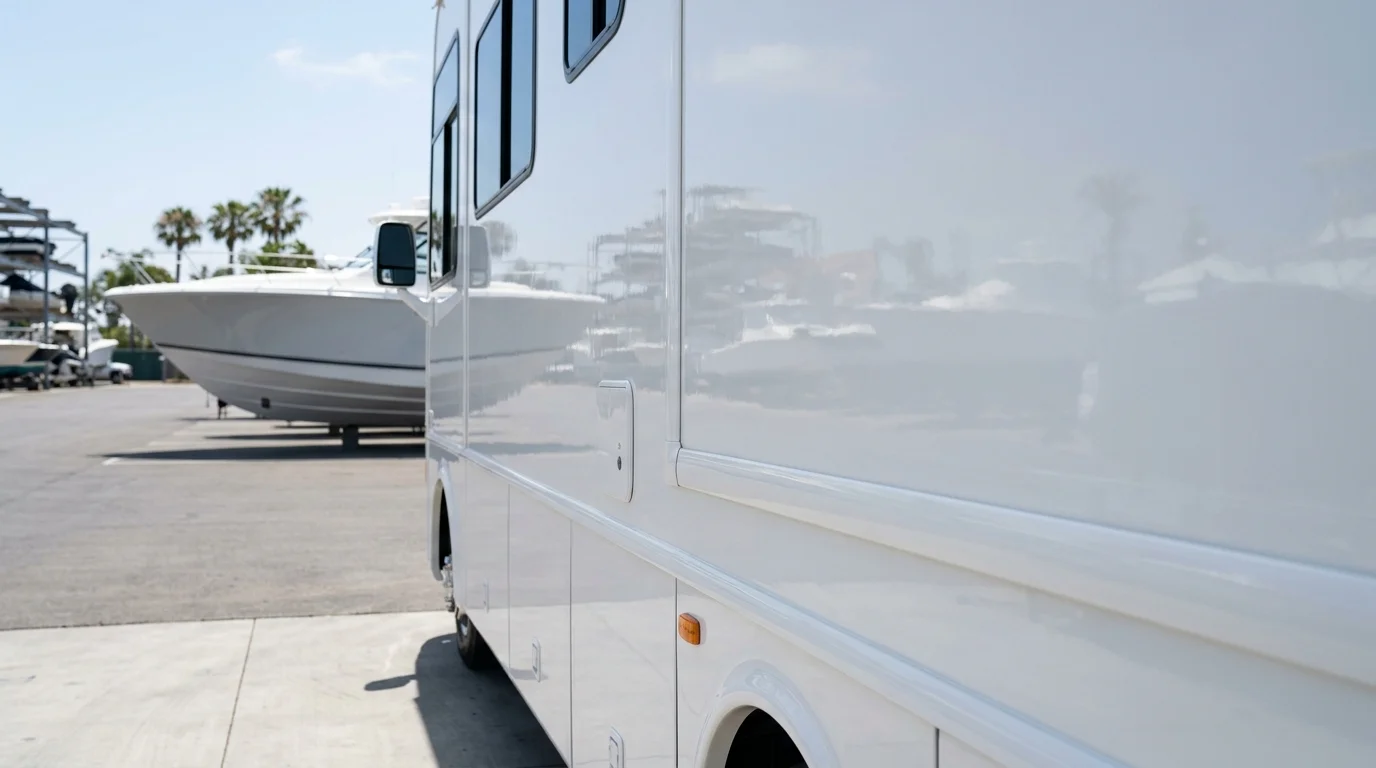
Why gelcoat and RV sidewalls need their own inspection
Many RVs and boats don’t have the same finish as a passenger car. Their exteriors may combine gelcoat, painted fiberglass, molded plastic, metal, vinyl graphics, and sealants. Each material reacts differently to sunlight, moisture, cleaning products, and outdoor storage.
Gelcoat is a resin-based surface commonly found over fiberglass. Long periods outside can leave its outer layer dull or chalky. Dark streaks, mineral deposits, and faded graphics can make the change more visible. A coating won’t reverse that existing damage by itself.
Large sidewalls also receive uneven exposure. One side may face afternoon sun every day. Another may sit beside landscaping or beneath trees. The roof, front cap, and upper corners can take a different beating than lower panels. That’s why an installer should inspect the complete rig before recommending a process.
Temecula adds hot inland exposure to the equation. Owners traveling south on Interstate 15 may store their rigs in Fallbrook, Escondido, or elsewhere in inland North County. Boats used around Oceanside, Mission Bay, or San Diego Bay face a different mix of moisture and salt residue.
The material matters more than the vehicle label. A fiberglass travel trailer, painted motorhome, aluminum trailer, and gelcoat boat shouldn’t receive one generic prep plan. The pro needs to identify each surface first. That inspection helps determine what can be polished, what should be protected, and what may need separate care.
What coating does for a rig that lives outside
Ceramic coating creates a water-repelling surface over prepared material. Dirt and residue may release more easily during washing. That can matter on an RV or boat, where cleaning every square foot already takes considerable effort.
A coating isn’t a repair product. It won’t restore failed clear coat, rebuild damaged gelcoat, or secure peeling decals. It also doesn’t stop dents, rock chips, or scraping from branches. Those limits should be clear before anyone quotes the job.
For a rig stored outdoors, the practical benefit is easier ongoing care. Road film, dust, bugs, bird droppings, and water spots still need attention. The coating gives the owner a maintained surface rather than a maintenance-free exterior.
Coverage also deserves a careful discussion. Some owners want only the painted sidewalls and front cap. Others ask about the roof, graphics, windows, wheels, or interior shower surfaces. A pro should confirm which materials are suitable and list every coated area in writing.
Our marine and RV coating service connects owners with vetted, insured local specialists. For a smaller tow vehicle or daily driver, the standard ceramic coating service may be the better match.
Aftermarket products can raise questions about a factory warranty. Under the federal Magnuson-Moss Warranty Act, a manufacturer generally cannot void a warranty merely because an aftermarket product was used, absent a showing that the product caused the failure. The Federal Trade Commission is the authority for that general rule. Any actual warranty dispute depends on its facts, so review the written warranty and speak with the responsible company.
Prep is most of the job on a neglected surface
Coating results depend heavily on the surface underneath. Applying a coating over oxidation, embedded residue, or failing graphics doesn’t solve those problems. It can make later correction more difficult.
The process usually starts with a detailed inspection. The pro identifies gelcoat, painted panels, trim, sealants, decals, and damaged areas. They’ll also look for chalking, staining, water spots, scratches, adhesive residue, and previous products.
Cleaning comes next, but a large rig may need more than a basic wash. Bugs collect across the front cap. Black streaks can run from roof edges. Boats can hold mineral and salt residue around hardware and waterlines. Lower trailer panels gather road grime that shouldn’t be sealed beneath a coating.
After cleaning, the specialist decides whether polishing or paint correction is appropriate. Mild dullness may respond differently than heavy oxidation. Thin graphics and aging clear coat require care. The owner should receive a clear explanation before aggressive correction begins.
Ask the pro to separate cleaning, correction, and coating in the written scope. That makes competing quotes easier to compare. One quote may cover coating only. Another may include extensive surface restoration that accounts for most of the labor.
Photos help with an initial conversation, but they don’t reveal every defect. Lighting, panel temperature, and camera processing can hide chalking or texture. The final process should follow an in-person inspection.
A neglected surface may not be ready for coating during the first visit. The pro may recommend correction first or exclude failing material. That isn’t a poor result. It’s better than placing a coating over a surface that can’t support it properly.
Size, storage, and what drives the price
No verified RV-specific price range appears in the approved claims for this site. The installer sets the price after reviewing the rig. Ask for the current total in writing before approving work.
Size is only the starting point. A tall motorhome can require different access than a low travel trailer. Slide-outs, ladders, awnings, roof fixtures, windows, rails, decals, and storage doors interrupt large panels. Each edge adds cleaning and application work.
Condition often affects the quote more than length alone. A newer trailer kept indoors may need limited correction. An older RV stored uncovered near Temecula may have oxidation, baked-on residue, or faded graphics. A boat kept near the coast may need extra cleaning before its surface can be assessed.
Storage affects the job in two ways. First, it shapes the finish before coating. Second, it determines where the work can happen. The pro needs enough room to reach the upper panels and move around the vehicle. They’ll also confirm whether the selected location suits the preparation and application process.
Ask these questions when comparing written quotes:
- Which exterior materials are included?
- Are the roof and front cap included?
- Does the quote cover washing and surface decontamination?
- What correction or polishing is included?
- Are decals, windows, wheels, or metal trim excluded?
- What care instructions come with the completed job?
- Which product warranty applies, and can the installer provide it in writing?
Don’t compare totals until the scopes match. A sidewall-only quote isn’t equivalent to full exterior preparation and coating. The cheapest number may simply cover less area.
Paint Shield SD doesn’t set the installer’s rate. We match owners with local pros, and the owner contracts with the selected pro directly. For rigs based in Temecula, confirm whether the pro accepts work outside San Diego County or whether the vehicle must be brought south.
Maintenance between coatings
A coated RV, trailer, or boat still needs regular cleaning. Waiting until residue becomes stubborn can turn a simple wash into a correction project. Follow the installer’s written instructions for the specific coating and surfaces.
Start with gentle washing. Use clean tools and a product the installer approves. Work on manageable sections so soap and water don’t dry across a large panel. Temecula’s inland heat can shorten that working window, especially on dark sidewalls.
Coastal owners face a different pattern. Salt residue can settle on boats and rigs stored near the ocean. Our guide to ceramic coating and San Diego’s coastal salt air explains why prompt, consistent washing matters near the coast.
Inspect trouble spots during each wash. Pay attention to the front cap, roof edges, window seals, graphics, lower panels, and areas beneath awnings. Bird droppings, tree sap, bug residue, and mineral deposits shouldn’t sit longer than necessary.
Avoid assuming every panel can take the same cleaner. Gelcoat, vinyl graphics, plastic trim, metal, glass, and coated paint may need different products. Ask the installer before using abrasive compounds, strong chemicals, or automatic brushes.
Storage choices still matter after coating. Covered storage can reduce direct exposure, but the coating still needs care. If you use a fitted cover, follow its manufacturer’s instructions and keep the contact surfaces clean. Trapped dirt can move against the finish.
Watch how water behaves during washing, but don’t treat beading as the only test. Residue or an incompatible product can change surface behavior. If cleaning no longer restores the finish, ask the installer to inspect it. They can determine whether it needs decontamination, maintenance, polishing, or another coating application.
Keep the written invoice, product details, excluded areas, and care instructions together. Those records prevent guesswork when another specialist later evaluates the rig.
When to call us
Call when oxidation, staining, mixed exterior materials, or failing graphics make the prep difficult to judge. California doesn’t issue a CSLB contractor license for automotive detailing or coating, so look for a vetted, insured specialist instead of a claimed trade license. Call us at (760) 400-6557 and we’ll connect you with a vetted, insured local pro.