A boat owner comparing wax with ceramic coating is choosing a care routine, not just a shine. Wax fits someone who wants a removable finish that can be refreshed as conditions change. A boat ceramic coating puts more weight on preparation, product-specific upkeep, and confirming which surfaces the formula can cover.
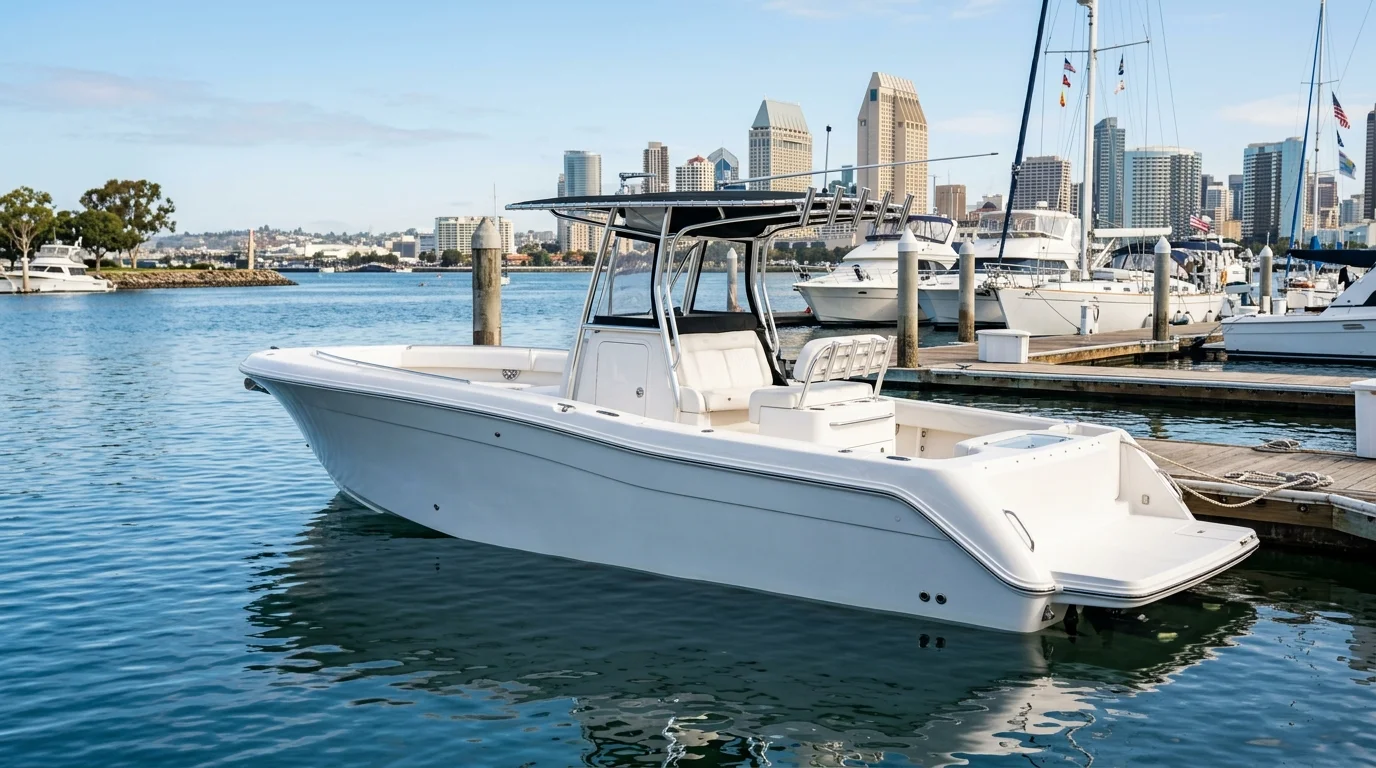
What wax and ceramic coating each do
Wax and ceramic coating are both surface-protection choices. They aren’t the same process, though.
Wax is applied over a prepared surface and buffed to the desired finish. Owners can inspect it and refresh it when the condition calls for more attention. That makes wax a familiar choice for someone comfortable repeating the application process.
Ceramic coating involves a more preparation-dependent service. The marine pro evaluates the existing finish, completes the agreed preparation, and applies a suitable coating system. The product maker’s instructions then govern application, initial care, and maintenance.
The visual result alone shouldn’t decide between them. Gloss can hide questions about surface condition, product suitability, and future upkeep. Water behavior also doesn’t prove that every part of the boat has adequate protection. Ask the pro to explain what they’ll apply, where they’ll apply it, and how you’ll maintain it.
Don’t treat either option as a repair for oxidation, scratches, stains, or failing paint. Those conditions belong in the surface evaluation. If correction is recommended, it should appear separately in the written scope.
Our marine and RV coating overview explains how we connect owners with independent local pros. The site’s broader ceramic coating service guide covers the referral process and questions that apply across vehicle types.
Paint Shield SD hasn’t confirmed a universal lifespan, marine price range, or warranty term for these products. Those details vary by product and job scope. The independent pro should confirm the written price. The product maker and pro should also document maintenance and warranty terms.
How salt spray, sun, and storage change the decision
A boat kept around San Diego Bay has a different routine from one stored inland. The right choice depends on where exposure happens and how easily you can maintain the boat.
For a boat kept at a San Diego Bay slip, ask how the proposed finish should be cleaned after salt spray and dockside exposure. Confirm whether the maintenance plan requires access to water, shade, or a specific washing method. The marina’s access rules may also shape when and where work can happen.
Mission Bay often brings another pattern: launching, retrieving, towing, and storage between outings. That puts the trailer, lower hull, topsides, and deck into separate maintenance conversations. A single label like “ceramic coated” doesn’t explain which areas were included.
At Oceanside Harbor, owners should make the same distinction between a boat kept in the water and one returned to a trailer. Ask the pro how waterline exposure changes the proposed scope. Don’t assume an above-water product belongs below the waterline.
Inland trailer storage near places such as Poway or El Cajon changes the checklist again. The boat may spend more time around uncovered parking, dust, covers, or limited wash access. Discuss those exact conditions instead of asking which product is “better” in general.
Owners comparing storage plans may also find useful questions in our guide to ceramic coating for RVs and trailers in San Diego. A boat requires its own surface decisions, but access, outdoor storage, and maintenance planning still matter.
Wax can fit a routine built around regular inspection and refreshing. Ceramic coating can fit an owner ready to follow the chosen product’s care instructions. Neither choice removes the need to inspect the finish after use and storage.
Which boat surfaces need separate answers
A boat isn’t one uniform panel. Before comparing wax with boat ceramic coating, divide the vessel into actual materials and exposure zones.
-
Topsides and smooth hull surfaces: Identify whether each area is gelcoat, paint, metal, or another finish. Ask the product maker and marine pro to confirm suitability for that exact material.
-
The waterline and submerged hull: Don’t assume a coating proposed for the topsides also belongs underwater. If the hull has antifouling paint or another existing treatment, request written compatibility guidance before approving anything.
-
Decks and textured non-skid areas: A glossy hull recommendation shouldn’t automatically carry onto textured walking surfaces. Ask what will be applied, how the original texture will be treated, and what maintenance the maker specifies.
-
Glass and clear plastic panels: Windshields, portlights, and clear enclosures may use different materials. Have the pro identify them before recommending a product. Written maker guidance matters more than a broad claim about “all marine surfaces.”
-
Metal hardware and trim: Rails, cleats, fittings, and painted metal can require different preparation. Ask whether they’re included or excluded. Don’t accept “the whole boat” as the only scope description.
-
Vinyl, canvas, rubber, and seals: These materials shouldn’t be bundled into the hull treatment without confirmation. Ask whether they need a separate product or should remain untreated.
-
Trailer surfaces: A trailer isn’t automatically part of a boat quote. Request a separate list for painted parts, wheels, hardware, and any surfaces the pro won’t cover.
A clear proposal maps products to surfaces. It also names exclusions. That’s more useful than choosing ceramic coating or wax based on a single polished sample.
Product compatibility couldn’t be confirmed as a universal rule. Marine finishes and coating formulas differ. Ask the independent pro to identify the exact product, then check its written instructions with the maker before work begins.
What preparation and maintenance belong in the quote
Compare equal scopes before comparing ceramic coating with wax. A low-detail quote may omit preparation that another proposal includes.
Start with the condition report. It should identify oxidation, stains, scratches, old product residue, failing paint, and areas needing closer inspection. Ask which conditions can be improved during preparation and which will remain visible.
The preparation line should describe the agreed cleaning and surface work. If polishing or correction is proposed, have the pro separate it from the protective application. That makes the quote easier to evaluate and helps prevent assumptions about what the final finish will conceal.
Next, request a surface map. It should list the hull areas, deck sections, trim, glass, metal, trailer parts, and other included zones. Exclusions should be just as clear. “Exterior coating” leaves too much room for different interpretations.
The application plan should also address the work setting. Ask whether the boat must be hauled out, trailered, covered, or positioned in a particular way. Confirm who handles marina access, keys, water, power, and moving the vessel. Those responsibilities can affect the scope even when no price is quoted online.
Maintenance instructions belong in writing. Ask which wash products and tools the maker specifies. Request guidance for salt residue, mineral spots, isolated damage, and future inspections. Any waiting period before washing, launching, covering, or exposing the boat to water must come from the chosen product’s instructions.
Warranty language also needs a written source. Ask who provides the warranty, what surfaces it covers, and what maintenance records it requires. Paint Shield SD doesn’t provide the coating warranty.
The car-focused guide to ceramic coating versus wax in San Diego offers another comparison framework. Don’t carry its surface assumptions onto a boat. Marine materials, waterline exposure, and storage require a separate written plan.
You contract with and pay the independent pro directly. Have that pro confirm the complete written price before approving the job.
Questions to ask a marine coating pro
Bring specific questions to each estimate. They make different proposals easier to compare.
- Which surfaces did you inspect, and what condition did you find?
- Is the proposal for wax, ceramic coating, or separate products by surface?
- What exact preparation is included before application?
- Are polishing and surface correction included or quoted separately?
- Which areas are excluded from the written scope?
- What product will be used on each included material?
- Where can I read the product maker’s compatibility instructions?
- Does the proposal cover areas below the waterline?
- How will existing paint or antifouling treatment affect the recommendation?
- What will be applied to textured deck and non-skid areas?
- Are glass, clear plastic, metal, vinyl, canvas, and rubber handled separately?
- What written maintenance steps should I follow after the service?
- What does the maker say about washing, launching, and covering the boat?
- Who provides any warranty, and what are its written conditions?
- Who handles marina access, haul-out arrangements, or trailer positioning?
- What is the complete written price, including preparation and exclusions?
Ask the pro to explain why the recommendation fits your actual routine. A boat kept in San Diego Bay may need a different plan than one launched at Mission Bay and stored inland. An Oceanside Harbor slip also raises different access questions from driveway trailer storage.
Vetting and insurance establish a referral baseline. They don’t replace product-specific answers. The pro and product maker should confirm compatibility, care instructions, timing, and warranty terms in writing.
If two quotes use different preparation steps, they aren’t direct comparisons. Put the scopes side by side before choosing. The stronger proposal is the one that clearly identifies surfaces, preparation, exclusions, maintenance, and responsibility.
When to call us
Call when your boat has mixed surfaces, visible finish problems, or an unclear maintenance history. We can match you with an independent pro who can inspect the boat and prepare a surface-specific quote. Call us at (760) 400-6557 and we’ll connect you with a vetted, insured local pro.