Searching color PPF near me in San Diego County means you want a local booking, not a brochure. You want an independent installer who can change the finish and still take rock chips on I-5 or I-15. Paint Shield SD matches you with vetted, insured local pros. You contract and pay the installer directly.
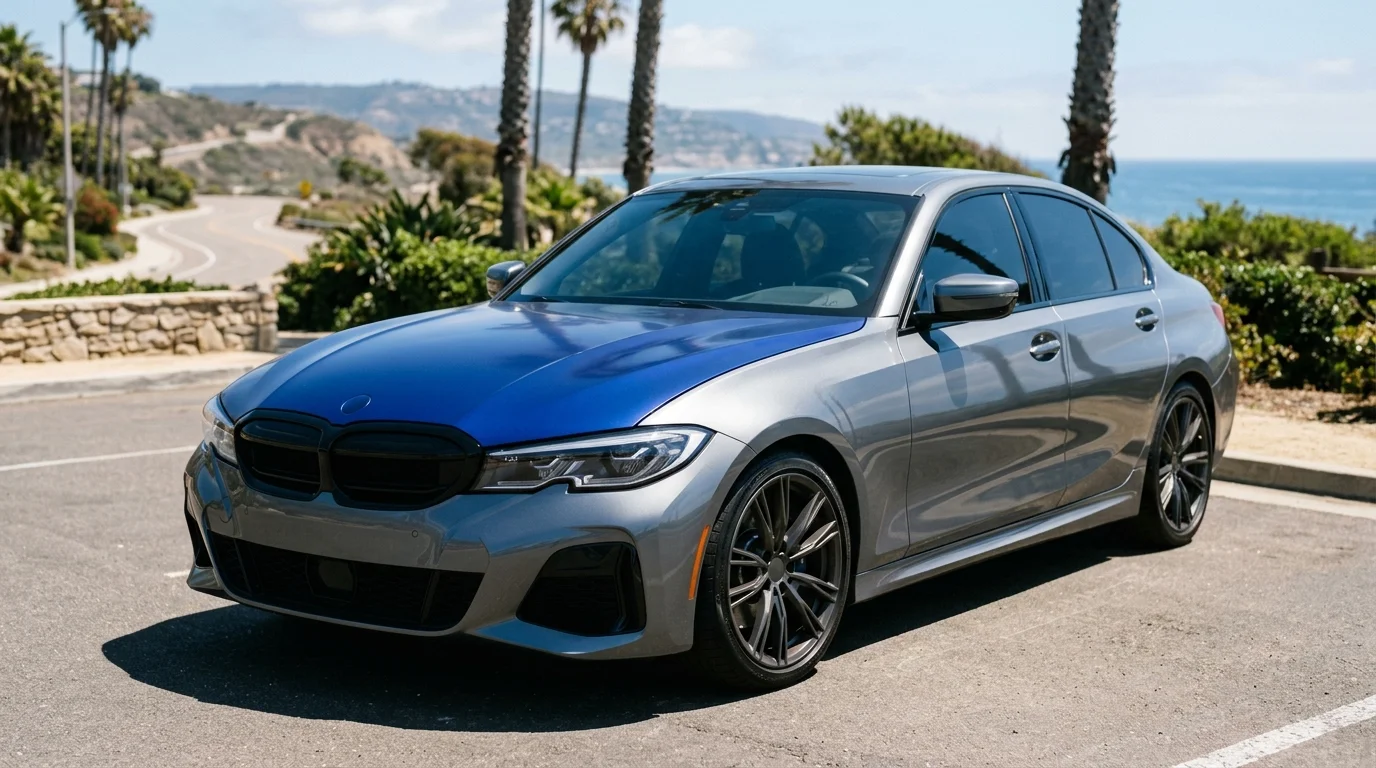
What colored PPF is meant to change
Colored paint protection film is still film. It is a flexible thermoplastic layer that sits on paint and takes chips, light scratches, and road debris. The difference from clear film is appearance. Pigment or a finished top coat is built into the sheet, so the panel reads as a new color or a new sheen instead of showing factory paint through a clear layer.
That is the job it is meant to do. One material for look and impact. It is not a respray. It is not a promise that every panel will match from across a parking lot unless coverage is planned that way. Short of full-body work, factory color still shows somewhere. Hood film next to an uncovered fender will read as two finishes. Your installer should say that out loud before anyone cuts a kit.
Clear film leaves the factory color visible and hides less of what sits under it. Colored film hides more of the paint beneath, which is useful when you want a different look. It is also a reason the pro inspects first. Chips, sanding marks, and failing clear coat do not disappear just because the film is opaque. They still affect adhesion and removal later.
A vinyl wrap color change is a different product. Vinyl is removable and it protects the paint beneath in the sense that it covers it. It is not the same impact layer as PPF. Some owners stack a wrap for color and clear film on the nose. That is two materials, two installs, and two removals later. Colored PPF is the one-layer version of that idea. If you are still deciding which path fits, read colored PPF vs vinyl wrap before you lock a date.
Some PPF uses urethane with a self-healing top coat for light surface scratches. Heat can help those marks relax. It does not heal punctures, deep damage, or the paint under the film. Do not treat self-healing as a forever claim. Ask the installer to show the product sheet for the film on the quote, not a nickname.
If you ask about 3M as a film family, put that request in writing. The quote should name the actual product the shop will install. This site stays brand-agnostic beyond that. The product tier your installer recommends is the one that belongs on the paperwork.
How finish, coverage, and paint condition affect the job
Finish, coverage, and paint condition move the job more than a color name. Gloss, satin, and matte are not interchangeable once they are on the car. A flat or satin face cannot be buffed shiny later without changing the look. Edges, seams, and wash habits show more on those finishes. Gloss hides some of that. It also shows swirls in coastal sun. Your installer should dry-fit or map seams on a matte or satin build with extra care, because a visible seam is a seam in the wrong place.
Coverage is the next fork. A bumper-only job protects the panel that eats the most debris. Factory color stays on the hood, fenders, and mirrors. Full-front work usually adds hood, fenders, mirrors, and often headlights, depending on the kit. Full-body work is the only tier that reads as a true color change from across a lot. Encinitas beach parking and an El Cajon I-8 commute do not need the same map. A car that lives on I-15 through Escondido and Poway takes a different chip pattern than a car that mostly sits in a La Jolla garage and runs the coast. Do not let a shop copy one package onto every body style.
Paint condition decides whether film belongs on the car at all. Professional removal on healthy factory paint is the normal case. Failing clear coat, a previous respray, or open chips is the risk case. Wrap and film adhesion can lift failing clear coat. Colored film can hide a chip from five feet away and still fail at the edge later. That is why the installer inspects in person. Paint correction may come first if swirls, water spots, or light scratches in the clear coat would telegraph or affect prep. Correction is an assessment and a quoted stage, not a guaranteed result.
Existing wax or coating can interfere with film adhesion. The film installer specifies prep. Do not assume a coated car is ready for colored PPF. If you already have a coating, say so. If you want a coating after film, that is a separate product. Ceramic coating is a liquid polymer that bonds to a surface and creates a hard, hydrophobic layer. It resists water, UV, and light chemical exposure. It does not absorb rock chip impacts. Some owners add coating over film for wash ease. Ask for a product made for film, and get the care sheet in writing. San Diego owners comparing that extra layer can start on our San Diego ceramic coating page.
Finish samples under shop lights lie a little. Walk the car outside. Coastal gray and inland noon sun are not the same light. A stealth sheen that looks even in Kearny Mesa can flash a different tone in Mission Beach glare. Bring the car, not only photos.
Why San Diego sun and parking change the choice
San Diego County is not one climate. Coastal north county sits in marine layer, salt air, and tight beach parking. Inland north county and the I-15 corridor run hotter and drier. East County and the South Bay bake in lots with less shade. The same colored film can be the right product in all of those places. The coverage and the care plan should not be identical.
Rock chips follow the freeways. I-5 through the coastal cities throws debris at the bumper, hood leading edge, and mirrors. I-15 does the same with a longer inland heat soak. Parking adds a different hit: door dings, cart nicks, and tight structure columns in downtown and coastal garages. Colored film on a bumper will not save an uncovered door in a Horton Plaza or UTC stall. If you park tight every day, talk about doors and rear corners, not only the nose.
Sun is the other local factor. Year-round UV is real here. Film can help the paint under it by covering it. That is not a numbered fade rating, and it is not a reason to skip washing. Bug splatter, bird droppings, and tree sap still need a prompt wipe, especially after a parked day in Escondido or El Cajon heat. Leave contaminants to cook and you can stain a finish. How bad that gets depends on the film, the contaminant, and the time. Your installer should say what the care sheet actually covers.
Wash method matters more on colored and matte film than people expect. Avoid brush tunnels. Manufacturer care advice can discourage pressure and automatic washing because of edge lifting. Do not copy a pressure setting or a first-wash wait from a forum. Follow the installed product care sheet for soap, timing, and whether a touchless wash or a pH-neutral hand wash is listed. For a flat finish, ask whether polish and wax are banned. Many are.
Headlights and lamps are a separate question. Colored body film is not a verdict on smoked or colored lamp film. California Vehicle Code 25950 sets color rules for emitted light and reflectors. Unlighted housing color can differ from the light that actually leaves the lamp, as long as the emitted color still matches the statute. Never treat a shop sample as a legal finding for a given lamp. Keep lamp film on its own line item.
If you want gloss, depth, and easier washing without changing color, clear PPF plus a coating may fit better than colored film. If you want a new color you can later remove, colored PPF and vinyl are the two honest paths. Gloss versus matte is covered in colored and matte PPF finishes. Use that page for sheen. Use this page to book.
What a written quote should identify
A useful quote is a map, not a teaser. Paint protection film in San Diego is typically quoted in a wide band of $800 to $8,000 depending on vehicle size and how much of the car is covered. Your installer confirms the written price. Colored film sits in that same service family. Do not treat a bumper number you saw on another site as your number. Full vinyl color-change wraps typically run $2,500 to $6,500 depending on vehicle size and film, with partial wraps and chrome delete typically $250 to $1,500 by scope. Those ranges are for comparing paths. They are not a shop’s promise until they are on paper.
Ask the quote to name, in plain words:
- Vehicle, year, and body style, including options that change bumper and mirror shapes.
- Finish: gloss, satin, matte, or another sheen the shop can actually source.
- Coverage by panel, not only a package nickname. Bumper, partial hood, full hood, fenders, mirrors, rockers, and full body are different jobs.
- What stays factory color. If the roof, jambs, or door edges are out, say so.
- Film family and product name, including a 3M request if that is what you asked for.
- Prep: wash, decontamination, and whether paint correction is included or extra.
- Edge plan: trimmed on the face, wrapped, or tucked where the body allows. Panel removal should be a yes or no, not a shrug.
- Sensor, camera, and radar cutouts on the quoted car.
- Install window as a hedged range. Full-body PPF is typically 3 to 5 days for a standard vehicle. That is an expectation. The installer confirms it. Same-week scheduling is available for most services. That is not a same-day arrival claim.
- Film warranty in writing, plus what the shop will do if an edge lifts. No thickness in mils, and no year figure copied from a brochure, unless the product sheet is attached.
- Aftercare sheet: first wash, chemicals, and whether a coating on top is included, optional, or declined.
Getting matched through Paint Shield SD costs you nothing. The in-person look and the written quote from the installer you choose also cost you nothing. You pay that installer for the work. For a line-by-line read of what usually sits inside a film number, see what PPF prices include.
A federal note belongs on the paperwork conversation, not as legal advice. Under the Magnuson-Moss Warranty Act, enforced by the FTC, a vehicle manufacturer generally cannot void a warranty merely because an aftermarket product was used, absent a showing that the product caused the failure. Causation is fact-specific. Do not treat film as a blanket warranty shield.
Questions to ask an independent installer
Book the walk-around with the person who will own the install, or with someone who can bind the quote. Independent, vetted, insured local installers do this work. Paint Shield SD does not. Your questions should force specifics.
Ask where the car will sit during the job, and whether it stays indoors overnight. Colored film and dust do not mix. Ask who trims sensors and how they mask cameras. Ask to see a seam plan on your bumper, not a generic photo. Ask how they will handle a two-tone or a wide fender flare if your car has one.
Ask what happens if they find failing clear coat after the wash. A good answer is pause, show you, and requote. A bad answer is we will bury it. Ask how removal is supposed to go on healthy factory paint, and what they will not promise on a respray. Ask whether they want the car coated after film, and which product they will put on this film. Compatible maintenance toppers only.
Ask how they want you to wash after pickup, in this county. Coastal cars pick up salt and morning moisture. Inland cars pick up dust and mineral spots from irrigation. The care sheet should match that, not a national slogan. Ask who you call if an edge lifts after a brush tunnel you were told to avoid. Get that name on the quote.
Bring three photos if you cannot leave the car: nose in sun, a fender at door-gap height, and the bumper from a low three-quarter. Note your commute. I-5 daily, I-15 daily, or mostly neighborhood streets. Note where you park. Street in South Park is not a Carlsbad driveway. Coverage should follow that story.
If the shop will only quote from a package menu and will not name panels, keep looking. If they will not put the film name and the warranty on paper, keep looking. You can get colored PPF in San Diego County. The booking quality is the difference between a color change you can live with and a two-tone you did not mean to buy.
When to call us
Call when you want colored film quoted as a real install, with finish, panels, and paint condition on paper, not a color name and a hope. A professional ceramic coating and paint protection film pro should inspect the car, confirm the product, and write the price before any film is cut. Call us at (760) 400-6557 and we’ll connect you with a vetted, insured local pro.