A full PPF can have a clear gloss, matte, satin, or colored finish. That gives you choices beyond keeping the factory shine. The decision affects the car’s appearance, care routine, and the questions you should ask before installation.
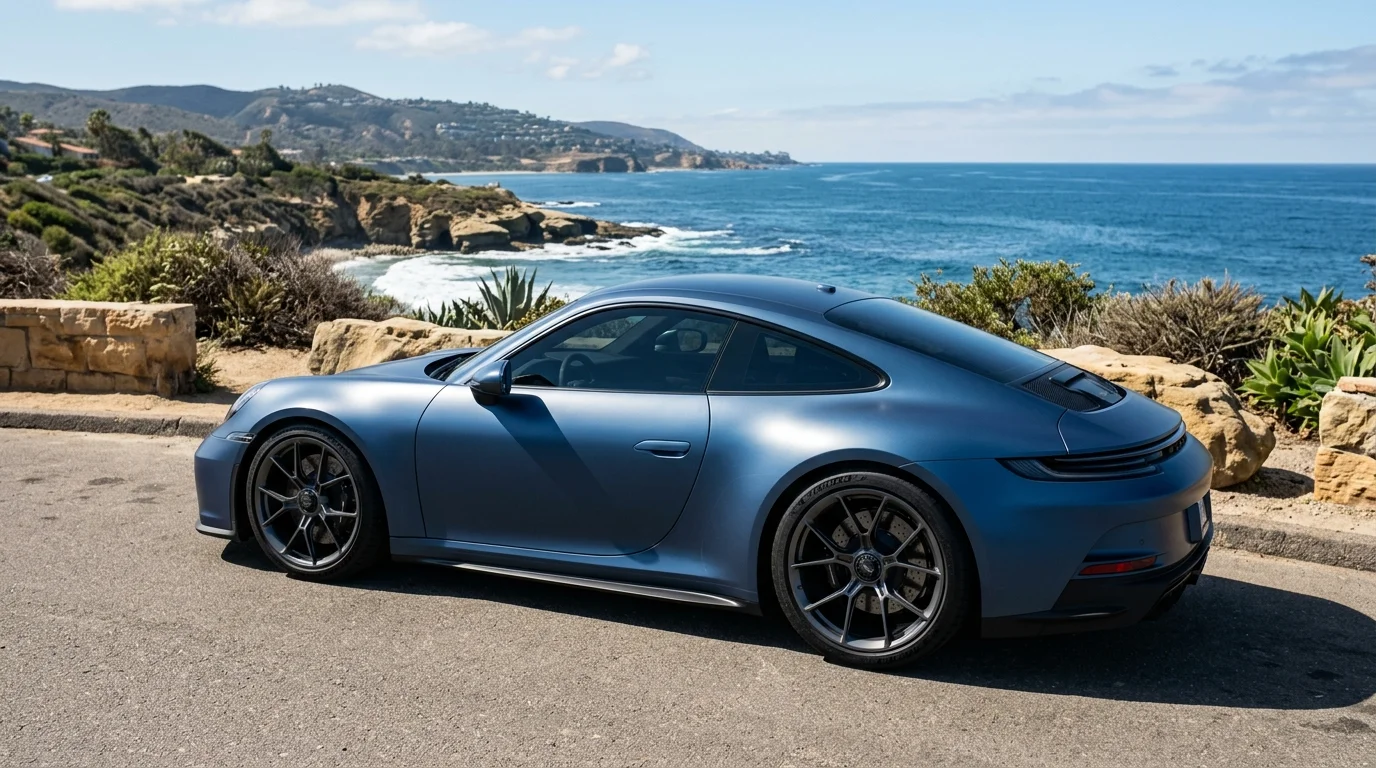
Gloss, matte, and satin film over the same paint
Clear gloss film keeps the factory color and reflective look dominant. It’s the familiar choice for owners who like their current paint. The finish can still look different across curved panels, sharp body lines, and trim. Ask to see a completed vehicle and a sample over paint similar to yours.
Clear matte film changes how the same paint reflects light. A glossy dark blue can take on a flatter, muted appearance. Metallic paint may also look different once reflections become softer. The original paint hasn’t changed color, but the visible finish has.
Satin sits between gloss and matte. It retains some reflection without producing the mirror-like appearance of gloss. Film makers and installers may describe finishes differently, so don’t choose from a label alone. Compare physical samples outdoors and under shop lighting.
San Diego light makes that sample check useful. A finish seen during an overcast Encinitas morning can look different during a bright afternoon in El Cajon. Look at the sample from several angles. Check it beside plastic trim, glass, wheels, and uncovered details.
Coverage also changes the decision. A full-body finish creates one visual treatment across painted panels. Partial coverage may leave an intentional contrast or an unwanted mismatch. Our guide to full-front versus full-body PPF in San Diego explains how those coverage choices differ.
Before choosing, ask the installer to identify the finish in writing. The written proposal should also identify covered panels and excluded pieces. That keeps “full” from becoming an unclear description once the work begins.
Colored film vs a vinyl color change
Colored PPF and vinyl can both change a car’s appearance. They aren’t interchangeable buying decisions. Colored PPF suits an owner who wants a new finish while making paint protection central to the project. A vinyl wrap is commonly selected when the color change itself leads the decision.
Vinyl wraps are removable and protect the paint beneath. Their outcome still depends on the paint’s condition. Wrap adhesion can lift failing clear coat, so an inspection matters before either a partial or complete color change. You can compare that route on our vinyl wrap and color change service page.
Colored PPF can be considered for a brand-new car. New ownership doesn’t remove the need for a paint inspection. Ask the installer to check every panel before film goes on. Confirm whether the car has repainted areas, dealer-installed accessories, adhesive residue, or visible paint defects. Any correction or preparation should appear in the written scope.
Don’t select between PPF and vinyl from a color photo alone. Ask for an installed sample showing texture, sheen, and edge appearance. Confirm which exterior pieces will remain their original color. Mirrors, door handles, badges, roof sections, and lower trim can affect the finished design.
A full-body PPF package may be the better comparison when consistent coverage matters most. The installer should confirm the product tier, installation scope, written price, and film warranty. Paint protection film ranges already approved for this site run from $800 to $8,000, depending on coverage and the installer’s written quote. Full vinyl color changes typically run from $2,500 to $6,500, depending on vehicle size and film. Those ranges don’t replace a vehicle-specific proposal.
What matte film demands of your wash routine
Matte and satin finishes reward a deliberate wash routine. Products that add gloss can work against the appearance you selected. Polishes, glazes, waxes, and drying aids shouldn’t be assumed compatible. Ask the installer which products are approved for the specific film.
Get those care instructions before booking, not after pickup. A useful written care sheet should answer several practical questions:
- Which wash soap should you use?
- Are automatic car washes acceptable for that film?
- Which spot remover can touch the finish?
- Can you use a spray sealant or drying aid?
- How should you handle bird residue and tree sap?
- Who should inspect a stain, scuff, or lifted edge?
That list matters across San Diego County. A car parked near Mission Bay faces a different daily setting than one stored in a Rancho Bernardo garage. An I-5 commuter may also wash on a different schedule than a lightly driven weekend car. Describe where the vehicle parks and how often it travels before accepting a care plan.
Matte film can also make inconsistent product use more noticeable. Treating one panel differently may change how it reflects beside the others. Use the same approved process across the covered area. Don’t experiment on a prominent section first.
Ask how the installer wants you to document a concern. Photos taken in shade and direct light can show different details. If an edge lifts or a patch changes appearance, stop applying new products until the installer reviews it. The installer can decide whether the issue calls for cleaning, correction, or film replacement.
The goal isn’t a complicated shelf of supplies. It’s a repeatable routine matched to the actual film. Keep the written product and warranty guidance with the vehicle records.
Mixing finishes on one car
A car doesn’t need one finish everywhere. Gloss body panels can be paired with a satin roof. Matte paint protection film can sit beside gloss trim. A colored body treatment can also leave a factory-colored roof or accent panel exposed.
The strongest combinations follow existing body lines. A roof edge, spoiler, mirror cap, or hood contour gives the finish change a clear boundary. Ending a finish in the middle of an uninterrupted panel can look accidental. Ask the installer to mark each transition on photos before approving the design.
Color matters at those transitions. Black gloss trim beside black satin film won’t reflect light the same way. Painted plastic, bare plastic, glass, and film also have different surfaces. View the proposed combination in person whenever possible.
San Diego drivers often see their cars under several kinds of light in one trip. Downtown parking structures, coastal cloud cover, and open inland roads can reveal different contrasts. A small sample board helps, but it can’t show every curve. Ask for examples of comparable panel shapes, without relying on claims about a different vehicle’s exact result.
A mixed-finish plan also needs a clear coverage map. The proposal should name each protected panel, exposed panel, and accent piece. It should state whether badges and trim are removed, covered, or worked around. Those decisions belong to the matched installer and vehicle owner.
Restraint usually produces a clearer design. Pick one main finish and use the second as an accent. If three or four treatments are under consideration, request separate mockups. That makes each option easier to judge before film is ordered or applied.
Reversibility and what the paint looks like underneath
Reversibility shouldn’t be treated as a promise about future paint condition. The starting surface matters. Stable factory paint, a repainted panel, and failing clear coat don’t present the same removal question. An installer needs to inspect the car before making a recommendation.
Tell the installer about known bodywork, paint repairs, touch-up paint, and replacement panels. If you don’t know the history, say that plainly. Ask whether the inspection found texture changes, peeling clear coat, or other visible concerns. Those observations should be documented before installation.
Film removal is also professional work. Don’t assume every panel should be stripped with the same method. Ask who handles removal, what the process includes, and how existing paint concerns affect the plan. Your installer should confirm those details for the actual vehicle and film.
No one can guarantee today exactly how every covered panel will appear years later. You can reduce uncertainty by recording the starting condition. Take dated photos in even light. Include panel edges, bumpers, mirrors, badges, and any existing damage. Keep the installation proposal, care instructions, and written film warranty together.
Owners of new vehicles sometimes worry that adding an aftermarket product automatically voids the factory warranty. Under the federal Magnuson-Moss Warranty Act, a manufacturer generally can’t void a warranty merely because an aftermarket product was used, absent a showing that the product caused the failure. The FTC provides consumer guidance on warranties and aftermarket parts. That principle isn’t a promise that a specific dispute will be covered, since causation is fact-specific.
Your final paint outcome begins with an honest inspection. If an installer sees failing clear coat or uncertain repairs, ask for that concern in writing. You can then compare proceeding, changing the coverage, or addressing the paint first.
When to call us
Call when you’re comparing gloss, matte, satin, or colored full-body PPF and need a professional inspection. The detailing specialist can review your paint, coverage plan, finish samples, and written care requirements.
Call us at (760) 400-6557 and we’ll connect you with a vetted, insured local pro.