Three layers, different jobs
Carnauba wax, paint sealant, and ceramic coating all make paint look better and add some protection. The similarity mostly ends there. They work by different mechanisms, last different lengths of time, and suit different use cases. Searchers comparing ceramic coating vs sealant are in the right place: sealant sits in the middle of that stack, and it is covered below.
The short version: wax is a short-term sacrificial layer that needs reapplication. Ceramic coating is a longer-term treatment with product-specific maintenance. Professional ceramic coating costs $500-$3,000. Your installer confirms the written price and care schedule.
What carnauba wax does
Carnauba wax is a plant-derived natural wax that fills and smooths the surface of clear coat, adding gloss and creating a temporary sacrificial layer that contaminants interact with before reaching the paint. It is soft, flexible, and beautiful under incandescent light. Concours judges love the warm, slightly amber depth that high-quality carnauba creates.
What wax does not do: it does not permanently bond to the clear coat. It sits on the surface and wears away with washing, UV exposure, heat, and time. How quickly that happens depends on the product, storage, exposure, and washing.
Regular waxing is a real maintenance habit, not a set-and-forget protection layer. For detail-oriented owners who enjoy caring for their cars and reapplying wax, it is a legitimate approach. Other owners may prefer a longer-term option with less frequent reapplication.
What synthetic paint sealants do
Paint sealants are synthetic products intended to last longer than traditional carnauba wax. Their actual durability and compatible top products depend on the specific system, so compare written product guidance rather than assuming every sealant can be layered the same way.
Sealants still require reapplication. Ask how the quoted product should be maintained for the way the vehicle is stored and washed.
What ceramic coating does differently
Ceramic coating is designed to bond to a prepared clear coat rather than sit on the surface like traditional wax. The exact chemistry, curing, maintenance, and removal process depend on the selected product, so the quote should name it.
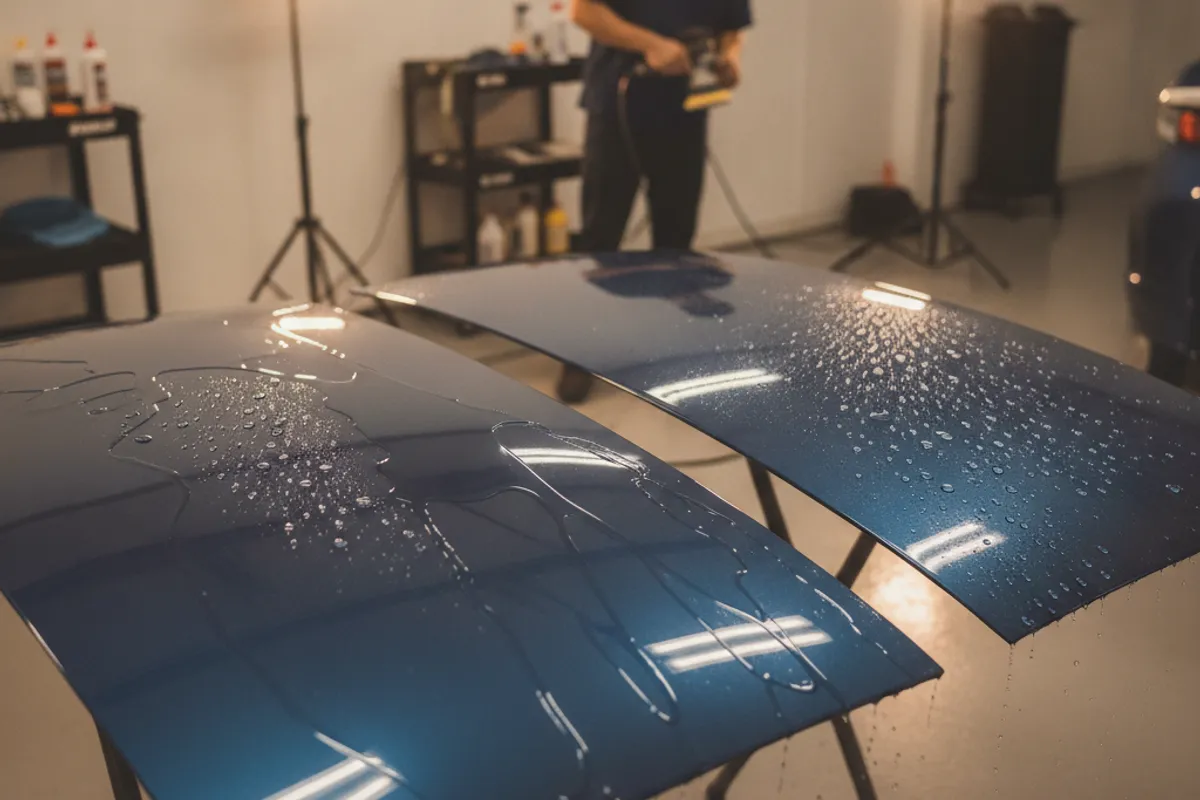
The practical reasons owners choose a coating are water behavior, easier routine cleaning, and a more durable sacrificial surface than wax. The exact result and how long it lasts depend on the product, preparation, exposure, and washing.
For a coastal car, compare how often each option must be reapplied and what the manufacturer says about contamination and water spots. A coating can make routine washing easier, but it does not make salt or mineral deposits harmless.
The cost comparison over time
Wax is cheaper upfront and it is a recurring cost. Product is inexpensive, and paying a detailer to reapply it as it wears is where the money adds up over the period you own the car.
Professional ceramic coating costs $500-$3,000. Any maintenance service is quoted separately by scope. Your installer confirms the written price after looking at the vehicle. Whether coating comes out ahead over the years you keep the car depends on what you would otherwise spend or do to maintain wax. Use your own numbers rather than a generic projection.
For owners who enjoy waxing their own cars and see it as hobby time, the math is different. For everyone else, compare the coating quote with the actual reapplication cost and effort over the period you expect to keep the car.
When wax still makes sense
There are legitimate situations where wax is the right answer. Older vehicles where the paint condition does not warrant the investment of coating. Cars you are keeping short-term before a sale or trade-in. Vehicles where you enjoy the maintenance process and want to engage with the car that way. Classic or collector cars where owners have philosophical preferences for traditional care methods.
If a coated car needs extra gloss for an event, use only a topper the coating manufacturer identifies as compatible. Product systems differ, so do not assume a carnauba wax is suitable.
Check compatibility before layering products
Do not layer wax, sealant, or a booster over a ceramic coating unless the coating manufacturer or installer identifies it as compatible. An incompatible topper can change the coating’s water behavior and make it harder to judge the coating’s condition. Ask for the product name and written care directions used for your installation.
Frequently asked questions
Is ceramic coating better than wax?
Ceramic coating is the longer-term option and generally requires less frequent reapplication, while wax has a lower upfront cost and is easier to renew. The better choice depends on your budget, maintenance habits, and how long you plan to keep the car.
How often do I have to wax versus coat?
Wax requires repeating as it wears away. A professional ceramic coating has product-specific care and inspection requirements. Ask for both schedules in writing before comparing their cost.
Can I put wax over ceramic coating?
Only if the coating manufacturer identifies the wax or topper as compatible. Otherwise, follow the written coating-care instructions.
Is ceramic coating worth it for a daily driver?
It can be if easier routine washing and less frequent reapplication matter enough to justify the upfront cost. It still needs maintenance and does not provide impact protection. See is ceramic coating worth it for the full purchase test.
Does wax or coating protect against rock chips?
Neither. Both are thin surface layers with no meaningful impact resistance, and chip protection requires paint protection film.
Which is better for a coastal car in La Jolla or Coronado?
Ceramic coating can suit an owner who prioritizes easier routine cleaning and a longer-term treatment. Wax can suit an owner who prefers a lower upfront cost and regular reapplication. Neither makes salt or mineral deposits safe to leave on the paint.
For more on what professional ceramic coating service covers, see the ceramic coating service page. To connect with a vetted, insured installer in San Diego County, call (760) 400-6557. Paint Shield SD matches San Diego car owners with vetted local shops.