A chip sitting against the black band at the windshield’s edge is not the same call as a pit in the middle of the glass. You cannot settle windshield chip near edge repair from a phone photo in a Mission Valley parking lot. An independent glass professional has to see that spot on the car.
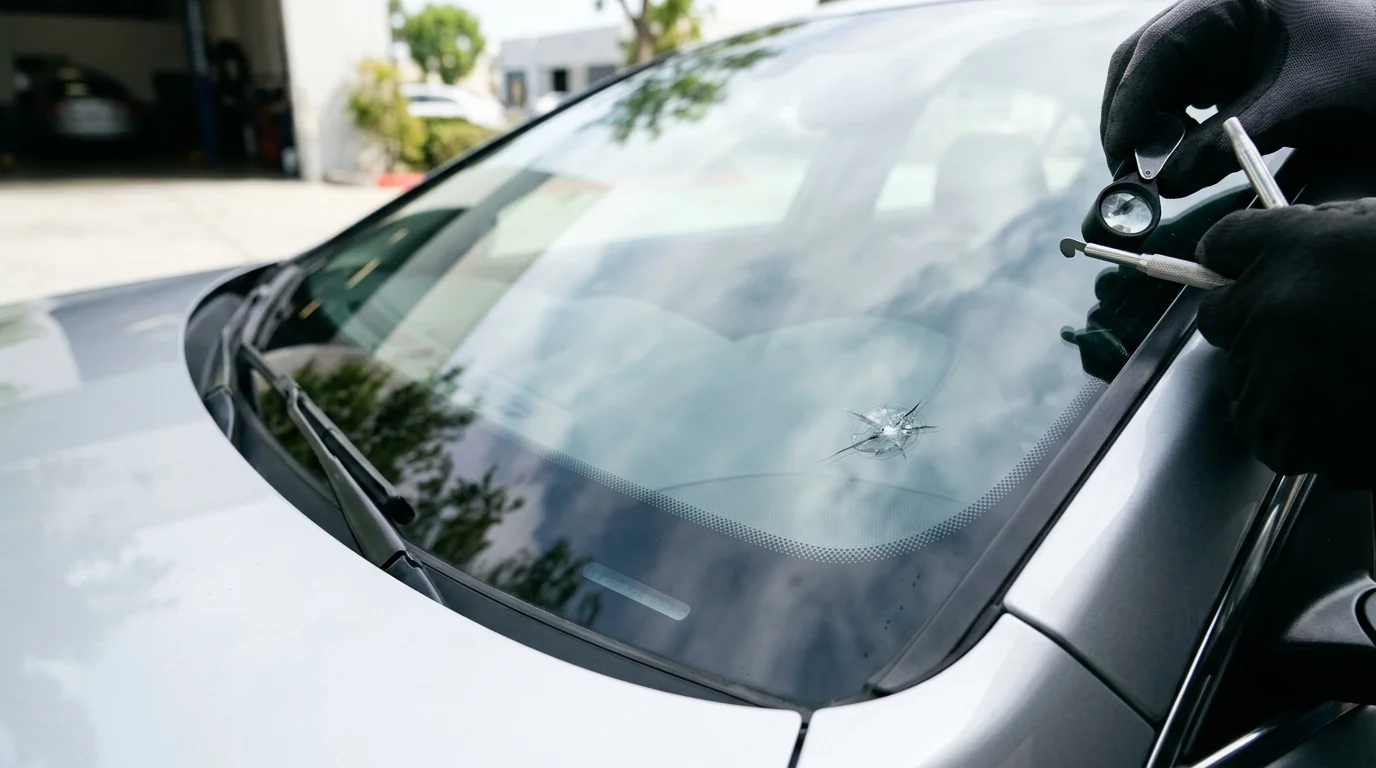
Why chip location matters during an inspection
A windshield is not one uniform pane from a repair standpoint. The glass has a center field of view, edges that tuck into the frame, and a dark ceramic band along the perimeter. A chip in the driver’s sight line is one conversation. A windshield edge chip sitting in that band, or right against the molding, is another.
The independent glass professional looks at where the damage sits because the resin has to wet the break, then cure in place. A chip against the dark band or molding can be harder to read from a cabin photo. Ask the pro to show you the damage from outside and from the driver’s seat.
Nobody on this page can publish a hard inch rule from the edge. That cutoff shows up on a lot of national blogs. It could not be confirmed as a California statute, and it is not in this site’s claims ledger. California Vehicle Code 26710 talks about a windshield in a defective condition that impairs the driver’s vision. An officer may require that condition be corrected within 48 hours. The statute does not set a chip-to-edge measurement. The independent glass professional measures the actual damage on your car.
Location also collides with the view you need to drive. A chip low and left of the rearview mirror sits in a different part of the field than a chip tucked into the passenger A-pillar. If the chip bothers your view on I-805 through National City, say so when you book the look. That detail belongs in the inspection, not in a guess from a blog.
How chips and spreading cracks require different answers
A chip is a small impact. A crack is a line that has already started to travel. Those two shapes do not get the same answer, even when both sit near the edge. Searchers looking up can an edge windshield chip be repaired usually want a yes or no. Local glass work does not work that way.
A bullseye, a star, or a combination break can still be a chip. The pit has a center. The legs, if they exist, are short. A spreading crack has left that center behind. Location is still one of the three things the technician confirms, along with size and depth. An edge chip and a center chip can look the same in a thumbnail. They are not automatically the same repair.
That is why this article is not a repeat of the chip-versus-crack comparison. Location is the extra variable. A chip in the middle of the pane and a chip against the molding can look the same in a thumbnail. They do not behave the same once the car is back on SR-52 or Highway 67. If a leg has already run to the frame, the independent glass professional is looking at a different problem than a contained pit.
Whether a chip or a crack is repairable still comes down to size, depth, and location. The technician confirms that in person. This site does not publish a millimeter chart, a star-count rule, or a promise that an edge chip will hold. Those figures are not in the claims ledger, so they do not belong here.
Paint Shield SD’s windshield work is chip and crack repair only. Repair keeps the factory glass in place. The brand does not replace windshields, and this page will not price a glass swap. If the independent glass professional finds that repair is not the right path, they will tell you that on the car. That finding is the inspection result, not a service this site sells.
On vehicles with camera-based driver assistance, a replacement can require recalibration. That is one reason owners ask about repair first. Keeping the factory pane avoids that fork when the damage is actually a repair candidate. Whether your chip qualifies is still the pro’s call, not a conclusion you should pull from a photo of the frit band.
What glass condition can change the repair decision
Location is only one input. The glass around the chip matters too. Dirt, moisture, and older damage can change what the technician sees, even when the pit looks small. This page cannot publish an hours-since-impact cutoff. The honest instruction is simple: do not wait for a convenient Saturday if you can get the glass looked at sooner. Same-week scheduling available for most services.
Previous work changes the picture. An old repair next to a new chip is not a fresh pit in clean glass. Tell the pro if the windshield was replaced or repaired before. They still inspect the damage in front of them. Ask them to show you what they see with a light, on the car, in shade if you can get it. This site will not invent a depth chart, a frit-masking rule, or a factory-versus-aftermarket eligibility split.
Camera brackets and rain sensors sit behind many newer windshields. A chip near those zones is still a location-and-condition problem, not a branded product problem. This site is brand-agnostic on film and does not name glass product lines. The pro looks at the glass you have, then tells you whether windshield chip repair is on the table.
Why visual inspection matters before booking
A photo helps you get matched. It does not finish the decision. Glare off a black frit band in noon sun at a UTC garage will hide legs that show up under a handheld light. So will a wet windshield after a marine-layer morning in Point Loma. The independent glass professional wants a dry pane, a raking light, and the chance to look from outside and from the cabin.
That is why visual inspection belongs before you treat the booking as settled. Send the clearest stills you can: the full windshield, a close crop of the chip, and a shot that shows how close it sits to the molding. Then plan on an in-person look. The technician confirms size, depth, and location on the car, not from a text thread.
San Diego parking makes this practical, not fussy. Downtown structures are dark. Open lots in Otay Mesa throw wind-blown grit onto the glass while you wait. A shaded driveway in Rancho Bernardo or a workplace lot in Sorrento Valley is an easier place to read a chip than a sun-blasted curb on El Cajon Boulevard at 2 p.m. If the pro asks you to move the car ten feet into shade, that is the inspection, not a delay tactic.
Mobile glass repair is a common service model in this market. Ask your pro whether they offer mobile service. This site does not assert that every matched pro will come to your driveway. Water, power, and a safe place to work are the pro’s to confirm at booking. Do not assume a street-side spot on University Avenue is enough.
Job time is an expectation, not a dispatch promise. Chip work is often under an hour per chip, and a visit is typically 1-3 hours on site, with the pro confirming the plan once they see the glass. Same-week scheduling available for most services.
If you already read the local primer on windshield chip repair in San Diego, treat this page as the location add-on. That guide covers the service. This one is about the chip that is hugging the frame.
What to ask the independent glass professional
Walk into the look with a short list. You are not hiring a script. You are making sure the person who will work on the glass has said the quiet parts out loud.
Ask them to name the damage: chip, crack, or a combination. Ask them to point to where it sits relative to the edge, the frit band, and your view down the hood. Ask whether they can see moisture or dirt in the break. Ask whether size, depth, and location still make this a repair candidate. If the answer is no, stop there. This brand matches car owners for chip and crack repair only.
Ask for the written price before anyone injects resin. In the San Diego market, windshield chip repair typically runs $60-$180 for the first chip, with additional chips quoted at the visit. Your installer confirms the written price. Getting matched costs you nothing. Do not treat a range on a blog as an invoice.
Ask whether they offer mobile service if you cannot leave the car in Kearny Mesa or National City during the day. Ask how they will light the edge so you can see the same thing they see. Ask what they want you to do after the fill: no car wash, no freeway, no parking in a certain kind of sun. Follow the pro’s instructions, not a generic aftercare list from another metro.
Ask about camera-based driver assistance only if your car has those systems. The honest point is narrow. Repair keeps the factory glass in place. A replacement can require recalibration. This site still does not replace glass. If repair is not appropriate, the independent glass professional will tell you that. That is the whole reason the inspection exists.
Bring the car’s recent history if you have it. A rock hit on the 67, a gravel truck on I-8, or a chip you have been watching since a trip through the desert on I-15 are useful facts. Neighborhood names help more than adjectives. “It is in the driver’s view on the 805” is better than “it seems kind of close to the side.”
Paint Shield SD matches you with vetted, insured local pros. The car owner contracts and pays the pro directly. The brand does not hold a California contractor license for this work, because no such license exists for automotive glass repair referral. Do not ask for a CSLB number. Ask for a clear inspection, a written price, and a straight answer on whether that edge chip is a repair.
When to call us
If a windshield chip is sitting against the edge, the frit, or your line of sight, get an independent glass professional on it before you book coating or film over a car you cannot see out of cleanly. Paint Shield SD matches San Diego County car owners with vetted, insured Ceramic Coating and Paint Protection Film pros, and with glass repair pros for chip and crack work only. Call us at (760) 400-6557 and we’ll connect you with a vetted, insured local pro.