A small chip near the passenger edge and a thin line across the driver’s view don’t get the same answer. For windshield crack repair in San Diego, repairability depends on size, depth, and location. A technician must confirm all three in person.
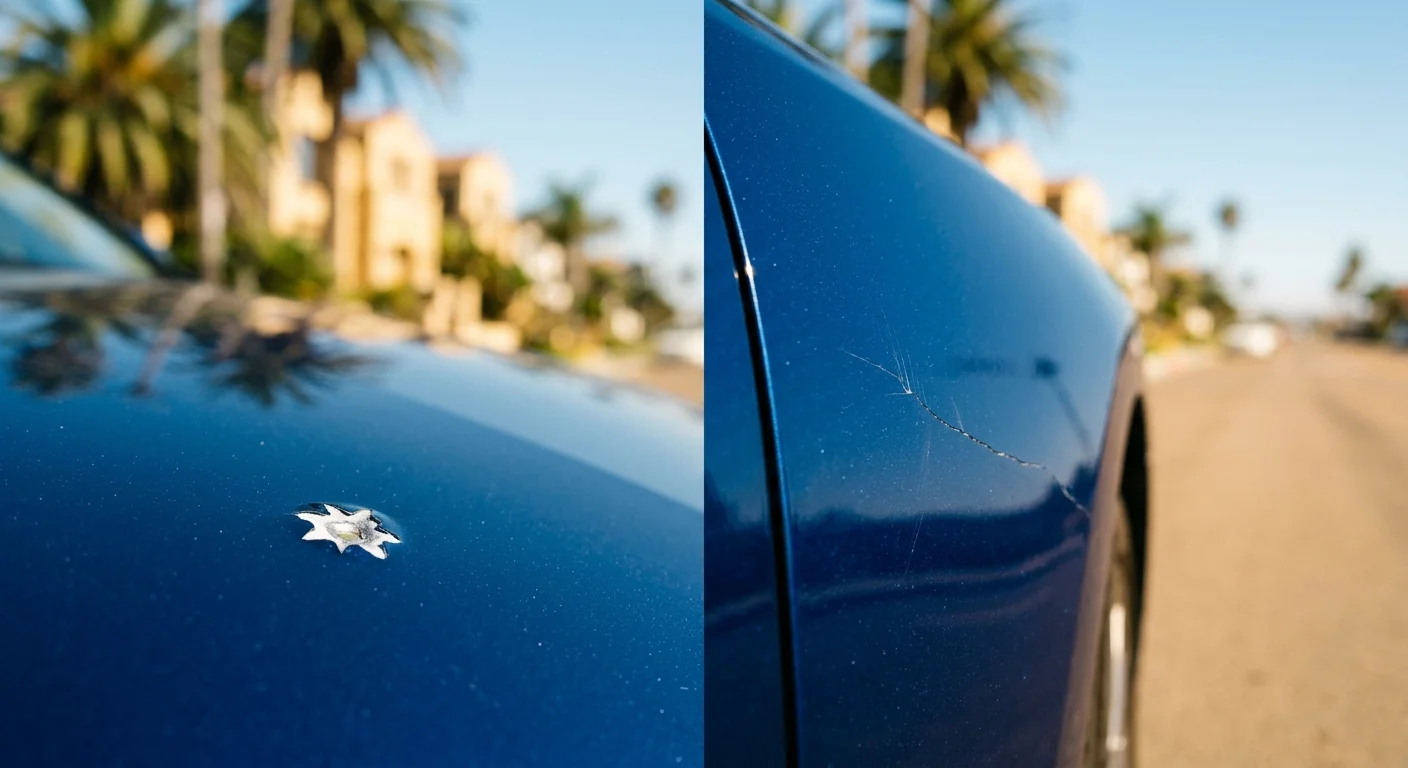
Size, depth, and location: the three questions
“Chip” and “crack” describe the visible damage. They don’t provide a final repair decision. A technician still needs to inspect the glass and determine whether the damage fits repair-only service.
Size is the first question. A small impact mark may look contained from the driver’s seat. A line extending from it may be easier to see outside the car. Photos help a pro understand the general shape, but they can’t establish a universal cutoff.
We don’t publish a fixed repairable size for every windshield. No such figure has been confirmed for this site. Windshield construction and damage patterns vary, so the technician makes the decision after seeing the vehicle.
Depth is the second question. Reflections can make it difficult to judge how far damage reaches. A dark spot, bright line, or rough surface doesn’t give a complete answer by itself. The technician examines the impact point before recommending repair.
Location is the third question. Note whether the damage sits near an edge, in front of the driver, or in the passenger-side area. Those positions raise different visibility and repairability concerns. The technician confirms what applies to your glass.
This process is the same across San Diego County. A car near I-5 in Chula Vista and one near I-15 in Escondido still need individual inspections. Road and neighborhood names don’t decide repairability.
Our windshield chip repair service covers repair only. Paint Shield SD matches car owners with vetted, insured independent local pros. The specialist, not Paint Shield SD, inspects and performs the work.
Why a chip in the driver’s sight line is different
Damage in front of the driver deserves closer attention because location matters. A small mark near the passenger side isn’t positioned like one directly ahead of the steering wheel. The technician considers that difference during the inspection.
Don’t rely only on a photo taken from outside. Sit in your normal driving position and notice where the damage appears. Then take another photo from that viewpoint for the pro. This gives useful context before the in-person assessment.
The important issue isn’t the label attached to the damage. A “chip” isn’t automatically repairable because it sounds minor. A “crack” also can’t be judged from its name alone. Size, depth, and location remain the deciding questions.
Visibility also matters under California law. The statute doesn’t publish a simple chip diameter that settles every situation. Instead, it addresses whether the windshield’s condition impairs the driver’s vision. That makes damage in the driver’s viewing area particularly relevant.
Ask the technician two separate questions. First, does the damage fit repair-only service? Second, what should you expect to see through that area afterward? Those answers need to come from the person who has inspected the actual glass.
San Diego driving can include dense city streets, freeway interchanges, and long county routes. The setting may change throughout the day, but the decision remains vehicle-specific. Don’t assume a small-looking mark is acceptable because it hasn’t spread.
How a chip becomes a crack overnight in the car
A chip doesn’t always remain the same shape. Temperature changes, road vibration, or pressure around the damaged area can contribute to a line extending from the original impact. That change may happen while the car is parked or during a later drive.
San Diego County drivers often move between coastal and inland areas. A trip from Oceanside toward Escondido on SR-78 can place the car in different conditions during one drive. Cabin heating or cooling may also change the temperature against the glass.
That doesn’t mean every chip will spread. Paint Shield SD can’t predict whether a particular mark will remain stable. A technician also needs to see its current condition, not only how it looked when the impact happened.
If you notice a new line in the morning, take a clear photo. Compare it with any earlier image you have. Note where the line began and whether it now reaches another part of the windshield. This information helps describe the change without pretending to diagnose it remotely.
Once a chip spreads, the original label no longer settles anything. The technician must reconsider its current size, depth, and location. A mark that appeared limited yesterday may receive a different recommendation today.
The same principle applies after driving I-8 through East County or I-5 through the South Bay. The route may help explain when you noticed the change. It doesn’t confirm whether the damage remains repairable.
Our detailed San Diego windshield chip repair guide explains what information to gather before contacting a pro. Photos can begin the conversation, but the final answer comes from an in-person inspection.
What CVC 26710 says about impaired vision
California Vehicle Code 26710 addresses defective windshields and rear windows. It says operating a vehicle is unlawful when the glass is “in such a defective condition as to impair the driver’s vision either to the front or rear.”
An officer may require that condition to be corrected within 48 hours. You can review the current statute through the California Legislative Information website.
The rule applies statewide, including San Diego, National City, Chula Vista, El Cajon, Oceanside, and other county communities. It doesn’t turn every visible chip into an automatic violation. The stated issue is whether the defective condition impairs the driver’s vision.
Paint Shield SD can’t determine whether a particular windshield violates the law. A photo also can’t provide a legal conclusion. If the damage sits in your viewing area, explain its exact position when requesting an inspection.
Don’t substitute an internet size chart for the statute’s actual wording. CVC 26710 doesn’t provide the repairability cutoff for a specific chip or crack. Repairability remains a technical decision for the inspecting professional.
The legal question and service question overlap, but they aren’t identical. The law addresses impaired vision. The technician decides whether the damage fits repair-only service based on size, depth, and location.
If an officer directs you to correct a defective condition, follow the instructions provided with that notice. For questions about the current law, use the state’s published code rather than an unsourced summary.
Why this site does repair only, and what to do if yours needs more
Paint Shield SD’s windshield service is limited to chip and crack repair. The pros we match don’t provide windshield replacement through this referral service. That boundary keeps the request clear before you’re connected.
When damage is repairable, the process keeps the factory glass in place. The technician confirms whether your specific chip or crack qualifies after inspecting its size, depth, and location.
If the damage doesn’t qualify, contact a full-service automotive glass provider for options outside our scope. Tell that provider what the repair technician found. Don’t assume that a failed repair assessment is also a complete plan for other glass work.
Vehicles with camera-based driver assistance need additional attention when glass is replaced. Replacement can require recalibration, depending on the vehicle. Ask the full-service glass provider what applies before authorizing work.
Paint Shield SD doesn’t make that determination, provide recalibration, or give a warranty for another company’s work. The car owner contracts with and pays each independent pro directly. Get the recommended scope and written price from the provider handling the job.
Glass damage is also separate from damaged paint. If an impact reached the hood, bumper, or another painted panel, paint protection film is a different service. It doesn’t repair windshield glass or determine whether a crack qualifies for repair.
When you contact us, describe the damage as it looks now. Include its location and whether it has changed. We’ll match you with a vetted, insured local specialist for repair-only windshield service. The technician provides the final recommendation after seeing the vehicle.
When to call us
Call when a chip or crack needs an in-person repairability check, especially when it’s spreading or sits in the driver’s view. If road damage also reached the paint, a professional ceramic coating and paint protection film pro can explain the separate paint-care options. Call us at (760) 400-6557 and we’ll connect you with a vetted, insured local pro.