A ceramic car wash is usually a bottled soap or a tunnel add-on, not a professionally applied coating. Three products share the name, and search results mix all three.
- Bottled ceramic wash soap is a detergent you buy and use at home. Some formulas include a light protectant. It is still a wash product, not a shop-applied coating.
- A drive-through ceramic wash is a menu add-on. The tunnel applies a finishing liquid at the end of the cycle. That is the upgrade this page spends the most time on.
- A professional ceramic coating is a separate job with paint prep. It is not a wash package. See is ceramic coating worth it if that is the purchase you are weighing.
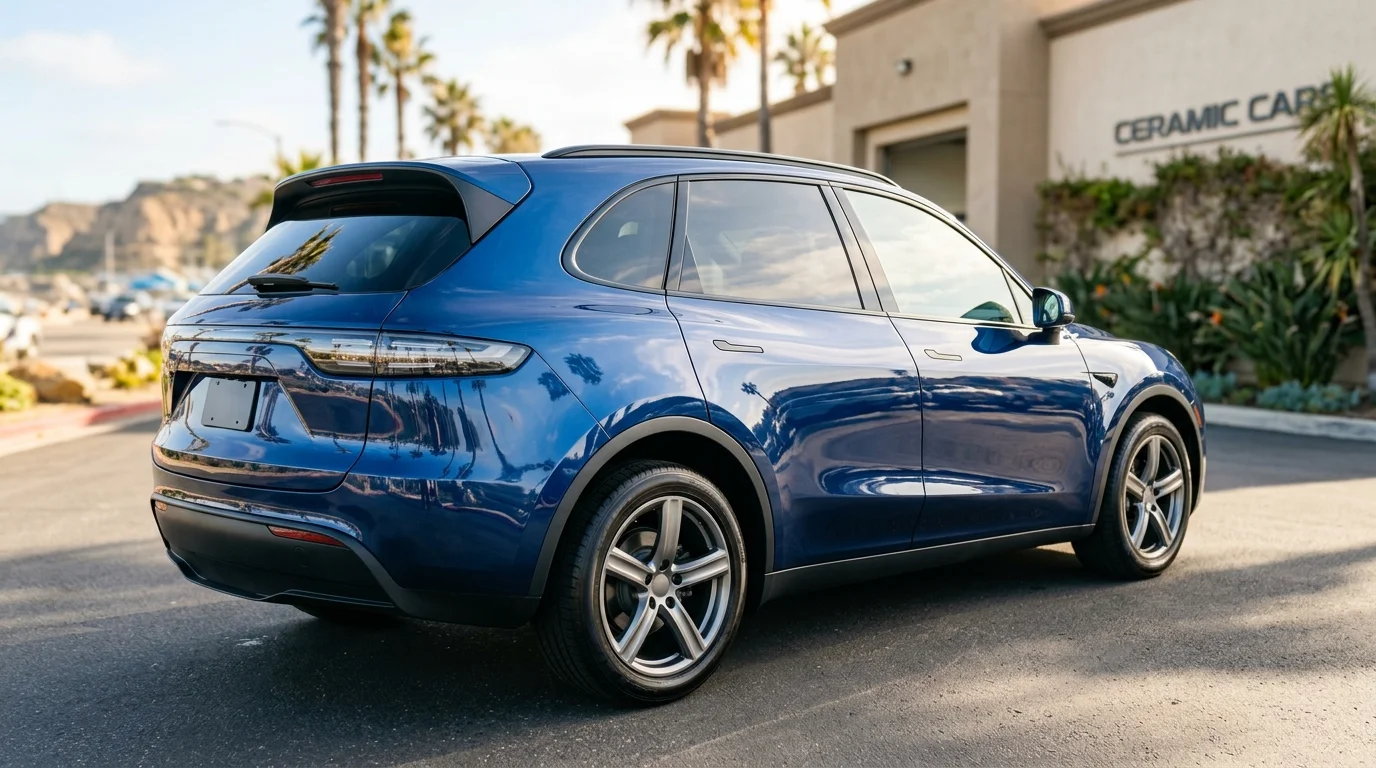
Is a ceramic car wash worth it in San Diego?
It can be worth the add-on when you want a finishing product during a wash. It is not worth treating as a professional coating. San Diego paint picks up coastal film, inland dust, and wash water that can dry into mineral spots. None of that turns a tunnel cycle into a coating job.
Hard water and mineral spotting happen when droplets dry on the panel. That can follow a wash, a driveway rinse, or sprinkler overspray. A ceramic menu name does not stop it. If the car leaves the bay wet and sits in sun, white rings can form on the hood, roof, and trunk. Dry the car. Don’t let mineral-bearing water air dry. Leftover marks are not proof the upgrade failed, and they are not proof a coating is intact.
If you use an automatic wash, avoid brush tunnels. Touchless is the safer automatic option. A ceramic package name does not tell you whether brushes or cloth hit the paint. Ask at the entrance. If the car already has a professional coating, film, or wrap, follow that product’s care sheet first. See automatic car washes and ceramic coating for the wash-type choice.
A tunnel add-on is not a substitute for a professional coating. The wash cannot inspect panels, correct defects, or apply a coating after prep. Ask the operator for the product name and the manufacturer sheet before you pay. If the coating itself is the purchase you are weighing, read is ceramic coating worth it.
What a drive-through ceramic wash puts on your paint
At most automatic washes, “ceramic” describes an added liquid protectant. The wash equipment applies it near the end of the cycle. The car is then rinsed and dried according to that location’s process.
The exact formula varies. One wash may use a product labeled ceramic sealant. Another may describe its upgrade as ceramic wax or ceramic protection. Those names don’t identify a standard formula or application method.
Ask the operator for the product name and manufacturer information. The label or product sheet should explain what’s being applied. If the location can’t provide that information, don’t assume the word “ceramic” guarantees a particular ingredient or result.
A ceramic wash can leave the surface feeling slicker. It may also change how water behaves on the paint. The result depends on the product, the wash process, and the paint’s condition before the application.
The upgrade doesn’t include the detailed preparation associated with a professional coating service. Tunnel equipment must wash many vehicles through the same basic sequence. It can’t inspect every panel, identify bonded contamination, or correct individual paint defects.
The type of wash matters too. Avoid brush tunnels. Touchless is the safer automatic option. Ask which method the site uses, especially if you’re concerned about existing swirls or visible paint marks.
San Diego drivers should also consider what’s already on the vehicle. A car with an existing coating, wax, sealant, vinyl wrap, or paint protection film may have specific care instructions. Check those instructions before adding an unfamiliar wash product.
How that differs from a professional ceramic coating
A professional ceramic coating is a separate detailing service. A detailing specialist inspects the vehicle and prepares the surface before applying the selected product.
Preparation can involve washing, removing bonded contamination, and assessing paint defects. If the paint needs correction, the pro discusses that work before coating it. A wash tunnel doesn’t provide that panel-by-panel assessment.
Professional application also gives the installer control over the working environment. The product is placed on prepared paint and allowed to set according to its instructions. The installer can address trim, wheels, glass, and existing protective materials based on the agreed scope.
A ceramic wash add-on is applied during a normal wash cycle. It’s meant to fit within that fast process. It doesn’t include individual panel preparation or an inspection of the finished application.
That doesn’t make the wash upgrade useless. It makes it a different purchase. Think of it as wash-applied surface care, not a substitute for professional ceramic coating.
A ceramic wash also isn’t paint protection film. Film is a physical layer installed over selected painted areas. A liquid wash product doesn’t become that kind of barrier. Drivers comparing those services should focus on the problem they want to address, not the shared word “protection.”
Paint condition matters with either route. A shiny protectant won’t remove scratches, water spots, oxidation, or swirl marks already visible beneath it. Those concerns need inspection before anyone recommends a coating or corrective service.
For a wider comparison of familiar paint-care options, read our guide to ceramic coating versus wax in San Diego.
How long each one actually lasts
There isn’t a verified universal lifespan for something sold as a ceramic car wash. The name covers different products and wash programs. Without the specific manufacturer’s instructions, a responsible duration can’t be confirmed.
Ask the wash operator how its duration statement was established. Request the product sheet and read any care conditions attached to that statement. Find out whether the claim assumes hand washing, touchless washing, covered parking, or regular reapplication.
Daily conditions also affect what you observe. A vehicle parked near the coast may collect marine residue. A car driven through inland North County may encounter dust and heat. Freeway mileage on Interstate 5, Interstate 8, or State Route 78 adds another mix of road film and debris.
Later washing methods matter as well. Strong cleaners, brush contact, and neglected contamination can change the surface. That’s why a calendar promise without product and care details isn’t useful.
Paint Shield SD couldn’t confirm a single defensible duration that applies to every ceramic wash product. The wash operator and product manufacturer are the right sources for that specific answer.
Professional ceramic coatings also vary by product, preparation, storage, exposure, and maintenance. This site’s approved claims don’t support publishing a universal lifespan in months or years. Your installer should identify the coating, explain its care needs, and put any product warranty terms in writing.
Be cautious with words such as permanent or lifetime. Those claims need written definitions and conditions. Ask what’s actually covered, who handles a claim, and which maintenance steps are required.
The honest comparison is about the process. A wash upgrade is applied during a wash. A professional coating is installed after vehicle-specific preparation. Exact longevity must come from the named product and its written documentation.
When a ceramic wash is a reasonable choice
A ceramic wash can make sense when you want routine cleaning with an added finishing product. It’s a simple purchase when you understand that you’re buying a wash upgrade, not a professional coating installation.
It may suit a daily driver that needs ordinary exterior cleaning. That can include commuter cars parked near Mission Valley, work vehicles traveling through Kearny Mesa, or family vehicles dealing with coastal residue around Oceanside and Chula Vista.
The upgrade is also easier to judge when the operator clearly identifies the product. Written product information gives you something more useful than a menu name. You can compare the instructions with your vehicle’s existing care requirements.
A ceramic wash may be a poor fit when the paint has visible damage or contamination. Scratches, etched spots, oxidation, and rough paint won’t disappear because a finishing product was applied. A detailing specialist should inspect those concerns.
Be careful if the vehicle already has a professional coating. Follow the installer’s maintenance instructions first. Don’t assume every product carrying the ceramic label is compatible with every installed coating.
The same caution applies to vinyl wraps and paint protection film. Ask the wrap or film installer which cleaning products and wash methods they recommend. Written guidance should take priority over a wash package description.
Drivers who want the vehicle cleaned at home or work can also explore mobile auto detailing. Mobile detailing comes to the customer’s driveway or workplace. Water, power, product choice, and access should be confirmed with the pro during booking.
Choose the ceramic wash for what it is: a convenient wash option with an added protectant. Choose professional evaluation when you need paint preparation, correction, or a longer-term coating plan.
What to ask before you pay for the upgrade
Start with the product name. “Ceramic” alone isn’t enough information. Ask the wash operator to identify the manufacturer and the exact product used in that package.
Then ask how it’s applied. Find out whether the product is sprayed, rinsed, or mechanically spread. Ask whether the wash uses brushes, cloth, or touchless equipment. Those details help you compare the upgrade with your paint-care priorities.
Useful questions include:
- What is the complete product name?
- Can I see the manufacturer’s product or care sheet?
- Is this a wash-applied protectant or a professional coating?
- Does the manufacturer state how often it should be reapplied?
- Does the duration claim depend on a specific wash method?
- Is the product intended for existing coatings, wraps, or paint protection film?
- What does the upgrade exclude?
- Are any results or warranty terms provided in writing?
Don’t treat visible water beading as proof of paint correction. A surface product can change water behavior while scratches and other defects remain underneath. Check the paint under good lighting after the vehicle is dry.
Also ask what the base wash includes. The ceramic upgrade may be only one step within a larger package. Knowing the complete sequence helps you decide whether you value the other services included.
San Diego conditions make written care directions especially useful. Coastal parking, inland dust, freeway travel, and outdoor storage create different maintenance needs. A product suited to one routine may not fit another.
If an employee makes a durability or warranty statement, request the written terms before paying. Your installer should also confirm any professional coating warranty in writing. Don’t rely on an undefined menu label or a verbal promise.
The decision becomes simple once the terms are clear. Buy the wash upgrade for convenient surface care. Seek professional coating advice when you want vehicle-specific preparation, product selection, and application.
When to call us
Call when you want a professional coating assessment, paint preparation advice, or help comparing coating and film options. Paint Shield SD matches car owners with vetted, insured local pros and doesn’t perform the physical work.
Call us at (760) 400-6557 and we’ll connect you with a vetted, insured local pro.