Machine polishing is the first choice for many shallow paint defects. A deeper scratch creates a harder decision: keep polishing, try wet sanding, or preserve the remaining clear coat. For San Diego drivers searching for mobile wet sanding, defect depth matters more than convenience.
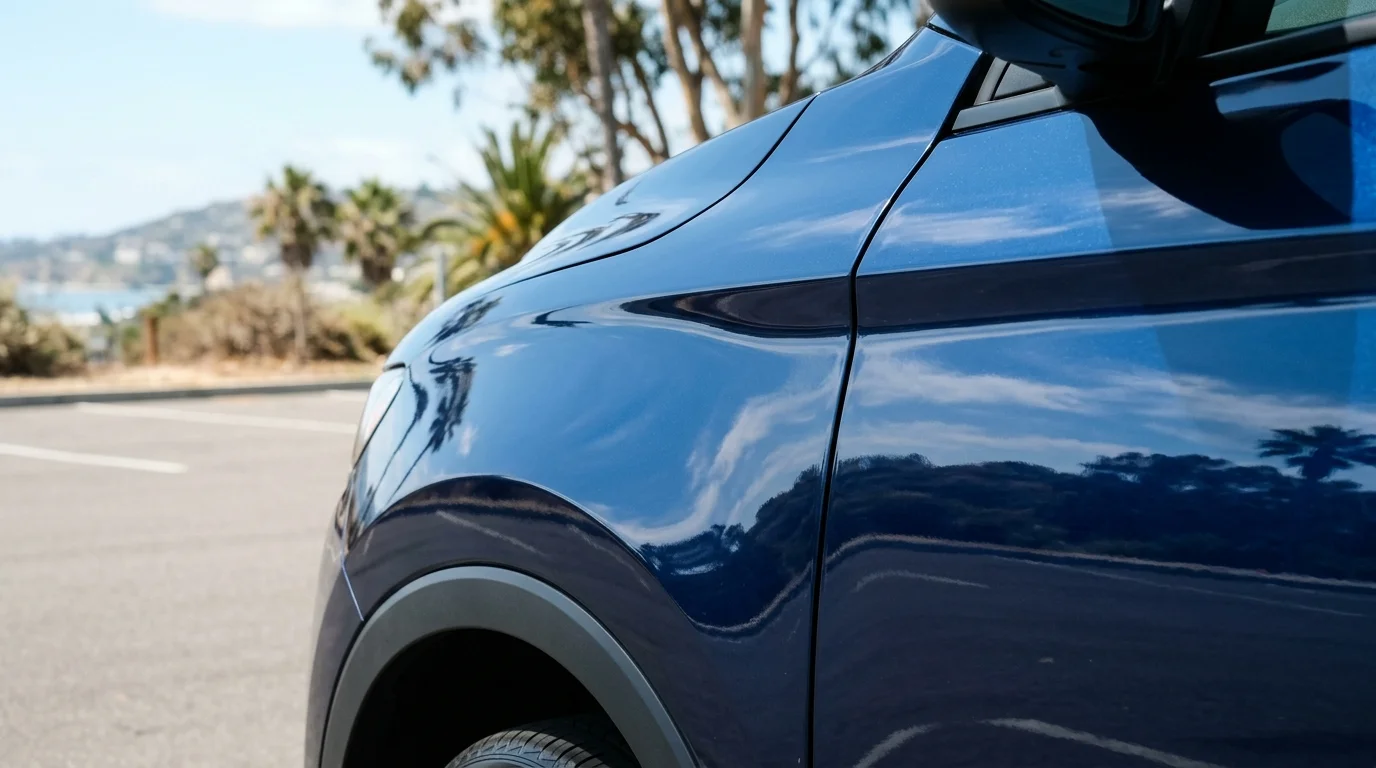
What machine polishing removes
Machine polishing uses a pad and abrasive liquid to refine the painted surface. The process removes a small amount from the upper finish. That leveling can reduce the way light catches shallow defects.
Common candidates include wash marks, light swirls, mild haze, and some water spotting. Results depend on the defect, paint system, previous repairs, and remaining clear coat. A polished panel may look dramatically better without becoming completely flawless.
That distinction matters. Polishing doesn’t refill a scratch. It lowers the surrounding surface until the defect becomes less visible. If the damage extends beyond the workable portion of clear coat, more polishing only removes additional material.
San Diego cars can collect different defects across the county. Vehicles near Encinitas or Imperial Beach may show spotting and residue after repeated coastal exposure. Cars driven along I-5, I-8, or I-805 may carry road film and fine marring from frequent washing. Inland vehicles in El Cajon or Poway often get inspected under stronger direct sunlight, which can make swirls easier to see.
A detailing specialist should identify the defect before choosing a pad or abrasive. A small test spot shows how the finish responds. It also helps set a realistic target for the rest of the vehicle.
Our paint correction service connects San Diego County car owners with vetted, insured local pros. The pro evaluates the vehicle and recommends an appropriate correction plan.
When a defect is too deep to polish out
A scratch is too deep for polishing when removing enough surrounding material would create an unreasonable risk to the finish. That point can’t be judged from color alone. Lighting, surface contamination, touch-up paint, and previous bodywork can change how damage appears.
The fingernail test is a rough clue, not a final diagnosis. A scratch that catches a nail may be deep, but shape and surface residue can affect that sensation. Likewise, a mark that looks white might be transferred material, exposed primer, or light reflecting from a sharp groove.
Cleaning the area comes first. The pro can then inspect it under focused lighting and from several angles. If the mark changes or disappears when the surface is wet, polishing may improve how it reflects. That still doesn’t prove the entire defect can be removed.
Some damage shouldn’t be chased. A cut through the clear coat can’t be repaired by removing more clear coat around it. Exposed color coat or primer needs a repair method that replaces missing material. Machine polishing can’t do that.
Location also affects the decision. Panel edges, raised body lines, and tightly curved areas require added restraint. A broad hood offers a different working surface than a narrow crease near a door handle.
The best result isn’t always a perfect-looking panel. Sometimes the responsible stopping point leaves a faint mark visible under direct light. That compromise can preserve more of the finish while making the defect far less distracting during normal driving.
Before approving deeper correction, ask what improvement the pro expects. Also ask what defect may remain afterward. Clear answers are more useful than a promise to remove every mark.
What wet sanding is and why it is the last resort
Wet sanding uses a fine abrasive with lubrication to level a small area. The treated spot becomes uniformly dull during the process. Machine polishing then refines the sanding marks and restores gloss.
This method can address certain isolated defects that polishing alone can’t reach. Examples may include a pronounced surface mark, localized etching, or uneven texture after refinishing. Suitability depends on the panel and the paint condition.
Wet sanding removes material faster than ordinary polishing. That makes it a last resort, not an automatic upgrade. The pro needs enough working room to level the defect and then remove the sanding haze. Stopping halfway can leave a flat or cloudy patch.
The phrase “mobile wet sanding” deserves special attention. On-site work still requires controlled inspection, clean tools, and a clean panel. Direct sun, poor lighting, or windblown grit can make the surface harder to assess. A driveway near Pacific Beach may present different working conditions than a covered garage in Rancho Bernardo.
Don’t assume every mobile detailer offers this process. Mobile detailing is common, but wet sanding is a separate skill and service decision. Confirm directly whether the matched pro offers it and whether the vehicle’s location is suitable. The pro may prefer to inspect the paint before deciding where the work should happen.
Photos can help start that conversation. They can’t reveal remaining clear coat or guarantee that sanding is appropriate. Include close views, wider panel views, and images taken under different light. Mention any repainting, touch-up work, or previous correction you know about.
Clear coat thickness and the limit nobody talks about
Clear coat gives the color layer its gloss and protective outer surface. Correction removes some of that material. Once it’s gone, polishing or coating can’t put it back.
There isn’t one responsible thickness number that applies to every vehicle. Paint systems differ between manufacturers, panels, and repair histories. Even readings across the same hood can vary. A repainted door may also behave differently from an adjacent factory-finished fender.
A paint thickness gauge can add useful information, but its reading needs interpretation. Some gauges report the combined build above the underlying panel. They may not isolate the clear coat by itself. That means a seemingly generous reading doesn’t automatically create permission for aggressive sanding.
Comparisons across the vehicle often provide better context. A pro may look for unusual differences between neighboring panels. They should also inspect edges, body lines, and areas showing signs of earlier work. Measurements support judgment, but they don’t replace it.
This limit becomes important before a coating is applied. Paint correction establishes the appearance that remains underneath. Our guide to paint correction before ceramic coating explains why those decisions happen before the coating step.
Coastal residue and inland sun can affect how a San Diego finish looks during inspection. Neither reveals how much workable clear coat remains. The same visible scratch may justify different plans on two otherwise similar cars.
Ask whether the goal is improvement or complete removal. Then ask what evidence supports the proposed sanding. A careful pro should be able to explain the stopping point without pretending the finish has unlimited material.
How a good shop decides where to stop
A sound correction plan starts with the least aggressive reasonable method. The pro cleans and inspects the panel, identifies the likely defect, and tests a small area. More aggressive steps follow only when the expected improvement justifies them.
The first decision is whether the mark sits on the surface or within it. Transferred paint, mineral residue, and bonded contamination may resemble damage. Removing those materials can change the diagnosis before polishing begins.
Next comes a test spot. The pro can compare the treated section with the surrounding paint under consistent light. If machine polishing produces a strong improvement, deeper cutting may offer little practical benefit. If a defect remains, the pro decides whether to reduce it, sand it, or leave it alone.
Vehicle use should shape that decision. A daily driver parked near downtown San Diego faces different priorities from a carefully stored weekend car. A work vehicle may benefit from sensible improvement without chasing every isolated mark. A collector may accept more inspection time while still preserving original paint.
Protection plans matter too. If the chosen plan includes ceramic coating, the correction decision should come first. Coating doesn’t replace missing clear coat or erase a deep scratch. The pro can explain what the finish should look like before protection is applied.
Get the intended result written clearly. It should distinguish defects expected to disappear, defects expected to improve, and defects that should remain. Also ask whether any section needs refinishing instead of more abrasion.
A responsible stopping point can feel conservative. It may leave a trace visible under a bright inspection light. That restraint often makes more sense than sacrificing additional clear coat for a result noticed only from one angle.
When to call us
Call when defects remain after washing, or when you’re deciding whether correction should come before ceramic coating or paint protection film. Call us at (760) 400-6557 and we’ll connect you with a vetted, insured local pro.