A fresh hood chip can turn a San Diego commute into a repair decision. To fix a rock chip, match the repair to its depth and spread. Touch-up suits small, stable damage, while larger defects may need refinishing.
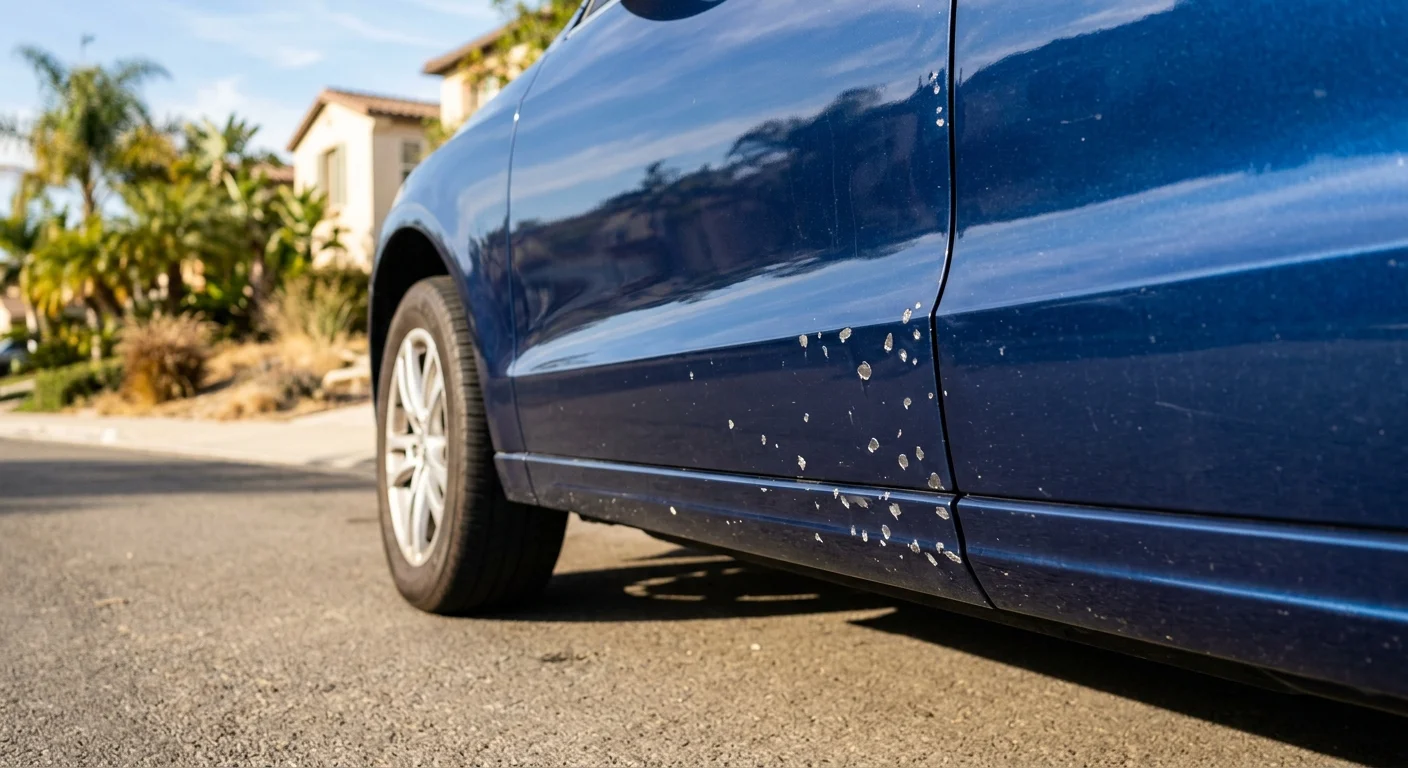
What a rock chip does to the layers of your paint
Automotive paint has several layers over the body panel. A chip may affect the clear coat, color, primer, or material underneath. The repair depends on which layers are missing.
A shallow mark can look pale around its edges. That may be damage within the clear coat. Professional paint correction can improve some surface defects, but polishing can’t replace paint that’s gone.
A deeper chip exposes the color layer or primer. It may show as a contrasting dot against the surrounding finish. Damage reaching the panel beneath deserves prompt assessment, especially when its edges are lifting.
Don’t judge a chip by width alone. Two marks with similar diameters can have different depths. One may be a surface nick. Another may have removed every paint layer.
Start with a clean, dry surface and indirect daylight. Look for loose edges, a visible center, or a shallow crater. Don’t scrape the spot to test it. A detailing or refinishing specialist can inspect the area without enlarging it.
Take one close photo and another showing the whole panel. Add a side-angle image if the chip catches a fingernail or casts a visible shadow. Those views help a pro understand the location and likely repair path. Final confirmation still requires a direct inspection.
The chip’s location also matters. A small hood defect sits in a highly visible area. Similar damage low on a bumper may be less noticeable. Your preferred finish, rather than chip size alone, should guide the decision.
When touch-up paint is enough
Touch-up paint works best for an isolated chip with firmly attached paint around it. The goal is to replace missing color and make the defect less noticeable. It may not create an invisible factory-like finish.
A good touch-up candidate usually has a defined boundary. It shouldn’t include widespread peeling, cracking, or a trail of nearby chips. The surrounding surface should also be in suitable condition for preparation.
Color matching matters. Factory paint codes provide a starting point, but existing paint can appear different after years of exposure. Application thickness and lighting can also change how the repaired spot looks. Ask the pro how close the finished match is expected to be.
Touch-up and paint correction solve different problems. Correction works on the surrounding surface. Touch-up adds material where paint is missing. Polishing a bare spot won’t bring its color back.
Set your expectations before choosing this route. Touch-up may be sensible when you want a small chip stabilized and visually softened. It’s less suitable when you expect the panel to look untouched from every angle.
Ask how the repair will be leveled and finished. Also explain whether you plan to add film afterward. The repair and film installers should confirm when the surface is ready for the next step.
A cluster of tiny chips can complicate the choice. Filling every dot may create a speckled finish that remains visible. At that point, compare the likely touch-up result with professional panel refinishing. The best answer depends on the paint condition and your finish expectations.
When a chip needs a panel respray
A panel respray becomes the stronger option when spot repair can’t produce a consistent surface. That may include broad missing paint, jagged edges, several concentrated chips, or a visible mismatch from an older repair.
The specialist should examine the complete panel, not just its worst chip. Existing scratches, peeling clear coat, previous bodywork, and surface contamination can affect the repair plan. A hood with one deep chip and many smaller marks may need a different approach than a clean panel with one isolated defect.
Panel material matters too. Front bumper covers and metal hoods don’t always require the same preparation. The pro should identify the material and explain the refinishing steps before work begins.
Ask whether the affected panel can be refinished by itself. In some cases, the pro may discuss blending color into a nearby area. That decision depends on the vehicle’s paint and the desired result. Get the proposed scope in writing before approving it.
Film doesn’t hide unfinished bodywork. Transparent material can preserve the appearance beneath it, including visible defects. If you want chips repaired before protection, settle the paint plan first.
Freshly refinished paint also needs an installer-approved waiting period before film application. Don’t rely on a generic timeline. The refinisher and film installer should confirm when that specific finish is ready.
Mention any dent, rust-colored spot, loose paint, or cracking when requesting an assessment. Those details can move the job beyond a simple chip repair. Clear photos help with the first conversation, but the pro confirms the proper method after seeing the panel directly.
Why film is the option here that adds a physical layer
Touch-up and respraying address damage that already exists. Of those three choices, film is the only one that adds a physical layer above the finished paint. That makes it the preventive option, but it doesn’t make a vehicle chip-proof.
A hard impact can still mark or puncture film. Coverage also matters. Film can’t protect an uncovered section of the hood, bumper, fender, or mirror. Your installer should explain the package boundaries before work starts.
Professional paint protection film can cover selected impact areas or a larger portion of the vehicle. The right scope depends on your driving pattern, the car’s condition, and how visible you want film edges to be.
Repair comes first when paint is already missing. Film won’t refill a crater or restore color. The paint and film pros should agree that the repaired surface is ready before installation.
Ask for the exact coverage on a diagram or written quote. Confirm whether edges will be wrapped where the panel allows it. Your installer should also identify the product tier and provide its warranty terms in writing. Paint Shield SD doesn’t issue the product or workmanship warranty.
Some owners worry that adding an aftermarket product automatically voids the vehicle warranty. Under the federal Magnuson-Moss Warranty Act, a manufacturer generally can’t void a warranty merely because an aftermarket product was used, unless that product caused the failure. The cause of a specific failure is fact-dependent, so review your warranty documents and seek qualified advice for a dispute. The Federal Trade Commission is the federal authority for consumer warranty information.
If you’re comparing coverage with repair cost and appearance, our guide to whether PPF is worth it in San Diego explains the main tradeoffs.
San Diego roads and freeways that chew up front ends
San Diego drivers don’t share one road pattern. Coastal commuters, inland drivers, and East County residents encounter different routes. Your regular corridor can help identify which panels receive the most exposure.
North County coastal trips often use Interstate 5 through Oceanside, Carlsbad, Encinitas, and Del Mar. Inland North County drivers may spend more time on State Route 78 or Interstate 15 near Escondido. Those commutes put the vehicle’s leading surfaces behind traffic for long stretches.
Central San Diego drivers frequently connect through Interstate 8, Interstate 805, and State Route 52. South Bay routes include Interstate 805, State Route 54, and State Route 905. East County travel often involves Interstate 8, State Route 67, or State Route 94.
None of those roads guarantees paint damage. Any route can place loose grit between your front end and another vehicle’s tires. Roadwork, shoulder debris, and uncovered loads can change conditions within one trip.
Give trucks and trailers more space when practical. Move away from a vehicle dropping visible debris. After a freeway trip, inspect the hood, bumper, mirror caps, and front fenders under clean lighting. Finding a fresh chip early gives you a clearer repair choice before dirt collects inside it.
Use your actual driving pattern when discussing film coverage. An Interstate 5 commuter may prioritize the full leading edge. A driver who regularly crosses inland or East County routes may want the installer to inspect additional exposed areas. Don’t buy coverage from a generic checklist. Ask the pro to map it to your vehicle and routine.
When to call us
Call when a chip’s depth isn’t clear, several marks cross one panel, or you want the paint assessed before film. Paint Shield SD matches car owners with vetted, insured local pros, and the car owner contracts with the pro directly. Call us at (760) 400-6557 and we’ll connect you with a vetted, insured local pro.