Choosing auto paint protection film in El Cajon starts with your driving pattern. I-8 travel, canyon routes, Main Street traffic, and parking habits can expose different panels.
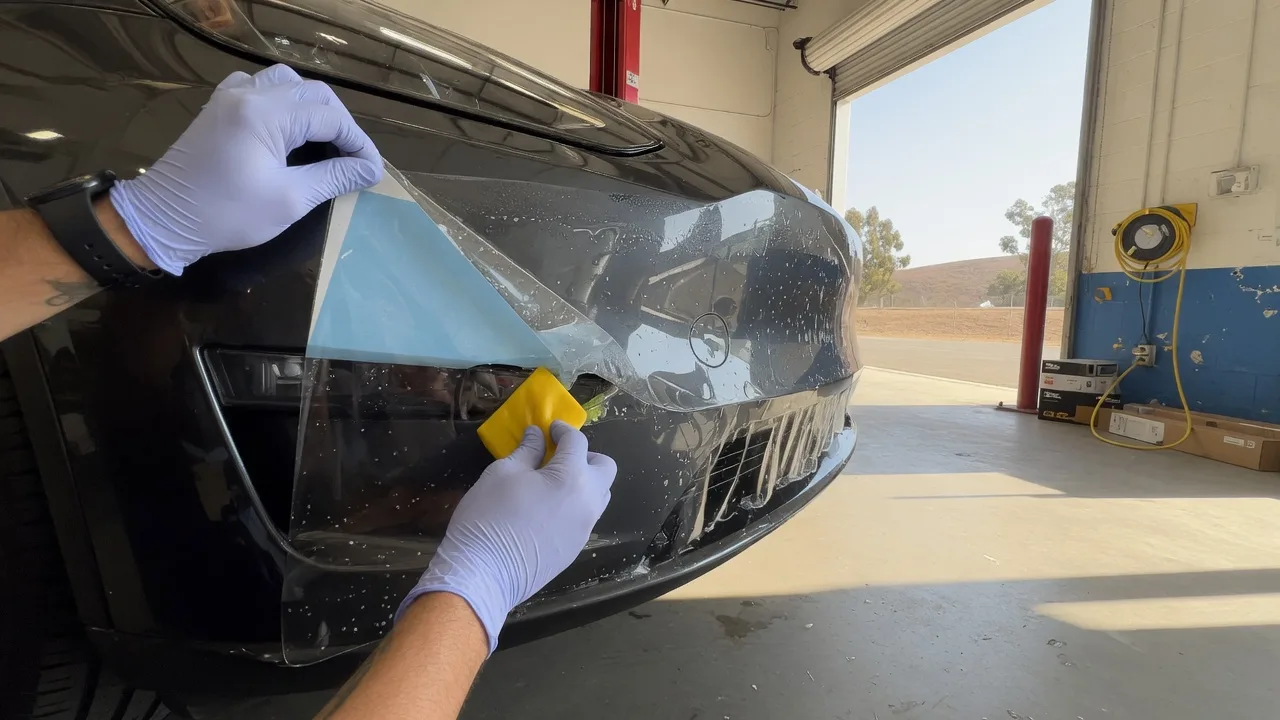
A useful quote should match those conditions to specific coverage. It shouldn’t treat every East County vehicle the same.
Start with where the chips and wash marks already are
Inspect the car in clean, indirect light before requesting film coverage. Look at the front bumper, hood, fender edges, mirror caps, and lower doors. Note where chips, scratches, or rough spots have collected.
That pattern gives an installer useful evidence. A regular I-8 commuter may see wear concentrated across forward-facing panels. A car used mainly around Main Street may show a different mix of marks. Tight Grossmont-area parking can also make door edges or loading areas part of the discussion.
Existing marks don’t automatically determine the film package. They help frame the in-person assessment. The installer still needs to inspect the paint, including any repainted panels or failing clear coat.
Paint protection film physically shields paint from chips, scratches, and road debris. Some professional-grade film uses a self-healing top coat for light surface scratches. That feature doesn’t repair punctures, deep damage, or the paint underneath.
Ask the installer to separate film preparation from paint improvement. Paint correction is machine polishing that can improve swirl marks, water spots, light scratches, and oxidation in the clear coat. The installer assesses the paint and quotes a safe stage before film is applied.
Take photos of the areas you’re concerned about. Include one full view and one close view of each panel. Photos can start the conversation, but they don’t replace an in-person inspection.
A car with clean factory paint presents a different removal risk than one with failing or previously resprayed paint. Professional removal on healthy factory paint is the normal case. That’s why an honest assessment should happen before you choose coverage.
How I-8, canyon roads, and inland heat change coverage
El Cajon drivers don’t all use their cars the same way. Some merge onto I-8 every weekday. Others spend more time on surface streets or canyon roads. Coverage should follow that real use.
Forward-facing panels matter most when road debris is the main concern. The bumper receives direct exposure. The hood, fenders, mirror caps, and headlights may also belong in the conversation. Your installer can show which of those parts are included in each package.
Canyon driving can add another variable. Debris doesn’t strike every vehicle or panel equally, so avoid a universal coverage map. Bring the installer a simple list of your common roads and the damage you’ve already found.
Inland sun and heat raise separate questions about care and parking. They don’t prove that one film tier or package fits every El Cajon car. Ask how the quoted product should be washed, dried, and inspected. Get the product care instructions in writing.
Heat can help a self-healing top coat address minor surface marks. It won’t heal deep scratches, punctures, or damaged paint. Ask the installer to demonstrate what the product description actually covers.
Don’t confuse impact protection with easier cleaning. Ceramic coating creates a hydrophobic surface layer and resists water, UV, and light chemical exposure. It doesn’t absorb rock-chip impacts. Our guide to ceramic coating and El Cajon’s inland heat explains that separate decision.
Drivers may choose film for impact-prone panels, then discuss coating for exposed paint or the film surface. The products serve different jobs. The installer should explain preparation and care for the exact combination quoted.
What full-front versus broader film actually covers
Package names can sound precise while hiding important differences. Compare the actual panel list, not only the label.
A full-front PPF package should be described panel by panel in your quote. Confirm whether the proposal includes the full hood, front bumper, full front fenders, mirror caps, and headlights. Don’t assume a familiar package name always includes the same parts.
Partial-front coverage uses less film. It may place a visible seam across the hood or fenders, depending on the design. Ask where each film edge will sit and whether that edge will bother you.
Broader coverage can extend beyond the front. Lower doors, rocker areas, rear loading edges, door cups, and door edges may matter for some vehicles. Their value depends on the vehicle’s shape and use.
An SUV carrying gear has different contact points than a sedan used for an I-8 commute. A work vehicle may have repeated loading wear. A car parked in narrow spaces may make door-edge protection more relevant. Those are reasons to discuss panels, not reasons to buy every available option.
Full-body film covers a wider painted surface area. It can make sense when the owner wants physical protection beyond impact-prone front panels. It’s still not an automatic choice for every car.
The comparison between full-front and full-body PPF comes down to exposure, paint condition, budget, and expectations. A written diagram can make the difference easier to see.
For a broader overview, review the site’s paint protection film service before meeting an installer. Then bring questions about your exact panels, rather than asking only for “PPF El Cajon.”
What an itemized El Cajon quote should identify
A useful quote names the vehicle, panels, preparation, product tier, and written price. It should also explain what the installer found during the paint inspection.
Start with the coverage map. Each included panel should appear in writing. Ask whether the film covers the full panel or only part of it. Confirm where seams and exposed edges will remain.
Next, ask about surface preparation. Existing wax or coating can interfere with film adhesion. The installer should specify the preparation required for the quoted film. If polishing is recommended, ask which panels need it and why.
The quote should distinguish paint correction from cleaning and film installation. Paint correction can improve certain clear-coat defects. It isn’t the same as washing or removing bonded contamination.
Ask how edges will be handled around badges, trim, sensors, panel gaps, and curved sections. You’re looking for a clear plan, not a promise that every edge can be hidden. Vehicle design affects what’s practical.
The written price should identify the chosen scope. Published PPF ranges are broad because vehicle size and coverage vary. Existing site guidance places PPF between $800 and $8,000. Your installer confirms the written price for your vehicle and selected panels.
Film thickness and warranty length haven’t been confirmed for this page. Don’t accept a general number as if it applied to every product. Ask for the quoted product information and have the installer confirm the film warranty in writing.
Also request the care sheet. Manufacturer guidance can discourage pressure washing or automatic washing because edges may lift. Don’t assume one product’s washing limits apply to another.
A clear quote gives you something concrete to compare. You can check scope, preparation, edges, care, and price without relying on package names alone.
Questions to ask before you book
Bring a short list to each assessment. It keeps the discussion focused on your vehicle and your El Cajon driving.
Start with these questions:
- Which existing paint defects need attention before film?
- Has any covered panel been repainted or shown clear-coat failure?
- Which exact panels are included in this quote?
- Does each panel receive full or partial coverage?
- Where will seams and exposed edges remain?
- How will badges, trim, sensors, and curved sections be handled?
- What preparation is included before installation?
- Is paint correction separate from the film price?
- What care instructions apply to this specific product?
- What does the written film warranty cover?
- Who handles a concern about lifting edges or trapped contamination?
- What should I inspect before accepting the completed work?
Ask the installer to walk around the vehicle with you. Point out the chips and wash marks you found. Explain whether most mileage comes from I-8, Main Street, canyon roads, or shorter local trips.
Review why rock chips appear in San Diego paint before comparing coverage. It can help you describe the exposure you’re trying to reduce without expecting a chip-proof guarantee.
Inspect the completed film under clean, even light. Review panel boundaries, seams, edges, and the areas around trim. Ask about anything that doesn’t match the written coverage map.
Care matters after installation. Follow the product care sheet for washing, chemicals, and timing. Avoid treating every film like it has identical requirements. If you later add a coating, confirm that it’s compatible with the installed film.
Paint Shield SD matches car owners with vetted, insured independent local pros. You’ll contract with and pay the installer you choose. The installer also confirms the product, written price, care instructions, and warranty terms.
When to call us
Call when you need a professional to inspect the paint and compare panel coverage for El Cajon driving. Call us at (760) 400-6557 and we’ll connect you with a vetted, insured local pro.