Fresh chips on the bumper or hood usually start the PPF decision. For a Carlsbad daily driver, compare coverage against the damage you see and the roads you use. A search for “ppf paint protection near me” should lead to a panel plan, not a vague package name.
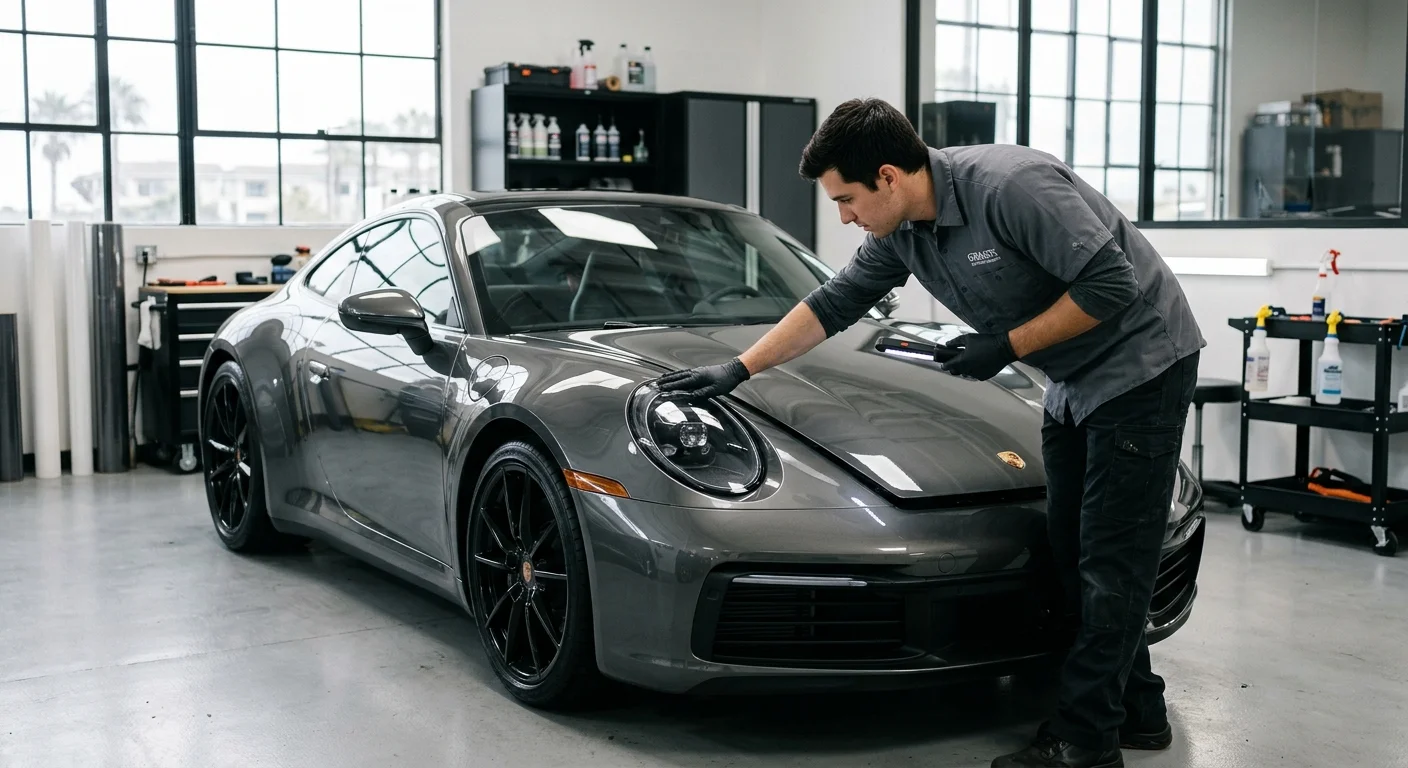
Start with where paint damage is appearing
Wash the car, park it in open shade, and inspect the paint closely. Start at the front bumper, hood, front fenders, and mirror caps. Then check the rocker panels, door edges, rear bumper, and loading area.
Look for chips, light scuffs, and marks that keep returning. Their locations help define the useful coverage area. A car with marks concentrated across its nose needs a different quote from one showing wear near doors and cargo areas.
The inspection should also account for how the car is used. A daily I-5 commuter may prioritize the leading panels. A car parked near the coast might need more attention around frequently handled doors and loading areas. Regular trips along Palomar Airport Road could place the emphasis on the front and lower body panels. These are decision examples, not predictions for every Carlsbad vehicle.
Photograph each area before contacting an installer. Include one full-car image and close views of individual marks. The photos give a pro useful context, although the final scope still depends on an in-person paint inspection.
Existing damage matters because film follows the surface beneath it. Ask the installer to identify any paint correction or touch-up that should happen first. Our guide to paint correction before PPF explains that separate preparation decision.
Write down your priorities before comparing packages. You may care most about highway exposure, parking scuffs, easier washing, or preserving a recently purchased car. That short list keeps the quote focused on your actual use.
How front-end coverage options differ
Front-end package names can sound more consistent than they are. Compare the listed panels, not only labels such as partial front or full front. The written scope should show exactly where the film begins and ends.
A limited quote might cover the front bumper and selected portions of nearby panels. Another might include the entire hood, front fenders, mirror caps, and bumper. Those differences affect both the visible seams and the amount of painted surface covered.
Partial coverage can fit a narrow goal or budget. It also creates stopping lines within some panels. Ask the installer to show where those lines will sit on your specific vehicle. Their visibility can depend on the paint color, panel shape, and how the car is viewed.
A full-front PPF package is a useful comparison point when the nose shows widespread marks. Review each included panel before treating “full front” as a complete specification. Confirm whether headlights, pillars, lower trim, and other small sections are included or quoted separately.
The broader paint protection film service page explains the overall matching process. Paint Shield SD connects car owners with vetted, insured independent installers. The installer inspects the vehicle, recommends the coverage, and performs the work.
Don’t let the package name replace a direct conversation about the car. Show the pro your damage photos and describe your normal driving. Ask for two itemized options if you’re undecided. One can target the most exposed panels, while the other can extend coverage across the full front.
That comparison makes the tradeoff easier to see. It also prevents two differently defined packages from looking equivalent on price alone.
Why I-5 and SR-78 driving affect the decision
Your recurring route can be more useful than your home address. Carlsbad drivers may use I-5 for north-south travel, SR-78 for east-west trips, or both during a normal week. Others spend more time on Palomar Airport Road and nearby surface streets.
Start with frequency. Occasional highway travel doesn’t create the same decision as a daily commute. Then consider where existing marks appear after those trips. A pattern across the bumper and hood supports pricing those panels together. Marks along lower doors or rocker areas support a separate side-coverage discussion.
Parking also belongs in the route review. A commute may end in a garage, an uncovered workplace lot, or coastal parking. Tight spaces and frequent loading can shift attention toward door edges, door cups, the rear bumper, or the cargo sill. The film map should follow those repeated contact areas rather than an imagined “Carlsbad package.”
Vehicle shape changes the conversation too. A low front end, tall SUV nose, wide rear quarter, or pronounced rocker panel gives the installer a different surface to inspect. Don’t assume a package shown for another body style transfers neatly to yours.
Think in terms of a typical week:
- Record which routes you drive most often.
- Note where the car is usually parked.
- Include sports gear, work equipment, pets, or frequent cargo loading.
- Mark the panels that already show repeated damage.
- Separate cosmetic concerns from areas you simply want covered.
This short use profile gives the installer a better starting point. If you’re still deciding whether the expense fits the car, read whether PPF is worth it in San Diego before requesting quotes.
When broader side and rear coverage makes sense
Broader coverage makes sense when your concerns extend beyond the vehicle’s nose. The clearest signal is repeated wear on side or rear panels. It may also fit an owner who wants fewer exposed paint transitions across the body.
Side coverage can focus on selected areas. Rocker panels, door edges, door cups, and rear-quarter sections may appear as separate quote items. Ask why each panel is recommended. A useful answer should connect the panel to visible wear or your regular use.
Rear coverage often relates to loading and parking patterns. A vehicle carrying beach equipment, strollers, tools, or luggage may show marks around the bumper and cargo opening. Photograph those areas after normal use. That evidence helps a pro distinguish an active problem from a panel that doesn’t need priority.
Full-body coverage is the broadest option, but it isn’t automatically the right one. Compare it with a targeted combination that addresses the front, sides, and loading areas you care about. The guide to full-front versus full-body PPF provides a closer comparison.
Paint condition can also change the plan. Film shouldn’t be treated as a way to erase existing defects. Ask the installer to inspect chips, scratches, repainted panels, and any clear coat concerns before finalizing coverage. The pro should explain which preparation belongs outside the PPF scope.
Carlsbad location pages can help narrow the starting point without turning geography into a fixed package. Review the local Carlsbad protection service page when you’re ready to request a match.
The goal is consistency between your priorities and the panel list. Broader coverage earns its place when the added panels solve a defined concern. If the reason stays vague, ask for a narrower alternative beside it.
What an itemized PPF quote should identify
A useful PPF quote names every covered panel. It shouldn’t rely on a package title alone. Read the scope line by line and compare the same panels across installers.
The quote should identify whether coverage is partial or complete on each panel. It should also show optional areas separately. That makes it easier to remove an unnecessary panel without rebuilding the whole proposal.
Ask the installer to identify:
- Every panel receiving film
- Any partial-panel boundaries
- Planned edge treatment where applicable
- Paint preparation included before installation
- Areas excluded because of paint condition
- Separate charges for optional coverage
- The total written price
- The film warranty in writing
- Expected job duration, confirmed by the installer
- Care instructions after installation
San Diego PPF projects can range from $800 to $8,000. Vehicle size and coverage scope can move a quote within that range. Your installer confirms the written price for your specific car.
Don’t compare totals until the panel lists match. A lower quote may cover fewer surfaces or stop partway across a panel. A higher quote may include broader coverage or preparation that appears separately elsewhere. Neither total explains enough by itself.
Ask for revisions in writing when the scope changes. If you replace partial hood coverage with the entire hood, the updated quote should reflect that exact change. The same applies when adding rocker panels, door edges, or rear loading areas.
The warranty needs similar clarity. Don’t rely on a general promise about film life or performance. No unverified lifespan figure should guide the decision. Your installer should confirm the film warranty in writing and explain what the document applies to.
Once the car is inspected, review the final panel map before work begins. Confirm that it matches your photos, commute, parking habits, and budget. That final check turns a nearby installer search into a specific protection plan.
When to call us
Call when you need a professional to inspect the paint and build a panel-specific PPF quote for your Carlsbad driving. Call us at (760) 400-6557 and we’ll connect you with a vetted, insured local pro.