A “full PPF near me” search is a booking search. You want the whole painted shell covered, and you want a local installer who will put that map on paper. Too many San Diego quotes still mean a full-front kit, a skipped roof, or a lump sum that hides prep.
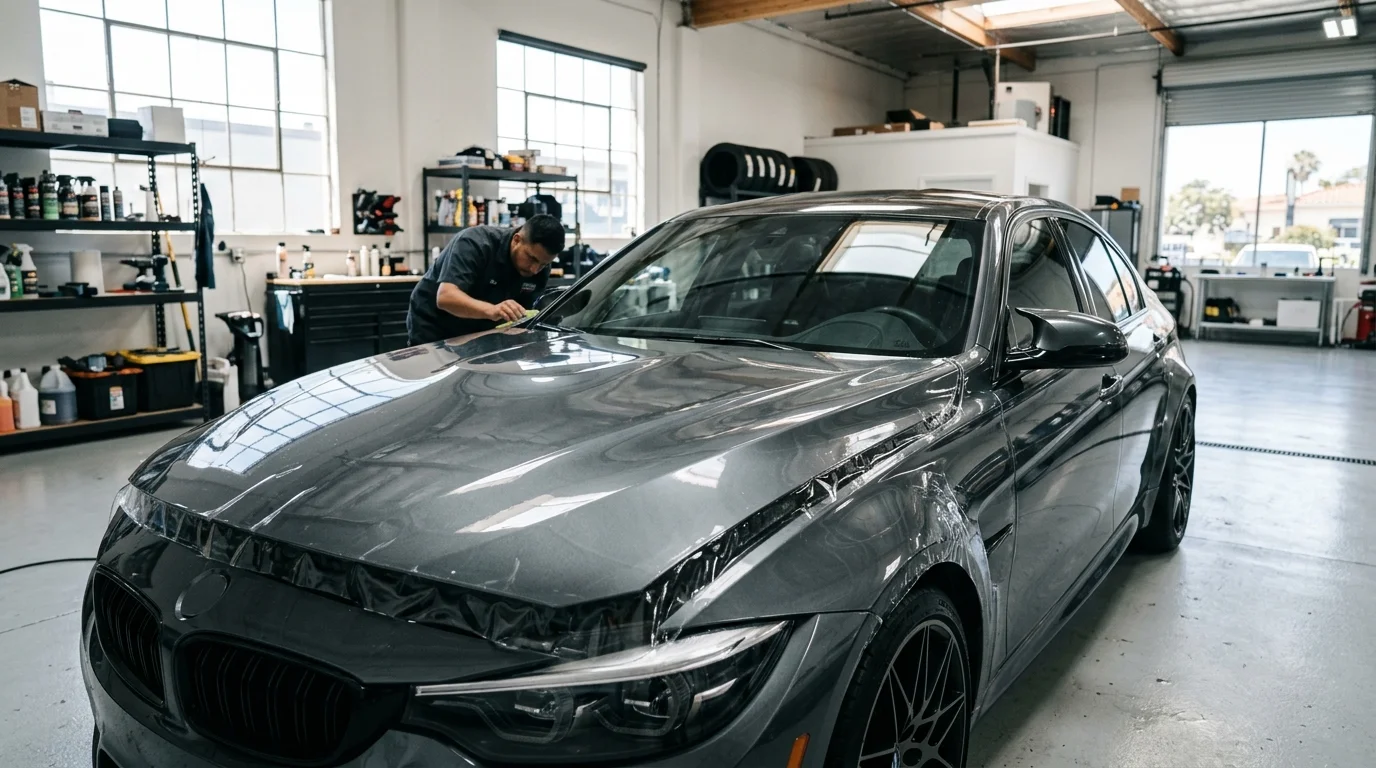
What full-body film is meant to cover, and what it often skips
Paint protection film is a flexible thermoplastic film that physically shields paint from chips, scratches, and road debris. Some films use urethane with a self-healing top coat for light surface scratches. That coat does not heal punctures, deep gouges, or the paint underneath. Professional removal on healthy factory paint is the normal case. Failing clear coat or a previous respray is the risk case, which is why the installer inspects first.
A full-body map is supposed to cover the painted exterior. That means the hood, roof, trunk or liftgate, front bumper, rear bumper, fenders, doors, painted pillars, and the painted faces of the mirrors. Headlights, fog lights, and glass are not automatic. Those are add-ons. Door jambs, the underside of the hood, the engine bay, and the inner fuel door stay bare unless the quote names them.
The trap in a full body ppf near me search is the word full. On a lot of shop pages, full means full front. Full front is usually the bumper, hood, fenders, and mirrors. Headlights sometimes sit in that kit. Doors, roof, and the rear of the car stay uncovered. If you typed full ppf near me and the bid is a front-end kit, you are not looking at the same job. Line the bid up with the full-body PPF package map, then with a general paint protection film scope.
Skips cluster in the same spots on San Diego cars. Roofs get dropped on crossovers with huge glass panels. Rockers get a short strip that stops above the dirt line. Rear bumper corners near exhaust stay open. Painted spoilers, roof rails, and the thin painted frame around windows get left off to save film. Edges get trimmed short instead of wrapped around the panel lip. Coastal parking then packs grit into that raw edge.
Ask the installer to walk the car in daylight. Have them point at every skip. Put those skips in writing. Film only protects what it covers.
How body type and paint condition change the map
A compact hatch commuting the I-8 is not a crew-cab truck on SR-67. Surface area, panel count, and body lines change film use and labor. SUVs and trucks have taller doors, longer rockers, and more bumper area. Sports cars add vents, splitters, and tight concave sections that take more time to wrap. EVs often bring large flat hoods, frunk lids, and camera cutouts the installer has to work around.
Paint condition changes the map before a single panel is cut. Film follows the paint. Swirl marks, water spots, light scratches, and oxidation in the clear coat will show. Independent installers often quote machine polishing first. That is paint correction, its own stage, not a buried extra. The installer assesses the paint and quotes the safe stage before film. Healthy factory paint is the normal removal case later. Respray and failing clear coat are the risk case.
New cars still need that look. Transport film, dealer lots in Kearny Mesa, and freeway delivery miles leave grit. Used cars that sat in East County heat or coastal lots need a closer check of the clear coat. A sedan quote does not transfer to a truck. A two-door quote does not transfer to a four-door crossover.
If the car is leased, coverage and removal timing matter as much as chips. Read full-body PPF for a leased car before you lock the map. Aftermarket film does not, by itself, void a factory warranty. The federal Magnuson-Moss Warranty Act, enforced by the FTC, is the rule that a manufacturer generally cannot void a warranty merely because an aftermarket product was used, unless that product caused the failure. That is not a promise your warranty is protected. Causation is fact-specific. Do not treat it as advice on a dispute.
Why San Diego sun, parking, and freeway miles affect the choice
San Diego County is not one climate. Coastal north county, the central city, East County, and the South Bay wear paint in different ways.
Coastal cars in Oceanside, Pacific Beach, Coronado, and Imperial Beach sit in salt air and the marine layer. Edges still need to stay clean. Salt does not replace washing. Inland cars in El Cajon, Santee, Escondido, and Ramona take more UV and hotter parked-car days. Ceramic coating is a liquid polymer that bonds to paint. It resists water, UV, and light chemical exposure. It does not absorb rock chips. If you want that slick layer on film or on uncovered paint, start with ceramic coating in San Diego. The installer confirms whether coating belongs in the same visit.
Freeway miles are where chips start. I-5 along the coast, I-15 through inland north county, I-805 through the South Bay, and I-8 toward the mountains throw grit. Caltrans work, dump trucks, and canyon wind on the 52 and 67 add more. Full-front film catches the first hits. Door edges, rockers, and the rear of an SUV still take damage in Fashion Valley, UTC, and beach lots. Full body is the quote for daily drivers who park tight and do not want a two-tone of protected and unprotected paint.
Parking is local. Downtown garage pillars. Mission Valley carts. La Jolla valet. Chula Vista apartment lots. Those are door dings and scuffs, not only hood chips. Some film can self-heal minor surface marks with heat. It is not a promise against a deep key gouge or a curb scrape through the film.
Installers around Miramar, Kearny Mesa, and La Mesa all quote this work. The panel map on the page matters more than the zip code on the shop. If you are still choosing coverage instead of booking the whole shell, use full front vs full body PPF in San Diego. This page is for the owner who already wants the whole car and needs the bid to match that intent.
What an itemized full-body quote should list
A useful full-body quote is a panel map plus a process list. It is not a single number with “full” on top.
San Diego paint protection film is typically quoted from $800 to $8,000, depending on coverage, vehicle size, and the product tier your installer recommends. A true full-body job sits toward the high end of that spread. Your installer confirms the written price. This site does not publish a verified full-body-only figure beyond that range. Treat a “starting at” ad as a different car and a different scope. Shop ads for a branded full-front kit are a smaller job. Do not paste that number onto a full-body ask.
The written bid should name every painted panel included, and every panel excluded. It should say whether edges wrap around the lip or stop short. It should say how patterns are cut, in plain language, without treating a method as a guarantee. Paint correction, if any, belongs on its own line. Wash and decontamination steps belong on the page too. Lights and other add-ons need their own prices, including a separate headlight film quote if you want it. Finish (gloss or satin) and the product tier should be named without a slogan. The installer confirms the film warranty in writing.
Time in the shop is typically 3-5 days for full-body film on a standard vehicle. That is an expectation, not a promise. Same-week scheduling available for most services. The installer confirms the calendar. Aftercare belongs on the bid: first wash, pressure-washer use around edges, and whether a coating is included. Avoid brush tunnels on film. Follow the care sheet for soap, chemicals, and timing.
Generic line items live on what PPF prices include. Use that list, then force the local bid to name your car, your city, and your skips. Getting matched costs you nothing. The in-person assessment and written quote cost you nothing. You pay the installer you choose for the work.
Questions to ask before you book an independent installer
Independent pros install the film. Paint Shield SD matches you with vetted, insured local installers. You contract with the pro. You pay the pro.
Ask the installer to walk this car with you and write every panel that will not get film. Ask to see the finish and the product tier they recommend, with the data sheet. Ask whether they will correct paint first, and what stage is safe on this clear coat. Ask how they handle cameras, sensors, and badges. Ask what the written film warranty covers, and who honors it. Ask how you should wash after install, and which wash method to avoid. Ask who reworks a lifting edge, and whether that visit is quoted. Ask whether any ceramic coating is in the bid, on the film, on uncovered paint, or neither.
Worth depends on how you drive and park. Full-body film is the physical shield. Coating is the slick layer. If your miles are I-15 gravel and tight garages, full body answers a real problem. If the car rarely leaves a quiet driveway, a smaller map may be enough. There is no chip-count guarantee on this site, and no invented resale figure. Ask the installer to talk through your commute in plain terms.
Plan the days the car is gone. A 3-5 day full-body job from Chula Vista or Oceanside means a second set of keys and a ride home. Do not hire on a package nickname. Hire on a panel list, a prep list, and a written price for this vehicle. Bring the car in daylight. Look at sample film on a real panel, not only on a brochure.
When to call us
When you want full-body film in San Diego County, you need a vetted, insured local installer to inspect the paint and write the map. Getting matched costs you nothing. Call us at (760) 400-6557 and we’ll connect you with a vetted, insured local pro.