Your coated paint felt slick before, but now your hand catches on it. That change deserves attention, but roughness alone doesn’t prove the ceramic coating failed. Start with a careful inspection, then compare what you find with the installer’s written care instructions.
Why coated paint may stop feeling smooth
A rough surface can have several possible explanations. Material may be sitting on the coating instead of the coating itself changing. The texture might also have been present beneath the coating. A finish problem is possible, but touch can’t identify it by itself.
Start by considering where the car spends its time. A vehicle parked near Oceanside or Imperial Beach faces different conditions than one parked in El Cajon or Santee. Coastal parking can involve damp air and airborne material. Inland parking can involve visible dust, landscaping debris, and dry roadside buildup.
Your usual routes matter too. Regular travel on I-5, I-805, or State Route 67 can expose the paint to different kinds of road residue. Outdoor parking near sprinklers or trees adds another variable. None of these observations proves the cause. They help an installer understand what changed.
Timing offers another useful clue. Note whether the texture appeared suddenly or developed between washes. Check whether it covers the entire car or only horizontal panels. The hood, roof, and trunk often reveal patterns more clearly than vertical doors.
Don’t assume every rough spot represents contamination. Also don’t assume the coating has disappeared. A recently coated car may need its original installer to inspect the finish and installation record. An older installation may need a broader maintenance review.
If you’re unsure what was applied, begin with the paperwork. The written invoice may identify the service and installer. Our ceramic coating service page explains how we connect San Diego County drivers with vetted, insured local pros when an independent assessment is needed.
How to inspect the surface without diagnosing by touch alone
Wash history comes before diagnosis. Write down when the car was last cleaned and what method was used. Include anything applied during or after that wash. If you don’t know a product’s compatibility, don’t guess. Check the coating maker’s instructions or ask the original installer.
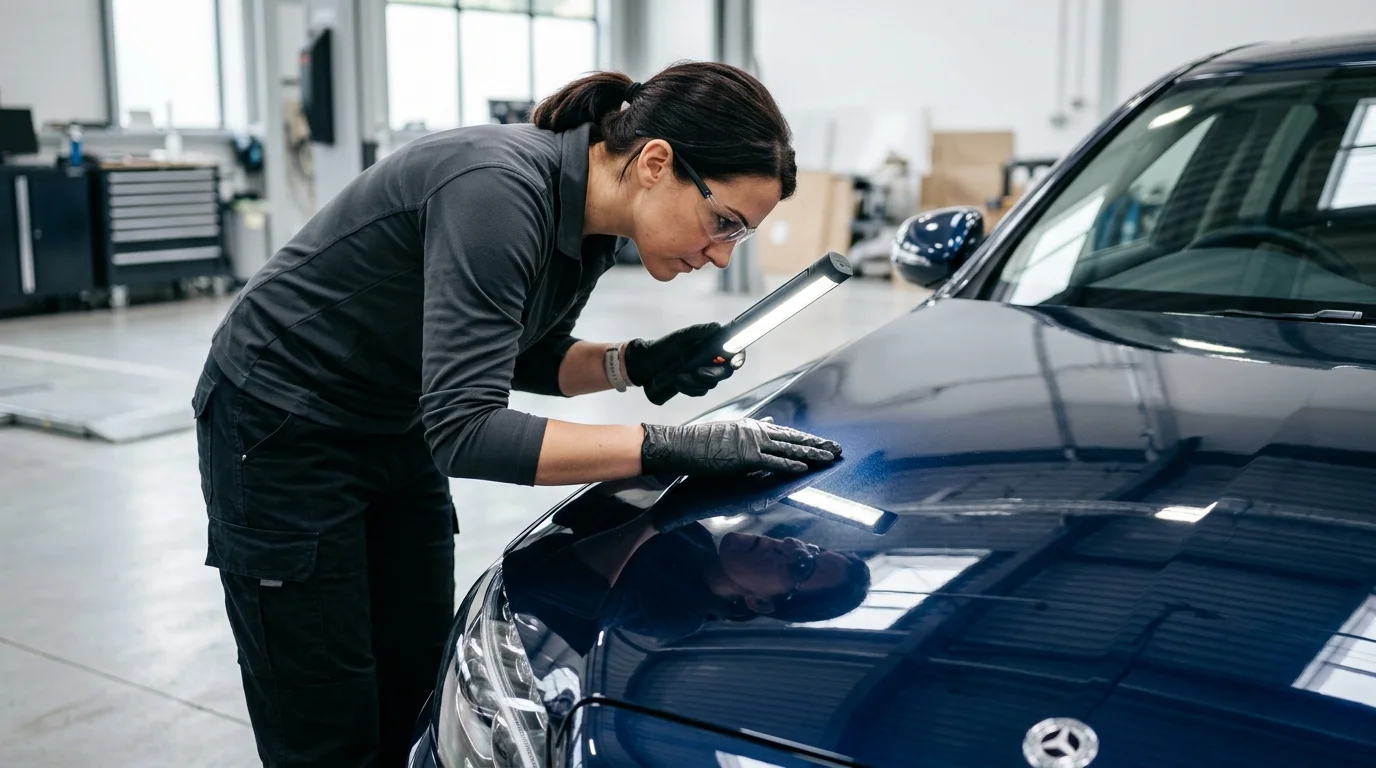
Inspect the paint under clean, even lighting. Look across the panel from several angles. Roughness may appear with visible specks, isolated marks, dull patches, or no obvious visual change. Record what you see without assigning a cause.
Check separate areas rather than repeatedly rubbing one spot. Compare a horizontal panel with a sheltered vertical section. You can also compare an exposed rear panel with an area less affected by road spray. These comparisons give a professional more useful information than “the whole car feels bad.”
Take clear photos before another wash or treatment. Capture one full panel and several close views. Reflections from a straight light source can help show whether the finish looks even. Photos won’t confirm coating failure, but they preserve the condition you noticed.
Avoid turning the inspection into an experiment. Don’t scrape a speck with a fingernail. Don’t reach for an abrasive product because a forum suggested it. Don’t mix cleaners or apply an aggressive treatment without written guidance for that coating.
San Diego conditions can change across one drive. A car may leave coastal Carlsbad, cross inland highways, and park near landscaping in Escondido. That history helps narrow the inspection without pretending touch provides a laboratory result.
For a wider care checklist, see our guide to maintaining a ceramic-coated car in San Diego. It can help you organize the details before speaking with the installer.
How bonded residue differs from coating failure
Bonded residue describes material that remains attached after an ordinary wash. Coating failure describes a concern with the installed layer or its condition. Those are different possibilities, but they can feel similar beneath your fingertips.
Texture alone can’t tell you which one you’re dealing with. A panel may feel rough while still looking glossy. Another may look uneven without feeling especially coarse. Water behavior can also vary across a dirty surface, so one rinse isn’t a final test.
Location patterns can help guide the next step. Texture limited to the roof, hood, or trunk suggests a different inspection path than texture surrounding one repaired panel. Roughness concentrated near lower doors may point the inspector toward road exposure. These are clues, not conclusions.
Visible rings or spots deserve their own review. Our article about water spots on ceramic coating covers that narrower problem. Don’t treat every rough panel as a water-spot issue, especially when no spotting is visible.
An installer may need to determine whether material sits above the coating. The installer may also review whether paint correction, body repair, or another service occurred after the original application. Share any records you have. That includes wash receipts, repair paperwork, and the coating invoice.
Don’t use a promised product lifespan as your diagnosis. Paint Shield SD doesn’t publish an unverified ceramic coating lifespan. Product, installation, use, parking, and care details belong in the installer’s written documents.
The useful question isn’t simply whether the paint feels rough. Ask what the professional can verify on the surface, what process they recommend, and how that process relates to the installed coating.
When washing or professional inspection may be appropriate
A routine wash may be a reasonable first step when the car is visibly dirty and its care instructions are available. Follow the written method provided for that coating. If those instructions are missing, contact the original installer before selecting chemicals or added treatments.
After washing, let visual evidence guide you. Note whether the roughness changed, stayed in the same locations, or became easier to see. Don’t keep washing the panel repeatedly to force a result. Repetition can erase useful context without identifying the underlying issue.
Professional inspection becomes more appropriate when texture remains after normal care. It’s also useful when the surface has isolated marks, uneven appearance, or a history you can’t reconstruct. A pro can examine the finish in person and explain what they can confirm.
Inspection also makes sense before any abrasive correction. Don’t approve polishing or another corrective step based only on a phone description. Ask the pro to identify the affected panels and explain the proposed process first. Request that the scope be written down.
If the original installer is available, begin there. They may have the installation record and applicable care terms. If you need another opinion, our ceramic maintenance program connects car owners with vetted, insured local pros.
Tell the pro where the vehicle is usually parked. Mention coastal exposure, inland dust, sprinkler contact, construction areas, and frequent freeway travel when applicable. Provide dates instead of vague impressions. “The roof changed after Tuesday’s wash” is more useful than “it recently got rough.”
The goal isn’t to produce a remote diagnosis. It’s to separate an ordinary cleaning question from a finish concern that needs hands-on evaluation.
What maintenance details to confirm in writing
Written instructions reduce guesswork after the inspection. Ask the installer to identify the coating or service recorded for your vehicle. The paperwork should also distinguish recommended routine care from any corrective work proposed now.
Request the exact process in plain language. Ask which panels need attention and why. If a product will be applied, ask the installer to confirm its suitability for the existing coating in writing. Don’t rely on an unlabeled bottle, a generic social video, or advice written for an unknown coating.
You should also ask what the proposed visit can establish. Will the pro inspect only, perform maintenance, or recommend correction after evaluating the paint? These are different scopes. The written document should match the conversation.
Warranty questions belong with the installing pro. Paint Shield SD doesn’t issue a coating warranty. The installer’s written terms control their work, including any conditions tied to inspection or maintenance. If the warranty language isn’t clear, ask the installer to explain it before approving treatment.
Keep a simple record after the visit. Save the date, photos, invoice, and care instructions together. Note where the vehicle normally parks and when the texture first appeared. That record helps if the surface changes again.
Don’t ask a pro to guarantee a result before seeing the car. Instead, ask what they observed and what remains uncertain. A careful answer may include limits. That’s more useful than a confident diagnosis based on touch alone.
For future maintenance, confirm these points in writing:
- The service performed and panels inspected
- The recorded coating or treatment
- The recommended wash approach
- Any product compatibility guidance
- The proposed correction scope, if applicable
- The installer’s written warranty terms
Those details create a clear baseline. They also help another professional understand the car without starting from assumptions.
When to call us
Call when rough ceramic coated paint remains after routine care, or before approving corrective work. We’ll match you with an independent Ceramic Coating and Paint Protection Film pro who can inspect the surface in person. Call us at (760) 400-6557 and we’ll connect you with a vetted, insured local pro.