White rings or cloudy marks can appear even on coated paint. For water spots on ceramic coating, start with the normal maintenance wash recommended by your installer. If the marks remain, stop experimenting and arrange a professional inspection.
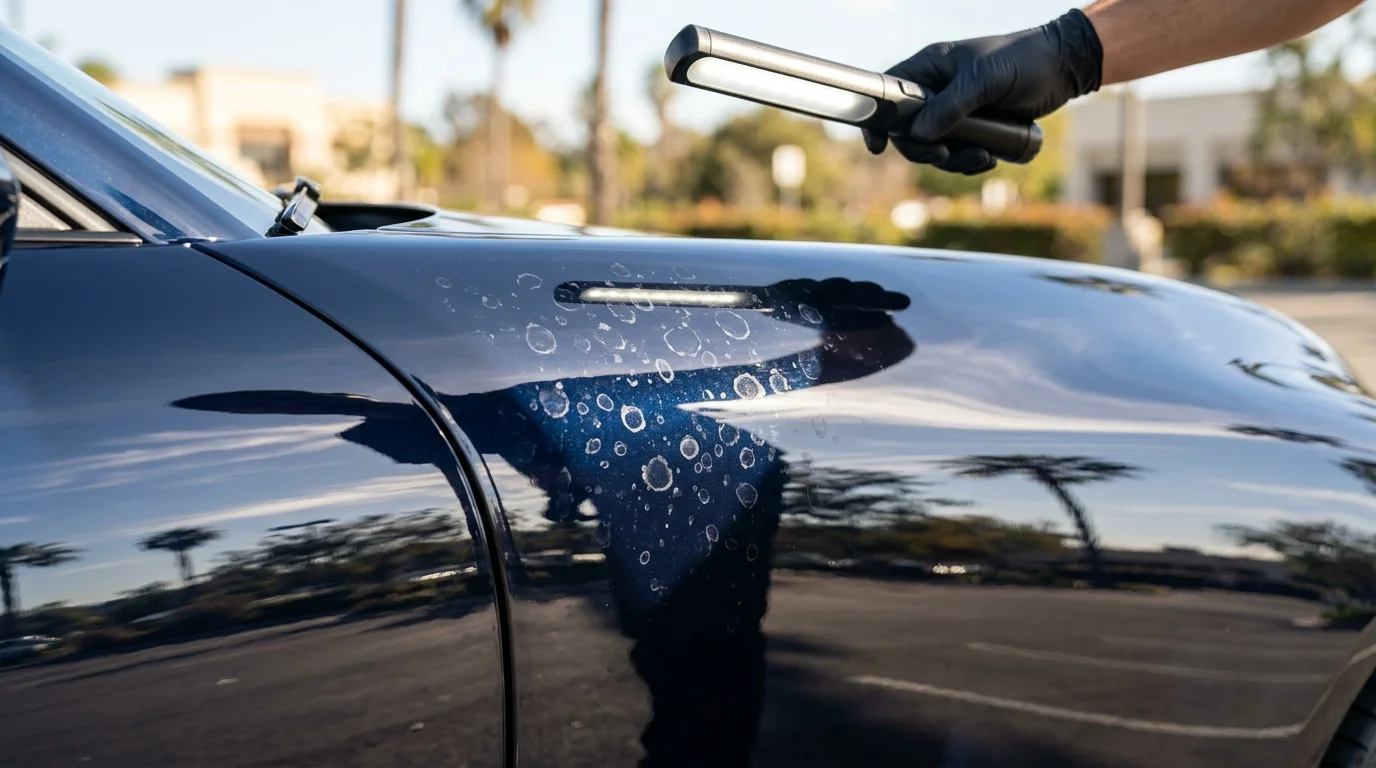
Why coated paint can still develop water spots
A ceramic coating doesn’t prevent water from landing on your vehicle. Droplets can remain after irrigation spray, rain, rinsing, or outdoor parking. When those droplets dry, material within them or already on the surface may remain visible.
That doesn’t automatically mean the coating has failed. It also doesn’t prove the marks are harmless surface residue. Similar-looking spots can involve different layers, and appearance alone may not reveal which layer is affected.
The recent history of the vehicle matters more than a quick guess. A car parked beside sprinklers in Chula Vista has a different exposure history from one rinsed and left wet in a Carlsbad garage. A vehicle parked outdoors in El Cajon may also collect several kinds of surface contamination before the owner notices any spots.
No verified local water analysis was available for this article. We can’t claim that water in one San Diego County community causes worse spotting than water elsewhere. Your address also can’t identify what’s on the panel. The useful details are where the water came from, when it dried, and what happened afterward.
Coated paint still needs routine care. Our guide to maintaining a ceramic-coated car in San Diego covers the broader washing and inspection routine. For a new cluster of spots, however, focus on the specific event. That gives you and a detailing professional a better starting point.
How to inspect spots before treating them
Begin by documenting the spots before applying anything new. Take clear photos in even daylight, then take another set under a direct inspection light. Include one wide photo and several close views. Reflections across the panel can make faint rings easier to see.
Note where the marks appear. Horizontal areas may include the hood, roof, and trunk. Also check nearby glass, trim, and uncoated surfaces. Similar marks across several materials can provide useful context, but they don’t confirm a cause.
Record the timing as accurately as you can. Write down whether the spots followed sprinkler overspray, rain, a driveway rinse, or a car wash. If the vehicle was parked near irrigation in North Park or a South Bay lot, include that detail. Don’t assume the source based only on the spot pattern.
Next, review any care instructions supplied by the coating installer. Look for the coating product, installation date, approved wash method, and listed maintenance products. If you don’t have that paperwork, ask the original installer for the information. Don’t substitute an online recipe for missing product guidance.
Inspect again after the normal wash and drying process. Notice whether each mark disappeared, became less visible, or remained unchanged. Don’t use harder pressure to force a result. Repeated rubbing can make it harder to tell which marks were present at the start.
This inspection isn’t a diagnosis. Its purpose is to preserve useful information and prevent random treatment. Clear photos, timing, and product records help a pro decide what to examine in person.
When washing may be enough
A normal maintenance wash is the reasonable first step when spotting appears fresh. This is especially true when the marks followed a known rinse or sprinkler event. Washing may remove material resting on the surface, but removal can’t be promised from appearance alone.
Follow the method and products identified by your installer. If those instructions aren’t available, don’t guess about chemical compatibility. The approved claims for this site don’t establish a universal spot remover, dilution, dwell time, or chemical procedure for every ceramic coating.
Keep the first attempt simple. Rinse the vehicle, complete the normal hand-wash process, rinse again, and dry it. Use clean wash materials and avoid aggressive rubbing. Then inspect the same areas under comparable lighting.
One careful wash provides better information than several changing treatments. If a spot remains, don’t cycle through household acids, compounds, polishes, or unlabeled products. A product described online as coating-safe may not match the coating installed on your vehicle. The installer or inspecting pro should confirm the next product and process.
An automatic wash can seem like a convenient second attempt. Before using one, read our guide to automatic car washes and ceramic coating. It explains what to compare against your installer’s care instructions.
Owners often search for ways to “remove water spots from ceramic coating.” The important distinction is that washing is an initial maintenance step, not proof that every mark will lift. If the normal wash works, return to the documented care routine. If it doesn’t, preserve your photos and move to an inspection.
When correction or coating inspection may be needed
Arrange an inspection when the marks remain after the normal wash. You should also get help if the area looks cloudy, changes under direct light, or appears different from the surrounding paint. Those observations don’t establish the damage level, but they justify a closer look.
A professional can examine the surface under controlled lighting. Ask the pro to explain whether the marks appear to sit above the coating, affect the coating, or involve the paint beneath it. The final assessment may require a small test area and review of the installed product.
“Ceramic coating water spot repair” can describe several different scopes. One vehicle may need further cleaning. Another may need a coating inspection or paint-related work. This site’s approved claims don’t establish one universal repair method, so the pro should explain the proposed steps before work begins.
Before anyone applies a stronger chemical or begins polishing, ask how that process relates to the existing coating. Product compatibility wasn’t confirmed for this article. The person inspecting the vehicle should identify the product, test plan, and expected effect without promising complete removal.
If paint correction is proposed, request a written scope. It should identify the affected panels and explain what happens after the correction step. Your pro should also confirm the written price. Paint Shield SD doesn’t set the independent pro’s price and doesn’t perform the correction.
If the current coating’s condition can’t be confirmed, compare the inspection findings with the available ceramic coating options. Don’t approve a new coating solely because spots are visible. First determine what the pro observed and what treatment is actually being recommended.
What to ask a maintenance professional
A useful appointment starts with a clear history. Tell the pro when the spots appeared, where the vehicle was parked, and which wash products were used. Share photos taken before and after washing. Bring the original coating paperwork if you have it.
Ask direct questions before authorizing treatment:
- What do you observe on the coated surface?
- Can you test a small area before treating the whole panel?
- Which product or process do you propose?
- How was its compatibility with this coating confirmed?
- Does the plan involve cleaning, polishing, coating work, or paint correction?
- Which panels are included in the written quote?
- What result can’t be confirmed until the test area is complete?
- What maintenance instructions should I follow afterward?
Listen for an explanation tied to your vehicle. A credible recommendation should reflect the actual panel, coating records, and spot history. Be cautious when someone guarantees removal from photos alone or recommends the same aggressive process for every coating.
San Diego County parking conditions vary by property and trip. Tell the pro if the vehicle regularly sits beside irrigation, remains outside near the coast, or spends workdays in an uncovered inland lot. If the spots followed a specific stop in Oceanside, San Marcos, La Mesa, or the South Bay, include that detail without guessing about the water source.
Ongoing support may make sense when outdoor parking or repeated water exposure keeps creating inspection concerns. A ceramic maintenance program gives you a service page to review before discussing the actual schedule and scope with an independent pro.
Paint Shield SD matches vehicle owners with vetted, insured local professionals. The independent pro performs the inspection, recommends any correction, and confirms the written price directly with you.
When to call us
Call when spots remain after the installer-approved wash, or when the coating’s condition isn’t clear. A professional ceramic coating and paint protection film pro can inspect the surface before stronger treatment is considered. Call us at (760) 400-6557 and we’ll connect you with a vetted, insured local pro.