Windshield protection film vs ceramic coating comes down to impact exposure versus surface care. Film adds a clear physical layer intended to face road contact. A coating changes how the glass surface behaves, but it isn’t a physical chip barrier.
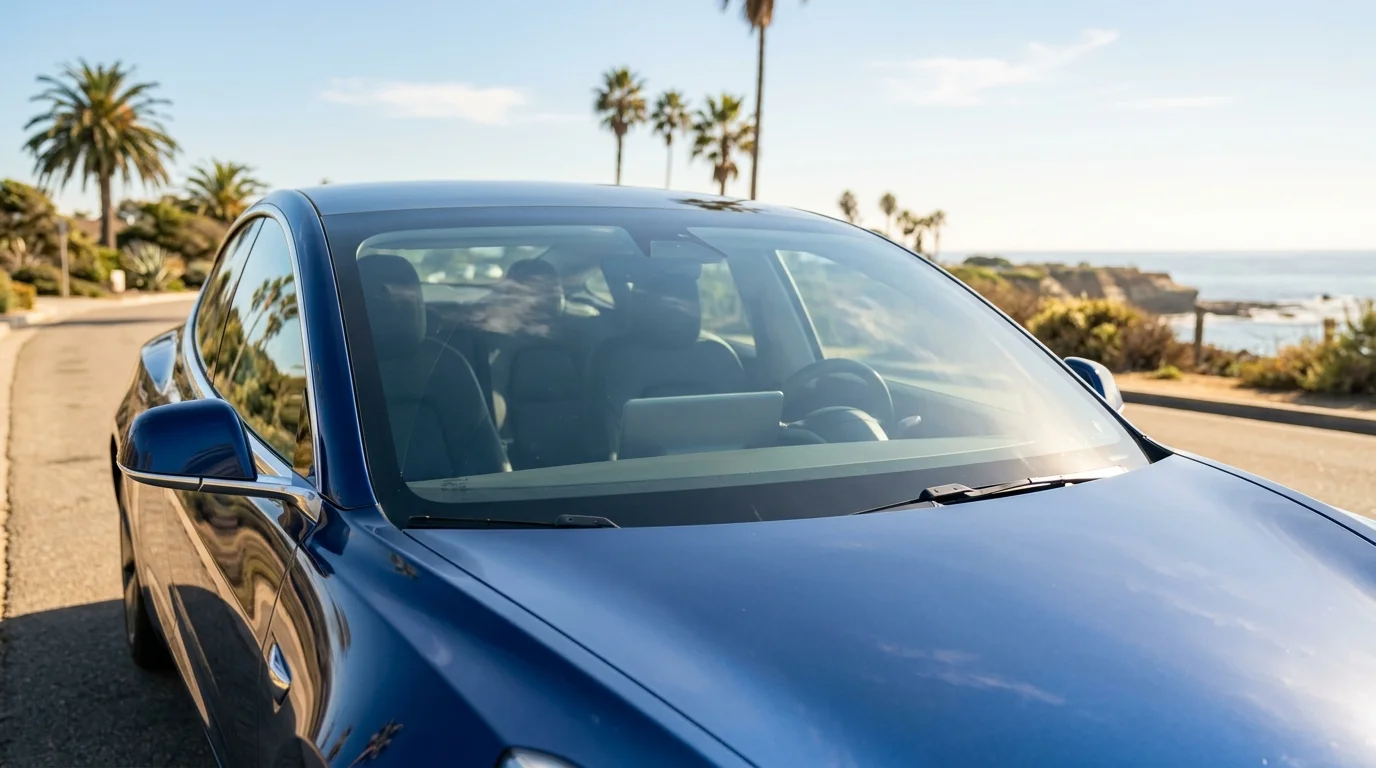
What windshield film is and how it differs from paint film
Windshield protection film is generally a clear sheet applied over automotive glass. It creates a separate surface between the windshield and the road. Ceramic coating is a liquid-applied treatment rather than a sheet.
That difference shapes the buying decision. Film is sold for drivers concerned about contact from road debris. A windshield coating is usually considered for water behavior, cleaning, and surface maintenance. It shouldn’t be treated as chip protection.
Windshield film also differs from the paint protection film used on body panels. Paint film follows painted panels such as the hood, fenders, and mirrors. Windshield film sits in the driver’s direct field of view and beneath the wiper path. That makes optical clarity and wiper compatibility central parts of the decision.
Neither option repairs existing glass damage. Have chips or cracks assessed before choosing another surface product. A technician determines whether damage can be repaired based on its size, depth, and location.
California law needs attention here. California Vehicle Code 26708 contains position-specific rules for material placed on a windshield. Its windshield provision addresses transparent material on the topmost portion, with the bottom edge at least 29 inches above the undepressed driver’s seat.
We couldn’t confirm from that statute that any specific full-windshield protection film is legal. Don’t accept a broad claim that every clear film is automatically allowed. Ask the installer to identify the proposed product and coverage. Then compare that application with the current official statute before paying.
The case for it on a long commute
A long freeway commute gives windshield film its strongest practical argument. More road time means more opportunities for debris to reach the glass. That doesn’t prove a film will prevent damage, but it makes the comparison more relevant.
San Diego routes can produce very different driving patterns. An Oceanside commuter may spend much of the week on I-5 toward Sorrento Valley. Someone traveling from Escondido to Miramar may rely on I-15. A Paradise Valley driver heading toward Kearny Mesa may use I-805, while an East County commute may follow I-8 between El Cajon and Mission Valley.
The freeway name alone shouldn’t decide the purchase. Start with your own history. Review where previous chips appeared and how often they occurred. Note whether you regularly follow construction traffic or drive near loose roadside material. Your real experience is more useful than a broad sales pitch.
Next, compare priorities. Film may deserve a closer look when repeated windshield damage has become a pattern. Ceramic coating fits a different concern, such as easier surface care. Drivers making short neighborhood trips may see less reason to accept the extra cost and maintenance of a specialty film.
Get separate written quotes for each option. The windshield-film quote should identify the exact coverage, surface preparation, removal terms, and care instructions. Your installer should also confirm any film or workmanship warranty in writing.
We couldn’t confirm a reliable installed price range for windshield protection film in San Diego. Local pros set their own prices, so a plausible number would still be a guess. Ask for the total written price before deciding, including any future removal charge.
What it does to wipers, sensors, and night glare
Wipers move directly across the windshield’s outer surface. With film installed, the blades move across that added layer instead of bare glass. Product-specific compatibility matters, and broad promises aren’t enough.
Ask the installer which wiper blades and washer fluids match the proposed film. Request written care directions. The installer should also explain what signs require an inspection. Don’t assume advice for paint film applies to a windshield product.
Sensor questions require the same care. If your vehicle has a camera or driver-assistance equipment behind the windshield, locate that area in the owner’s manual. Ask whether the proposed film covers the camera’s view through the glass. The answer should address your vehicle and the exact product, not film in general.
Don’t assume windshield film automatically requires camera recalibration. Don’t accept a blanket promise that it can never affect the camera’s view either. Product placement and vehicle design matter. The installer and vehicle manufacturer are better sources for that specific compatibility decision.
If the windshield later needs replacement, vehicles with camera-based driver assistance can require recalibration. The pros we connect you with offer windshield repair only, not replacement.
Night visibility deserves an equally direct check. Ask how the film handles haze, reflections, and optical distortion. Request product documentation rather than an unsupported percentage claim. If possible, view the same product from the driver’s position in an installed vehicle. Check it in daylight and after dark.
Also inspect the edges and the full wiper sweep. The goal isn’t simply a clear appearance while parked. You need a surface you can evaluate through real rain, road grime, oncoming lights, and regular wiper use. No film should receive a pass based only on a showroom sample.
Why it is a niche product, not a default
Windshield film isn’t the automatic next step after paint PPF. It brings a separate legal question, a direct visibility requirement, and vehicle-specific compatibility concerns. Those checks make it a niche choice.
The strongest candidate is usually a driver with repeated windshield damage and substantial freeway exposure. The driver should also be willing to follow the film’s written care instructions. Even then, film should be treated as one option, not guaranteed protection.
It becomes a weaker fit when the main concern is water behavior or easier cleaning. Those are coating questions. It’s also a poor match for anyone expecting permanent protection, a guaranteed chip-free windshield, or an unsupported lifespan promise.
Be cautious with product claims that don’t identify a source. We couldn’t verify a universal film thickness, service life, or warranty length. Ask the installer to put the film warranty in writing. Read its exclusions, maintenance terms, and removal conditions before authorizing work.
Some drivers also worry that an aftermarket product automatically voids the vehicle warranty. Under the federal Magnuson-Moss Warranty Act, enforced by the Federal Trade Commission, a manufacturer generally can’t void a warranty merely because an aftermarket product was used, absent a showing that the product caused the failure.
That rule isn’t a promise that a specific warranty dispute will go your way. Causation depends on the facts. Ask the vehicle manufacturer about relevant warranty terms, and keep the installer’s product records.
A careful comparison should therefore cover four separate matters: legal fit, visibility, vehicle compatibility, and written cost. If one remains unclear, pause the purchase. Windshield film should solve a documented problem, not create a new uncertainty.
The cheaper alternative most drivers should look at first
For many drivers, the first alternative isn’t another windshield product. It’s leaving the glass untreated and using professional chip repair when repairable damage appears.
That approach has a confirmed market range. Windshield chip repair typically costs $60 to $180 for the first chip. Additional chips are quoted at the visit. Your installer confirms the written price before work begins.
We couldn’t confirm that this approach always costs less over time. Total cost depends on your damage history and whether each chip is repairable. It does avoid buying film before you’ve established that your driving pattern supports it.
A technician must inspect the damage. Repairability depends on size, depth, and location. The pros we connect you with for windshield chip repair keep the factory glass in place when the damage qualifies for repair. They don’t offer windshield replacement.
That distinction can matter on vehicles with camera-based driver assistance because replacement can require recalibration. Repair isn’t guaranteed to fit every chip or crack, but it’s worth checking before assuming replacement is the only path. Our guide to windshield chip repair in San Diego explains what information to gather before contacting a pro.
Don’t ignore damage that affects your view. California Vehicle Code 26710 says operating a vehicle with a windshield or rear window in a condition that impairs the driver’s vision is unlawful. An officer may require the condition to be corrected within 48 hours.
If your main complaint is water or cleaning, compare a windshield coating instead. If road impacts are the concern, remember that coating isn’t a chip barrier. Match the product to the actual problem, then get the scope and price in writing.
When to call us
Call when you need a professional Ceramic Coating and Paint Protection Film pro to compare film, coating, and care requirements for your vehicle. The independent pro confirms the written price, compatibility details, and any warranty.
Call us at (760) 400-6557 and we’ll connect you with a vetted, insured local pro.