A faint car scratch may polish out, while a deeper mark needs touch-up paint or refinishing. For car scratch repair in San Diego, the first step is identifying which paint layer was damaged. A simple inspection can narrow the possibilities, but a local pro should confirm the repair method.
The fingernail test and what it tells you
The fingernail test is a quick screening method, not a final diagnosis. Wash and dry the area first. Dirt can hide the scratch or create new marks while you inspect it.
Move a clean fingernail lightly across the scratch. Don’t press or scrape. A mark that feels smooth may sit near the surface of the clear coat. That type of damage may respond to professional polishing.
A scratch that catches your nail is likely deeper. The stronger the catch, the less likely polishing alone will remove the entire mark. It still doesn’t identify the damaged layer with certainty. Curved panels, rough residue, and transferred material can change how the scratch feels.
Transferred paint can also look worse than the damage underneath. A white line on a dark door may be material left by another object. Once a pro cleans the area, the original paint may show only a lighter clear coat mark. Don’t assume every bright line means your paint is missing.
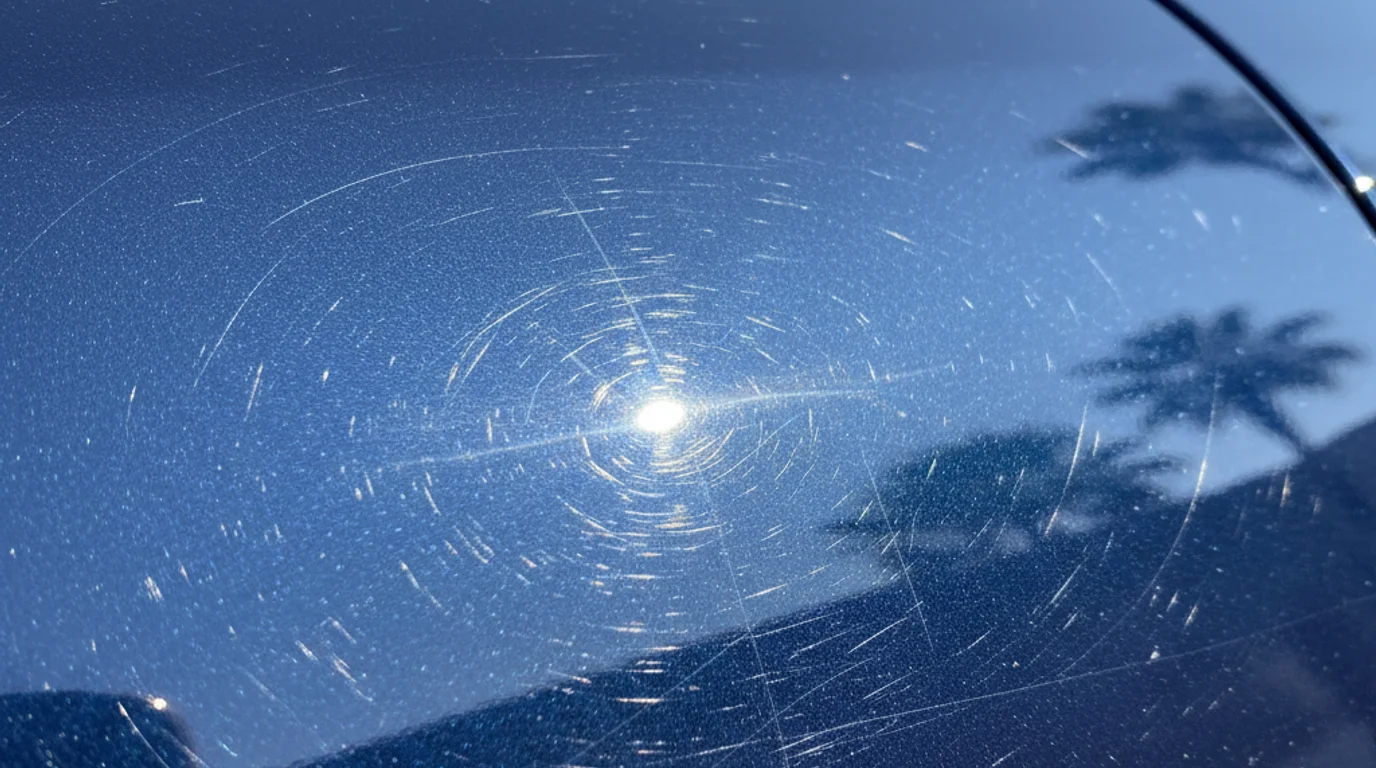
Inspect the scratch under more than one light source. San Diego’s direct afternoon sun can reveal marks that disappear inside a garage. Fixed overhead lighting can also expose circular wash marks around the main scratch.
Take close photos from straight on and from an angle. Include one wider photo showing the affected panel. Those images help a pro begin the assessment, though the final answer may require an in-person look.
Clear coat scratches vs base coat vs primer
Modern vehicle paint has multiple layers, and each layer changes the repair options. The visible color is covered by clear coat. Beneath the color layer sits primer, followed by the body panel.
A shallow clear coat scratch often looks like a fine line or hazy patch. It may be most visible when sunlight crosses the panel. If enough clear coat remains around the mark, a pro may improve it through polishing or a more involved paint correction service.
A base coat scratch reaches the colored paint. It may show a different shade within the line, especially when viewed closely. Polishing can sometimes soften its edges, but it can’t replace color that’s gone. Touch-up paint or refinishing may be the more honest recommendation.
A deeper scratch may reveal primer or the panel beneath it. These marks usually look light gray, white, or metallic, depending on the vehicle and damage. Their exact appearance isn’t a reliable diagnosis by itself. A pro needs to inspect the panel before choosing a repair.
Depth can also vary within one scratch. The first several inches might affect only clear coat. Another section may cut through the color. That’s common when an object moves across a curved door, fender, or bumper.
For San Diego drivers, parking-garage scrapes in Mission Valley may look different from narrow branch marks picked up near inland trailheads. The cause offers context, but depth still decides the repair. Ask the pro to separate the polishable portion from areas needing paint.
Why the same scratch looks worse on black paint
Dark paint creates strong contrast around defects. A shallow scratch scatters reflected light, making the line appear pale against black, navy, or deep gray paint. That bright edge can make minor clear coat damage look severe.
Black paint also shows the condition around the scratch. Fine wash marks, water spotting, and polishing haze may become visible at the same time. What looked like one isolated scratch under shade can become a larger field of marks in direct sun.
This is especially noticeable when moving between different San Diego lighting conditions. A panel can look clean inside a parking structure near UTC, then show every fine mark outdoors. Coastal cloud cover may soften the appearance, while direct light exposes more contrast. Neither view alone tells you how deep the scratch runs.
Don’t judge repairability only by how dramatic the mark looks. Use the fingernail test, check whether color is missing, and inspect the surface from several angles. A shallow mark on black paint may look worse than a deeper scratch on silver paint.
The repair goal matters too. A daily driver doesn’t always need a show-car finish. Some owners want the scratch less visible from normal standing distance. Others want the panel as uniform as possible before adding a coating or film.
Tell the pro what result you expect. That helps distinguish a practical polishing job from touch-up work or panel refinishing. It also reduces the chance of chasing perfection where the existing paint can’t support it.
What polishing can and cannot remove
Polishing works on defects within the clear coat. It levels the area around a shallow mark so light reflects more evenly. The result depends on scratch depth, clear coat condition, panel shape, and the finish you expect.
A pro should begin with an inspection and choose an approach that preserves as much healthy clear coat as possible. More aggressive work isn’t automatically better. Chasing a deep line can remove more surrounding clear coat without eliminating the damage.
Polishing may improve fine wash marks, light scuffs, and shallow scratches that don’t catch a fingernail. It may also reduce the harsh edge of a deeper scratch. Improvement doesn’t always mean complete removal.
Polishing can’t restore missing base coat. It can’t fill a cut that reaches primer or bare panel material. It also can’t correct cracked paint, peeling clear coat, or damage that has changed the panel’s shape. Those conditions need another repair approach.
This distinction matters before protective services. Existing defects should be evaluated before coating or film goes over the panel. Our guide to paint correction before ceramic coating explains why owners should settle the finish first.
Ask the pro to explain the realistic stopping point. A good assessment should identify which marks may disappear, which may only improve, and which need paint. Get the repair scope and written price before authorizing the work.
If you’re comparing car scratch repair in San Diego, send every pro the same photos and expectations. A sunlit close-up, angled view, and full-panel image make comparisons more useful. The final method should still follow a direct inspection.
When touch-up is the honest answer
Touch-up paint becomes the practical option when a scratch has removed visible color. It replaces missing paint rather than trying to polish away the surrounding surface. That makes it different from paint correction.
The result may still be visible at close range. Touch-up can reduce contrast and cover the exposed line, but it doesn’t always recreate the uniform reflection of an untouched panel. Color match, scratch width, application, and the surrounding finish all affect the appearance.
Small isolated chips and narrow scratches may suit touch-up work. Long gouges, broad scrapes, peeling paint, or damage across several contours may call for panel refinishing. A plastic bumper scuff can also need a different process than a scratch on a metal door. Your pro should assess which method fits.
Set the finish standard before approving the repair. If you mainly want a bright line to stop drawing attention, touch-up may meet that goal. If you expect the damage to disappear under close inspection, ask whether refinishing is required.
Protection comes after the repair decision. Paint protection film protects the paint beneath it, but it isn’t a substitute for replacing missing color. Ask the installer whether the corrected area is ready for film and have them confirm the film warranty in writing.
Avoid any quote based only on a vague description such as “small scratch.” Scale is hard to judge without a reference, and depth can’t always be confirmed from photos. Include the vehicle, panel, clear photos, and desired result. The matched pro can then inspect the damage and confirm the written price.
When to call us
Call when a scratch catches your nail, shows missing color, or remains visible after careful cleaning. Call us at (760) 400-6557 and we’ll connect you with a vetted, insured local pro.