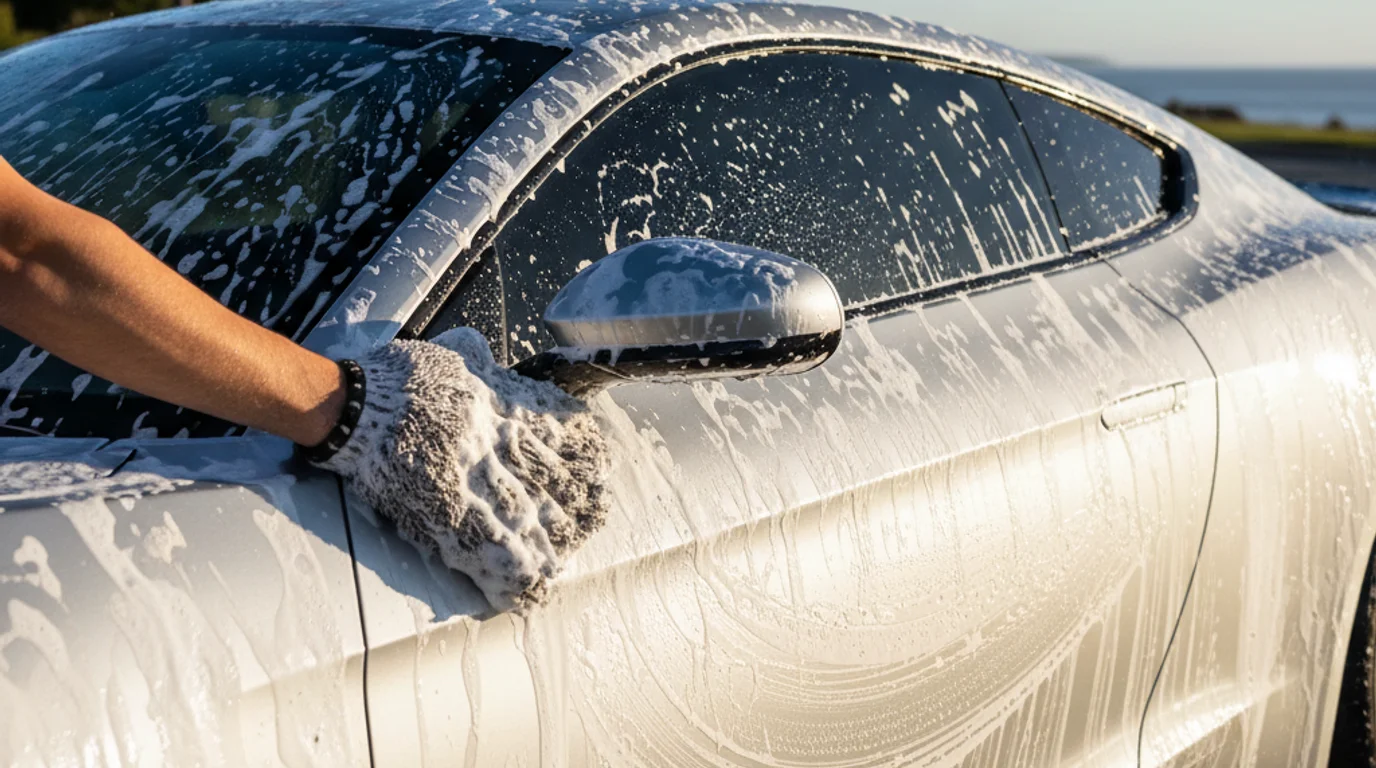
Wash paint protection film the same way you would wash a new clear coat: float the grit off first, then use a clean mitt and a film-safe soap. Stay off raised edges. Your installer’s written care sheet outranks any general advice, because film brands and install dates differ.
The order that usually keeps film safer:
- Rinse grit off before a mitt touches the panel.
- Wash with a film-safe soap and a clean mitt.
- Keep pressure and the mitt off raised edges and seams.
- Dry without hooking a towel on a corner.
- Follow the written care sheet for that install, including any first-week wait.
San Diego driving can leave several kinds of contamination on one car. A coastal I-5 commute may bring damp, salty residue. Inland trips along I-8 or SR-67 can leave dry dust and insects. Regular washing prevents those layers from building up on your paint protection film.
Pressure washers and the distance that matters
A pressure washer can remove loose dirt before your wash mitt touches the film. It can also concentrate water against a vulnerable seam. Technique matters more than simply deciding whether the machine is acceptable.
There isn’t one confirmed nozzle distance for every PPF installation. Pressure varies by machine, nozzle, and setting. Film condition also matters. A newly installed panel and an older panel with a loose corner shouldn’t receive the same treatment. Check the film care sheet or ask the installer for the correct distance and pressure.
Start with the least aggressive setting approved by your installer. Keep the nozzle moving across the panel. Direct the spray down the middle of the filmed surface, not toward its perimeter. Don’t hold concentrated pressure over one spot while trying to remove a stubborn mark.
A broad water pattern gives you more control than a concentrated stream. That doesn’t make every setting safe for every film. The installer should confirm the appropriate nozzle and washing method for your installation.
Inspect the car before connecting the washer. Look along the hood, mirrors, bumper openings, headlights, and wheel arches. Those areas contain curves, seams, and narrow film sections. If an edge is already raised, skip pressure washing that area. Photograph it and contact the installer.
You can also use a regular hose for the initial rinse. The objective is to float away grit before physical contact. Grinding dry road dust into the film with a mitt creates an avoidable problem.
When someone else washes the car, explain that it has PPF. A mobile auto detailing pro can come to a driveway or workplace, but the pro should confirm water, power, and film-care requirements when booking.
Why you never aim at an edge
The center of a filmed panel is different from its boundary. Along an edge, water can strike the side of the material instead of flowing across its face. Concentrated spray or rough wiping there can disturb a section that was already vulnerable.
Film edges may sit near hood gaps, mirror housings, bumper openings, door cups, or trim. Some installations wrap around a panel edge. Others finish on the visible surface. Don’t assume every seam follows the same pattern.
During rinsing, direct water along the film rather than into the seam. During hand washing, move the mitt from the film toward the edge. Avoid pushing from bare paint back into the film boundary. That motion can catch an exposed lip.
Use a clean, soft wash mitt and rinse it often. Start with upper panels, then work downward. Lower doors, rocker areas, and the rear bumper usually collect heavier road grime. Keeping those areas until later reduces the chance of carrying grit across cleaner panels.
Drying deserves the same attention. Pat or glide a clean microfiber towel across the film. Don’t hook the towel against a corner. Compressed air, blowers, and other drying tools should only be used as the film maker or installer directs.
Don’t press a raised edge back down during a wash. Soap, water, and debris may already be beneath it. Home adhesives or heat can make a professional inspection harder. Leave the area clean, take a clear photo, and ask the installer what to do next.
A lifting edge doesn’t automatically explain the condition of the entire installation. Its location, contamination, and surrounding film need an in-person assessment. Our guide to PPF edges lifting explains what to document before contacting a pro.
Soaps and degreasers that attack film adhesive
Choose a wash soap approved for the installed film. A bottle marked for automotive use isn’t automatically suitable for every PPF surface. The product maker’s care sheet and your installer’s instructions are the right references.
Strong degreasers and solvent-heavy cleaners deserve particular caution. They may affect the film’s finish or reach adhesive near an exposed edge. Don’t use extra concentration because a normal wash left one stain behind. More chemical strength isn’t the same as better cleaning.
Avoid mixing cleaners. The resulting combination may behave differently from either product alone. Don’t test an unfamiliar chemical on the vehicle. Ask the installer whether the specific cleaner is compatible with the film and any coating over it.
Apply soap through a clean mitt, foam applicator, or method approved by the installer. Work on a cool surface when the care directions require it. Don’t let cleaner dry on the panel. Wash manageable sections, then rinse them fully.
Use separate tools for the wheels and filmed paint. Wheel brushes and towels can hold abrasive brake residue. Moving that material onto the hood or fenders can mark the surface. Keep wash buckets, mitts, and towels clean throughout the job.
Ceramic-coated PPF may have different care instructions from uncoated film. The coating doesn’t erase film seams or make every cleaner acceptable. Follow the written directions for both layers. Our guide to maintaining a ceramic-coated car in San Diego covers the same gentle-wash principle for coated surfaces.
If you can’t confirm a cleaner’s compatibility, don’t guess. Save its label, note the ingredients, and send that information to the installer. A delayed wash is easier to address than damage from an unknown chemical.
Bugs, tar, and sap on a filmed panel
Bugs, road tar, and tree sap shouldn’t be attacked with a fingernail or scraper. Start by rinsing away loose dirt. Then use a film-approved cleaner and method to soften the remaining spot.
Give the approved cleaner time to work according to its label. Don’t compensate with hard scrubbing. A clean microfiber towel can lift softened residue with light, controlled passes. Turn the towel often so removed debris doesn’t return to the panel.
For dried insects, place a damp microfiber towel over the affected area if that method is allowed by the film’s care instructions. The moisture can help loosen residue before wiping. Don’t leave the towel unattended or let the panel dry beneath it.
Tar often appears along lower doors, rocker areas, and behind the wheels. Treat each spot individually. A general wash soap may not remove it, but that doesn’t justify reaching for an unapproved solvent. Ask the installer which tar remover is compatible with the installed film.
Sap can be especially tempting to scrape. Don’t use a blade, hard card, or abrasive pad. If approved washing doesn’t release it, stop. Record where it sits and how long you’ve noticed it. A pro can inspect whether the residue is on the surface or has affected the film’s appearance.
San Diego parking conditions change throughout one day. A car may collect coastal residue during a morning commute, dust while parked inland, then insects during an evening freeway drive. That mixed layer calls for careful rinsing before any spot treatment.
Bird droppings should also be handled with the approved care method. Remove loose contamination gently and avoid grinding it into the film. If a mark remains after cleaning, don’t repeatedly polish the spot. Polishing changes the surface and should be evaluated by a detailing or PPF professional.
The first week after install
The first week begins with one rule: follow the installer’s written aftercare schedule. A universal waiting period couldn’t be confirmed for every film and installation. Product, weather, panel shape, and installation method may affect the instructions.
Before leaving the installation appointment, ask when the first wash may occur. Also ask whether hand washing or pressure washing is permitted. Get guidance for edges, spot cleaning, and any coating applied over the film. Keep those directions with the invoice.
If the installer says to avoid washing, don’t substitute a waterless wash or detailing spray. Those are still cleaning processes. Ask what to do if the car collects bugs, bird residue, or sap during the waiting period.
Don’t press, puncture, heat, or massage an area that looks unusual. Photograph it in even lighting. Include one close image and another showing its location on the car. Send both to the installer and describe when you first noticed the condition.
San Diego weather can shift between a cool coastal morning and a warmer inland afternoon. Don’t invent a shorter curing schedule because the day feels dry. The installer should confirm when the film is ready for normal washing.
Once washing is approved, keep the first wash simple. Rinse loose dirt, use the approved soap, and work with clean tools. Stay cautious around seams and panel boundaries. Skip aggressive spot correction until the installer confirms the right approach.
After that first wash, inspect the film in daylight. Look along edges, curved sections, and openings. Don’t judge only from directly above the panel. Low-angle light can make contamination or a raised edge easier to see.
Good PPF detailing isn’t a one-time treatment. It’s a repeatable wash process with compatible products and careful edge handling. When instructions are missing, contact the installer instead of filling the gap with online guesses.
When to call us
Call when film edges are lifting, contamination won’t release gently, or you need professional care for PPF or a ceramic-coated surface. The matched detailing specialist can inspect the condition and confirm the right treatment.
Call us at (760) 400-6557 and we’ll connect you with a vetted, insured local pro.