Sand on the floor, residue outside, and damp beach gear can change what your car needs. For auto detailing in Oceanside after beach parking, choose the service by condition, access, and written scope, not its package name.
Start with sand, residue, and interior condition
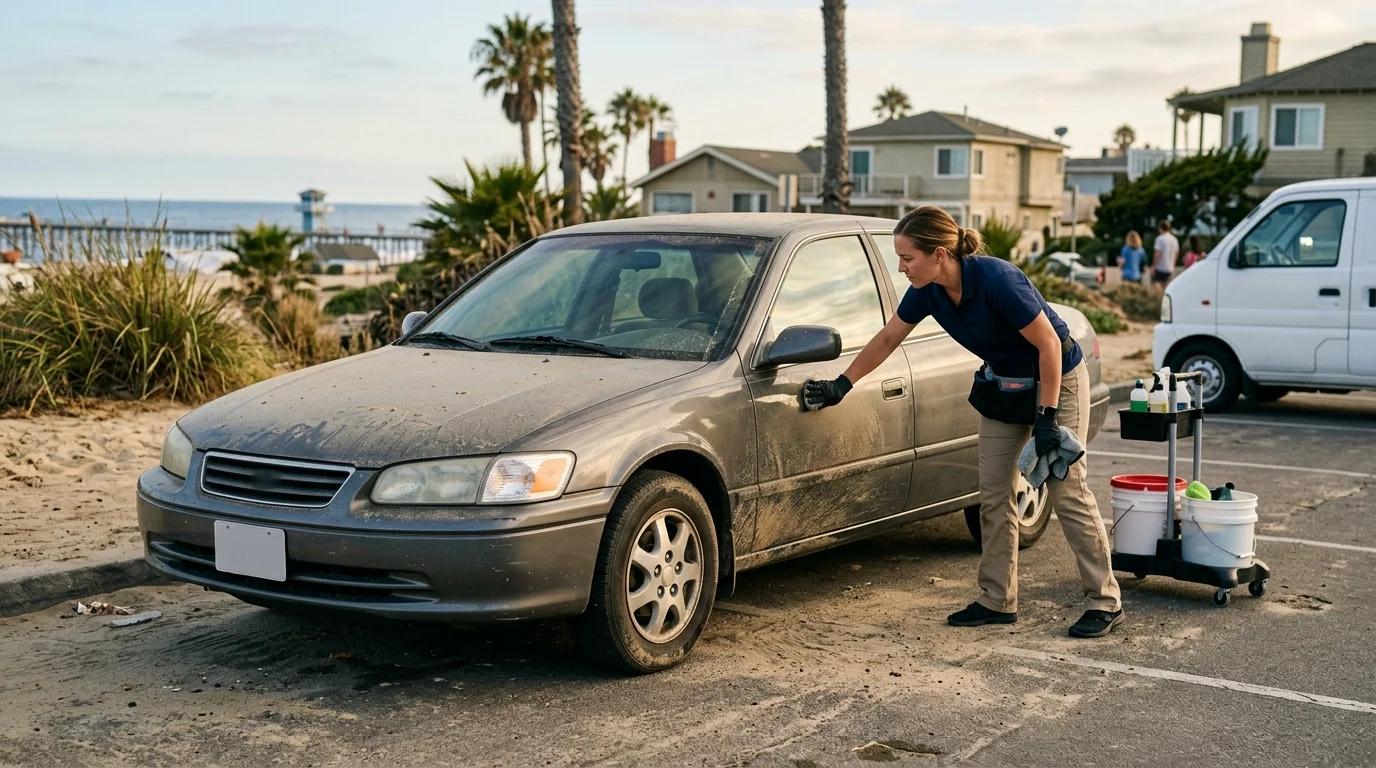
Start by checking where the beach day actually left its mark. A car parked near Oceanside Harbor may have sand around the pedals, seat tracks, door pockets, and cargo area. Parking closer to Coast Highway may leave a different mix of dust, spots, fingerprints, and road residue.
Not every coastal vehicle has the same condition. A closed car used by one driver differs from an SUV carrying towels, chairs, and wet gear. Photos help the detailing specialist see that difference before discussing a package.
Walk around the vehicle in daylight. Look across the paint instead of checking only obvious spots. Note bird droppings, sap, water spots, and residue around trim. Don’t promise yourself that every mark will wash away. The pro needs to identify the material and inspect the surface.
Inside, lift removable mats and check beneath them. Sand often collects along their edges and in carpet seams. Look between seats, beneath child seats, and around the rear hatch. Mention drink spills, sunscreen smears, food, pet hair, and odors separately. Each condition may call for different work.
A standard package name doesn’t describe your car. One provider’s “full detail” may differ from another provider’s package. Our guide to what’s included in a mobile detail explains why the written task list matters.
Send clear photos and describe the condition honestly. The specialist can then explain which steps fit and what results are realistic. That conversation is more useful than choosing the biggest package without examining the vehicle.
How street, apartment, and driveway access change the setup
Mobile detailing comes to your driveway or workplace, but the location still matters. Oceanside has single-family driveways, apartment parking areas, shared lots, and street spaces. Each setting gives the pro a different working area.
A private driveway may offer room to open every door. It may also provide easier access around the vehicle. You still need to confirm whether the detailing specialist needs access to water or power. Those needs are set by the pro and should be discussed while booking.
Apartment and condominium parking requires more planning. Ask property management whether vehicle washing or commercial work is allowed in the lot. Don’t assume an open space means the work is permitted. Confirm gate access, visitor parking, and where the pro can place equipment.
Street parking can be difficult when traffic passes close to the vehicle. Limited curb space may prevent safe access to both sides. Nearby sprinklers, trees, construction, or scheduled street activity may also affect the setup. Tell the pro what the space looks like before the visit.
Workplace parking brings another set of questions. The property owner may restrict washing, runoff, equipment placement, or service vehicles. Get permission when the lot isn’t yours. Give the pro any entry instructions without promising that security will admit them.
Drivers moving between Oceanside and I-5 should also choose a location where the car can remain available for the agreed service. Don’t build the booking around an uncertain gap between errands.
When the location won’t work, ask the pro about alternatives. Paint Shield SD can match you with a vetted, insured specialist for mobile auto detailing, but the specialist confirms the practical setup.
What an exterior service scope should list
An exterior detail should be described as a list of tasks. “Wash and shine” doesn’t tell you how the wheels, trim, glass, paint, or problem areas will be handled. Ask for a written scope before agreeing to the work.
The scope should identify which exterior areas are included. Depending on the package, that discussion may cover:
- Wheels, tires, wheel faces, and accessible wheel areas
- Exterior glass, mirrors, lights, and trim
- Door jambs and fuel-door areas
- Bug residue on the front end
- Spots, sap, droppings, or other visible contamination
- Drying methods and the finishing product
- Any paint assessment or added correction work
Don’t assume stain removal, polishing, or paint correction is included. Washing removes loose material, while bonded residue or visible paint defects may require another process. A detailing specialist should inspect those areas before describing likely results.
Photos taken after beach parking can help. Include the lower doors, rear bumper, roof, hood, and front end. If the car traveled on I-5 afterward, show the leading surfaces rather than describing everything as “beach residue.” The pro needs to see what’s present.
Ask which services are included in the quoted package and which are optional. Your installer confirms the written price. If the condition changes after the initial photos, ask for an updated scope before added work begins.
Exterior detailing also creates a useful inspection point. Clean paint makes chips, scratches, dull areas, and film edges easier to discuss. Detailing itself isn’t the same as paint correction, ceramic coating, or paint protection film.
If you’re considering longer-term paint protection, compare that work separately. The Oceanside ceramic coating service page explains how we connect local drivers with vetted, insured pros. The installer should confirm preparation, coverage, product tier, price, and warranty terms in writing.
When interior sand or stains need added work
Loose sand and a set-in stain aren’t the same problem. Sand may sit on a rubber mat, work into carpet fibers, or collect inside seat tracks. A spill may affect upholstery, seams, padding, or nearby trim.
Describe both the material and its location. “Sand in the car” gives the pro less information than “sand beneath both front mats and around the rear seat tracks.” Mention whether the vehicle has cloth, leather, vinyl, carpet, or mixed surfaces.
Remove personal items before the appointment. Beach towels, toys, chargers, paperwork, and bags can hide affected areas. Emptying the cargo area also lets the specialist inspect the floor and side panels.
Don’t scrub an unknown stain with whichever cleaner is nearby. Tell the pro what caused it, if you know. Sunscreen, drinks, food, mud, and saltwater gear can leave different conditions. Also mention anything already applied to the surface.
Ask whether the written scope includes vacuuming beneath removable mats, seat crevice work, cargo-area cleaning, spot treatment, or deeper fabric work. These tasks shouldn’t be assumed from “interior detail.”
Set expectations around improvement, not guaranteed removal. Age, material, prior cleaning attempts, and how far a spill traveled can affect the outcome. The specialist should inspect the area before promising any particular result.
Our guide to what interior detailing can remove helps explains how to separate loose debris from stains, odors, and damaged material. That distinction helps when you compare an auto detail in Oceanside, especially after several beach trips rather than one afternoon.
What to confirm before the mobile visit
A useful booking confirmation covers the vehicle, condition, location, and exact work. It should reduce surprises for you and the independent pro.
Start with basic vehicle details. Provide the body style and the areas needing attention. Share current photos instead of older pictures. If roof racks, child seats, cargo organizers, or pet covers limit access, mention them before the visit.
Then confirm the service location. Give the correct entrance, parking instructions, gate details, and space number when relevant. Tell the pro whether the spot is on a driveway, street, apartment lot, or workplace property.
Ask these questions before accepting the scope:
- What exact exterior and interior tasks are included?
- Are wheels, glass, jambs, mats, and cargo areas covered?
- How will visible stains or residue be assessed?
- Does the pro need customer-provided water or power?
- Is the proposed parking space suitable for the equipment?
- What preparation does the customer need to complete?
- Which requested tasks would be quoted separately?
- What written price applies to the agreed scope?
If access depends on property approval, get that approval first. If the vehicle must move during the service, explain that conflict before booking. A mobile visit works better when the pro can plan around the actual site.
Keep the written scope available when the pro arrives. Walk around the car together and identify the priority areas. If the in-person condition differs from the photos, pause and confirm any revised work and price.
Paint Shield SD is a referral service. We match car owners with vetted, insured independent local pros. The car owner contracts with and pays the pro directly. The specialist confirms the service scope, site needs, price, and any warranty covering their work.
When to call us
Call when detailing reveals paint defects, exposed impact areas, or protection needs that washing alone won’t address. A professional Ceramic Coating and Paint Protection Film pro can inspect the finish and explain suitable options without treating every mark as the same problem.
Call us at (760) 400-6557 and we’ll connect you with a vetted, insured local pro.