A partial wrap for one San Diego work truck typically costs $250 to $1,500, depending on scope. Decals and lettering typically cost $250 to $1,000 per vehicle. Your installer must confirm the written price after reviewing the truck, artwork, and coverage.
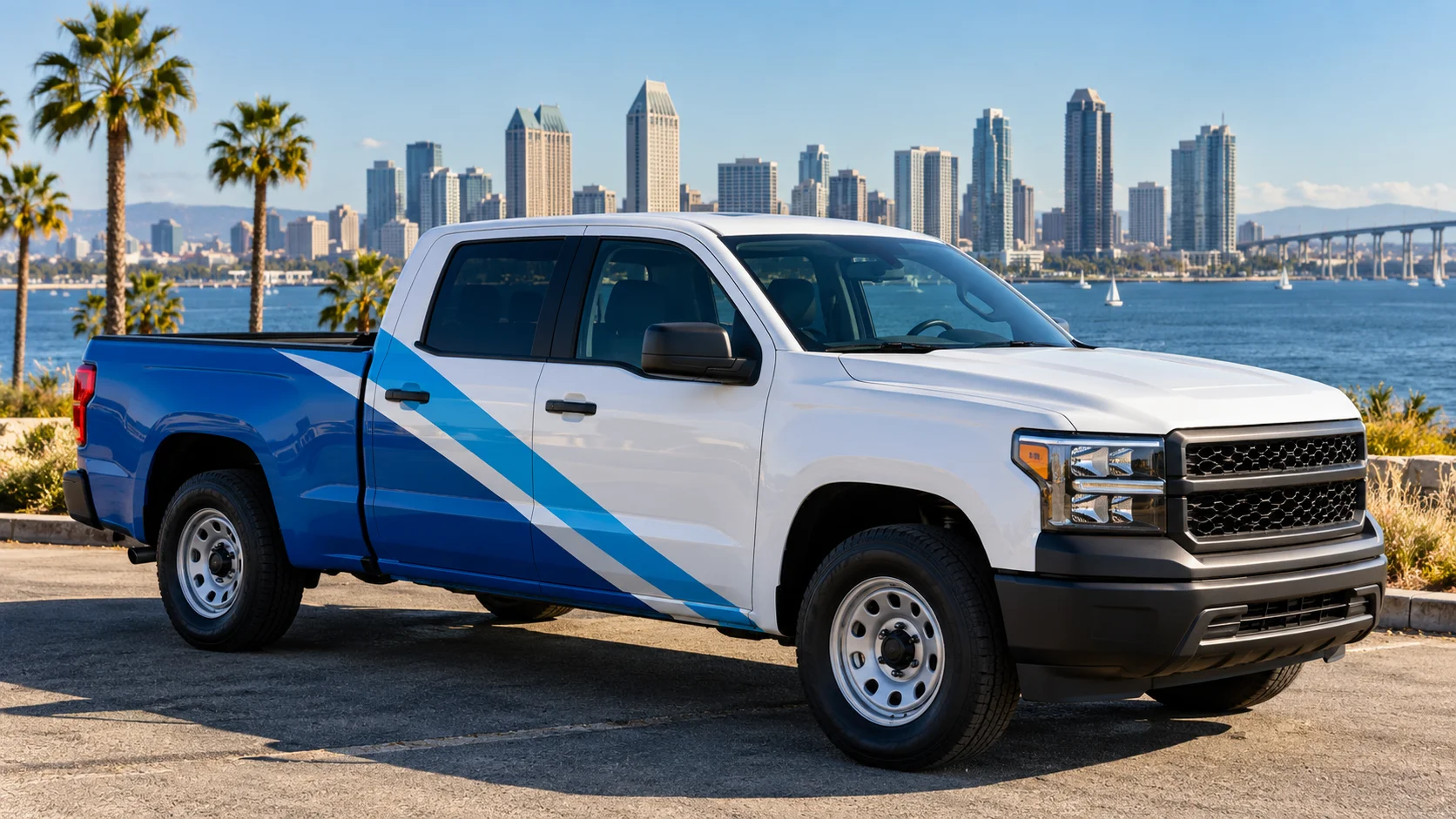
What the price range actually covers
“Partial wrap” can describe several very different projects. One quote may cover two door logos and contact details. Another may include printed graphics across the doors, bed, and tailgate. Both can use the same label, but they don’t have the same scope.
Commercial decals and lettering typically cost $250 to $1,000 per vehicle. Partial wraps typically cost $250 to $1,500 by scope. A full commercial wrap is a different category, typically $2,500 to $5,500. These are broad market ranges, not Paint Shield SD prices. Your installer confirms the written price.
A useful quote should separate design, production, preparation, installation, and removal. It should also identify every covered panel. “Partial wrap” alone isn’t specific enough.
Ask whether the quote includes:
- Logo cleanup or new artwork preparation
- Printed graphics, cut vinyl, or both
- Coverage on both sides of the truck
- Tailgate, hood, bed, or utility-body panels
- Removal of existing decals or adhesive
- Surface preparation before installation
- Reinstallation around removable equipment
- Any written film warranty from the installer
Send clear photos of every side. Include the year, make, model, cab style, bed length, and any aftermarket body. A pickup, service body, flatbed, and utility truck present different surfaces.
San Diego operators also need to consider how the truck is seen. A compact door mark may work at a parked job site. Larger side graphics may read better along I-5, I-805, or SR-78. That design choice changes coverage, so it can change the quote.
Lettering, a partial wrap, and a full wrap aren’t interchangeable
Cut-vinyl lettering uses separate letters, numbers, and simple shapes. It often suits a business name, phone number, website, or required identification. The truck’s original paint remains the main background.
A partial wrap covers selected areas with larger vinyl sections. It can combine a logo, color fields, photographs, service wording, and cut lettering. The original paint still forms part of the design. Good layouts treat that paint color as an intentional element.
A full wrap covers most painted exterior surfaces. It offers more control over the truck’s overall appearance, but it also requires more material and preparation. That’s why full commercial wraps sit in a separate approved price range.
Coverage should follow the message, not a category name. A plumbing truck moving through Chula Vista may need a different layout than a landscaping pickup working around Escondido. A utility body with compartment doors also needs different artwork than a standard pickup bed.
Ask the installer to mark the covered panels on photos or a vehicle template. Confirm what happens around door handles, hinges, badges, bed rails, toolboxes, racks, and utility compartments. Those details affect both appearance and production.
If you’re still comparing coverage types, review the broader commercial fleet wrap service. The same planning principles apply to one truck, even when there’s no fleet rollout. You should still receive a vehicle-specific quote rather than a generic package description.
The truck’s paint and current graphics matter
Vinyl depends on the surface beneath it. Wrap adhesion can lift failing clear coat. Existing scratches, chipped paint, rust, body repairs, and old graphics should be shown before artwork enters production.
A wrap can protect the healthy paint it covers, but it doesn’t repair damaged paint. It also won’t hide every surface defect. The installer should inspect questionable areas and explain how they affect adhesion or removal.
Send close photos of:
- Peeling or cloudy clear coat
- Chipped paint around panel edges
- Rust near beds, hinges, or utility compartments
- Dents crossing the planned graphic area
- Old decals and leftover adhesive
- Repainted or repaired panels
- Plastic trim inside the proposed coverage
Don’t apply wax or a coating before the wrap installer confirms the preparation plan. Existing wax or coating can interfere with film adhesion. The installer should specify the surface preparation required for the selected film.
If the truck already has lettering, ask whether removal is included. Old vinyl may leave adhesive, outlines, or differences in the exposed paint. The installer needs to see that condition before confirming the scope.
For a truck that needs paint improvement first, learn what paint correction can and can’t address. Machine polishing can improve certain clear-coat defects, but it isn’t body repair. The pro should assess the paint and quote a safe process.
Your written quote should also say who approves the final proof. Check every word, number, and logo before production. A clean design can’t rescue incorrect business information.
Confirm required vehicle markings before approving artwork
Business branding and legally required identification aren’t automatically the same thing. A logo may identify your company visually, while a law or agency rule may require particular names, numbers, or placement.
The exact vehicle coverage of California Business and Professions Code 7029.5 couldn’t be confirmed from the approved legal sources for this page. The same is true for the applicability of 49 CFR 390.21 and California CA number requirements. This page therefore can’t tell you that your specific truck must display a CSLB number, USDOT number, or CA number.
Confirm the current requirements with the authority governing your operation before approving the proof. Review the current California statute through the California Legislature. For federal commercial motor vehicle markings, check with the Federal Motor Carrier Safety Administration. For California carrier identification questions, check with the California Highway Patrol.
Tell each authority how the truck is used. Include its registration, operating area, business type, and whether it crosses state lines. Don’t assume a rule applies because another contractor’s truck carries similar markings.
Keep this legal check separate from the wrap installer’s design role. Ask the appropriate authority what must appear. Then give the installer the exact approved wording and numbers. Request a proof showing their size and placement before production.
Leave room for future changes. Phone numbers, web addresses, unit numbers, and regulatory identifiers may not share the same update cycle as the main logo. Separate cut-vinyl elements may be easier to replace than information printed inside a larger graphic. Ask how the proposed design handles those updates.
How to request a useful quote for one truck
Start with a short description of the business and the truck’s daily use. Mention whether it works mostly in the City of San Diego, South Bay, East County, or North County. That helps the designer understand viewing distance and operating context.
Then provide a complete quote packet:
- Year, make, model, and body configuration
- Clear photos of the front, rear, and both sides
- Close photos of damage, repairs, or old graphics
- A vector logo file, if available
- Exact business name and contact details
- Confirmed regulatory markings, if applicable
- The panels you want covered
- Examples of the visual style you prefer
- Any racks, toolboxes, or equipment that block panels
- Your requested installation window, without treating it as guaranteed
Ask for separate options when you’re unsure about coverage. One option might use door lettering and a tailgate logo. Another might add printed bed graphics. Comparing defined scopes is more useful than comparing vague “basic” and “premium” packages.
The quote should identify exclusions. Confirm whether design revisions, old-vinyl removal, surface preparation, and artwork changes are included. Ask the installer to state the written price and film warranty.
Paint Shield SD matches vehicle owners with vetted, insured local pros. Getting matched and receiving an in-person vehicle assessment and written quote costs you nothing. You contract with and pay the independent installer you choose. Availability for a single-truck lettering or partial-wrap project must be confirmed with the matched pro.
When to call us
Call when you need a professional to inspect the truck, compare lettering with partial coverage, or prepare a written wrap quote. Call us at (760) 400-6557 and we’ll connect you with a vetted, insured local pro.