How much does auto detailing cost in San Diego? Express work typically runs $80-$150. A full interior and exterior detail typically runs $200-$450, depending on vehicle size and condition. Your installer confirms the written price after inspection. Use those bands to test a quote. Don’t treat a shop menu as a county rate.
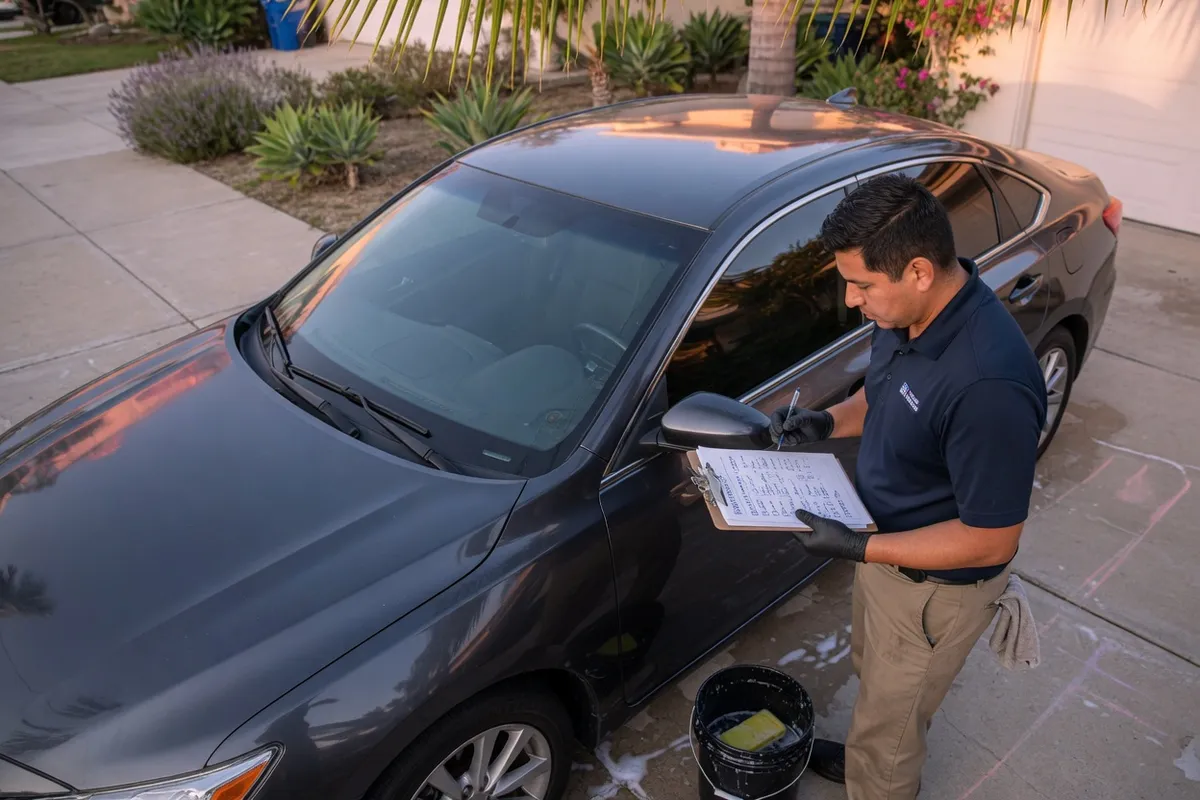
What the quoted range usually covers
A dollar figure is only useful once the tasks are named. San Diego has two publishable detailing bands. Express typically sits at $80-$150. Full interior plus exterior typically sits at $200-$450. If the written list doesn’t match the band, the label is doing the selling.
Express is maintenance. It fits a car that is already in decent shape. The list may include a wash, wheels, drying, and a light interior tidy. It may skip the cabin. Read every line. “Express” isn’t a reset.
Full interior and exterior is the higher band. That name still isn’t a standard. One specialist may include mats, glass, and a thorough vacuum. Another may list stain work, extraction, or paint decontamination as extra. For the task-by-task walkthrough, use what’s included in a mobile detail. This page owns the cost question, not the full checklist.
Package names don’t set the price. Deluxe, premium, complete, and luxury are marketing words. Two quotes in the same band can cover different surfaces. Two quotes in different bands can overlap if one is mostly a label.
Mobile auto detailing describes where the work happens: a driveway or a workplace. It’s not a second published rate. Paint Shield SD doesn’t detail cars. We match you with a vetted, insured local specialist. You contract with and pay that pro directly. Getting matched costs you nothing.
Most appointments run 1-3 hours on site, depending on package and vehicle size. Your pro confirms timing at booking. Same-week scheduling available for most services.
Why vehicle size and condition move the number
A compact coupe isn’t a three-row SUV. Size changes panel count, carpet area, seating rows, and how long the wheels take. A mid-size sedan that commutes I-805 is usually less labor than a crew-cab truck that sits at a job site in Otay Mesa. Ask the specialist to show how size moved the written number.
Condition moves the quote more than the ZIP code. Light dashboard dust isn’t packed beach sand. A rinsed weekday commuter isn’t a family SUV after a wet weekend at La Jolla Shores. Describe the car honestly. Photos of the paint, seats, mats, and cargo area help. Hiding a spill doesn’t lower the bill. It produces a quote that doesn’t match the vehicle the pro finds.
Some interiors need extra labor. Pet hair woven into fabric, old stains, smoke residue, and packed sand are common examples. Those items are quoted after inspection. We don’t publish add-on dollars for pet hair, ozone, or engine bays. Those figures aren’t a single county rate. If a task isn’t on the written scope, ask whether it is excluded or priced after the look.
What interior detailing can remove is the page for stains, sand, and odor. Use it to set expectations. Then come back to this range when you compare the dollars.
Vehicle type still matters even when both cars look “clean.” A two-seat convertible and a minivan with a third row are different interiors. Mention child seats, cargo liners, aftermarket electronics, and any existing coating or film before the quote is locked. The pro prices the car in front of them, not the average car on a menu.
How coastal salt and inland dust change the job
Coastal salt and inland dust aren’t the same job. A county-wide menu price hides that.
Coastal cars collect salt film. Parking near Oceanside Harbor, Pacific Beach, Mission Beach, Coronado, or Imperial Beach leaves residue on paint, wheels, and lower panels. A plain rinse may not finish it. Wet sand travels into carpets, seat tracks, and the hatch after a day at the water. Damp towels add moisture the vacuum has to deal with. Morning marine layer plus irrigation overspray can leave mineral spots on the hood and roof. That’s labor. It’s not a second published rate. It’s why the same “full detail” can take more work in Encinitas than it does on a garage-kept car in Mission Valley.
Inland cars collect a different load. El Cajon, Santee, Poway, Escondido, and Ramona see dry dust, uncovered parking, and inland sun. I-15 and I-8 commuters pick up brake dust on wheels and lower doors. Fine dust works into seams and carpets without any beach trip. Irrigation spotting still shows up on East County driveways. That job isn’t salt. Treating salt as dust, or dust as salt, is how two written scopes diverge while both use the same package name.
Tell the pro where the car lives and which roads it uses. An I-5 week near the coast isn’t an SR-67 week through Lakeside. An SR-78 run from Oceanside inland picks up both environments in one commute. The quote should reflect the contamination in front of them, not a city name on a flyer.
What is not in a detail price
A detail is cleaning. It’s not automatically correction, coating, or film.
Paint correction is machine polishing for defects in the clear coat. It’s a separate quote after the installer inspects the paint. Don’t assume a “full detail” includes polishing because the car looks dull from I-15 film or East County dust.
Ceramic coating is a chemical layer, not a wash. If a quote says ceramic, ask whether that means a professional coating or a short-term spray. For installed coating dollars, use ceramic coating cost in San Diego. That page owns the coating range. This page doesn’t repeat those dollars.
Paint protection film, window tint, wheel coating, and dent repair are other services. They don’t ride along unless they appear as their own lines.
Engine bays, ozone or other odor treatments, headliner work, and pet-hair extraction aren’t assumed. Ask. If the pro needs to see the car first, wait for that look. Don’t shop a number you invented for an add-on.
A wax, sealant, or spray protectant isn’t a professional coating. If protection is listed, the quote should name the product category and the care notes that follow. Decontamination, clay, and iron remover aren’t part of every wash. If bonded fallout is the problem, it should be written down.
Questions that belong on the written quote
Use the quote as a scope of work. If a promise isn’t on it, it isn’t priced.
Ask these questions before you accept a number:
- Which exterior panels and cabin areas are included?
- Are wheels, tires, glass, jambs, mats, and cargo areas in the price?
- Is this express, typically $80-$150, or full interior and exterior, typically $200-$450?
- How did vehicle size or condition move the number inside that band?
- What is excluded: stains, pet hair, odors, engine bay, polishing, coating, film?
- What water, power, and parking access does the visit need?
- What should I remove from the cabin before you arrive?
- Who confirms the final written price, and when?
Send photos when condition could change the work. Include the whole vehicle, the worst interior areas, and any existing film or coating. The independent pro sets the price. Paint Shield SD doesn’t set it.
Compare written scope to the published range. A quote inside $80-$150 should read like express work. A quote inside $200-$450 should read like a full interior and exterior. A quote that sits in one band while promising the other isn’t a bargain. It’s a mismatch.
When to call us
Call when you want a matched local pro to inspect the car and put the detail price in writing. Call us at (760) 400-6557 and we’ll connect you with a vetted, insured specialist who serves your part of San Diego County.