Headlight PPF vs ceramic coating is a lens choice, not a paint choice. Clear film is a physical layer that can take chips. Ceramic coating is a thin bonded layer for easier cleaning and UV-related product claims. It is not rock-chip armor. National PPF-versus-coating tables usually talk about hoods and bumpers. Headlights are typically polycarbonate, so the useful questions are chips on I-5 and I-15, San Diego sun, and the condition of the plastic you already have.
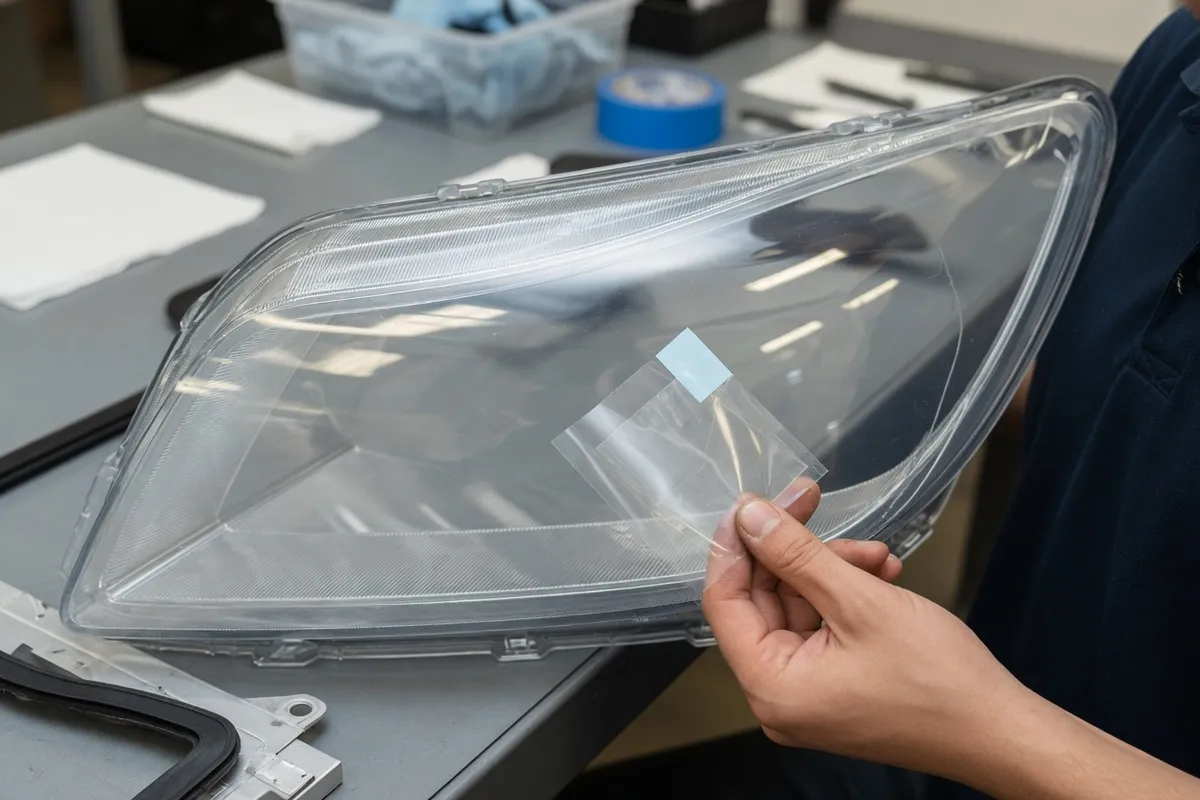
How film and ceramic coating protect differently
A painted hood and a headlight lens are different substrates. Most modern lamps use a clear polycarbonate outer lens with a factory hard coat. Grit, bugs, wash marks, and sun hit that plastic first. A product sold for clear coat does not automatically belong on that lamp.
Headlight protection film is a sacrificial urethane layer fitted to the exterior of the lens. Small impacts, road grit, and insect residue reach the film first. That can spare the plastic underneath some of that contact. Film still cannot promise an untouched lamp, and it cannot repair damage already in the lens.
Ceramic coating is a liquid that bonds to a prepared surface and cures as a thin layer. On paint, that layer is sold for easier washing, water behavior, and UV-related resistance. On a headlight, those benefits only apply if the installer confirms the selected coating is intended for exterior plastic lenses. Coating does not absorb a rock at highway speed. The same chip that would mark bare plastic can still mark a coated lens.
Keep the two comparisons separate. The paint version lives in our ceramic coating vs paint protection film guide. Use that page for hoods, bumpers, and fenders. Use this page for the lamps.
You can discuss both products on one car. Film handles the chip conversation. Coating, when the product fits the lens, is about wash-off and UV-related claims in the written sheet.
What impact, sun, and surface condition change
Impact is the freeway problem. A daily run on I-5 through the coastal corridor, or I-15 through Miramar, puts the lamps in the same debris path as the bumper. Truck traffic around National City and Otay Mesa throws grit at the nose. Film is the product that belongs in that chip conversation. Coating is not.
Sun is the parking problem. A car left outside in Oceanside or Mission Beach takes more UV hours than one garaged in Poway. Polycarbonate yellows and hazes as the factory hard coat wears. Coastal lots add salt spray, sand, and bug film. Inland lots add heat on a dry lens. Coating can make residue easier to wash if it is specified for the lamp. It still does not replace film on a chip-prone commute.
Surface condition decides the order of work. A new, clear lens can be a film candidate after cleaning and inspection. A dull, pitted, or yellowed lens is a restoration conversation first. Coating over haze will not erase the haze. Film over haze can lock that look in place.
Scope changes the quote as much as the product does. Ask whether headlight film is already inside a full-front package, or whether it is a separate line. A full-front package is often discussed in the $1,500-$3,000 band. Confirm the written panel list so you do not pay for the lamps twice. Ask whether a vehicle coating includes the lamps, or whether the installer quotes lens work only after polish. Headlight film typically runs $150-$250 for both front headlights. Added taillight coverage typically runs $250-$400. Ceramic coating typically runs $500-$3,000 for the vehicle, not as a per-lens number, unless the installer writes headlights as their own line. Your installer confirms the written price.
When existing headlight damage needs separate work
Haze, yellowing, and pitting are restoration or polish work. They are not protection. Film and coating preserve what is already there. They do not rebuild a worn lens. Our headlight protection film overview covers that sequence in more detail.
Look at both lamps in daylight before you book:
- Uneven dullness on the exterior
- Tiny pits from gravel
- Peeling factory hard coat
- Old film edges or leftover adhesive
- Moisture or droplets behind the lens
Moisture inside the assembly is not a film or coating job. Cracks, broken mounts, and leaking seals need a different repair path. The installer we match should say so before quoting protection.
If the lenses were already polished, tell the pro. Some restorations leave a surface that needs a specific finish, or a waiting stage, before film or coating. We could not confirm one universal wait time. The product instructions and the installer control that sequence.
On a used car, clear film can be hard to see. A slight texture change or an edge near the housing can mean previous coverage. Ask the pro to inspect both lamps and quote removal separately if old material has to come off. If the plastic still looks tired after prep, that is what you will see through the new layer.
What installation and maintenance questions to ask
Ask whether the quoted film is made for exterior headlight lenses, not just painted panels. Curves, heat, and optical clarity are different from a hood. Ask how the edges will follow this lamp shape.
For coating, ask whether the product is specified for polycarbonate lamps. A coating sold for paint is not automatically the right chemistry for a lens. If the coating is part of a vehicle job, ask whether the headlights are included, excluded, or quoted after polish.
Useful questions before you approve the work:
- Is this film or coating intended for exterior headlight lenses?
- What preparation does this pair of lamps need first?
- Are headlights already in a full-front film package?
- Are taillights included, or a separate line?
- What washing, rain, and first-week rules apply?
- Who handles a lifting edge, haze, or removal later?
Maintenance follows the installed product’s care sheet. Avoid brush tunnels. Touchless is the safer automatic option. Use the soap and first-wash timing the installer puts in writing. Do not treat water beading as proof a coating is intact or gone.
Same-week scheduling is available for most services. Your matched pro confirms appointment length after seeing the lenses.
How to compare written product terms
Compare written scopes, not package names. Two quotes can use “headlight protection” for different products. One may be clear film. Another may be a coating line added after polish. A third may already sit inside a full-front film package.
A useful quote should identify:
- Clear headlight film, ceramic coating, or both
- Both front lamps, or one
- Whether taillights are included
- Whether headlights are inside a full-front film package
- Restoration or polish as a separate line
- The product description and any UV claim from the maker’s current sheet
- Warranty language for discoloration, lifting, and removal
- Aftercare, first-wash rules, and the total written price
Ask whether a UV claim is about the film or coating itself, the lens underneath, or both. Those are not the same promise. This site does not publish a lifespan in years for either product on a headlight. The written warranty is what matters.
If film and coating are stacked, ask whether the makers allow that pairing on this lens. Get the product names and the current application guidance in writing. Coating over film should not be promised to extend that film’s service life without support from the selected product maker.
Colored or smoked headlight film is a different legal topic under CVC 25950. It is not this comparison.
Paint Shield SD matches you with a vetted, insured local installer. You contract with and pay that installer directly. Getting matched costs you nothing.
When to call us
Call when you are choosing headlight PPF vs ceramic coating, when the lenses already look dull, or when you need the film line separated from a full-front package. Call us at (760) 400-6557 and we’ll connect you with a vetted, insured local pro.