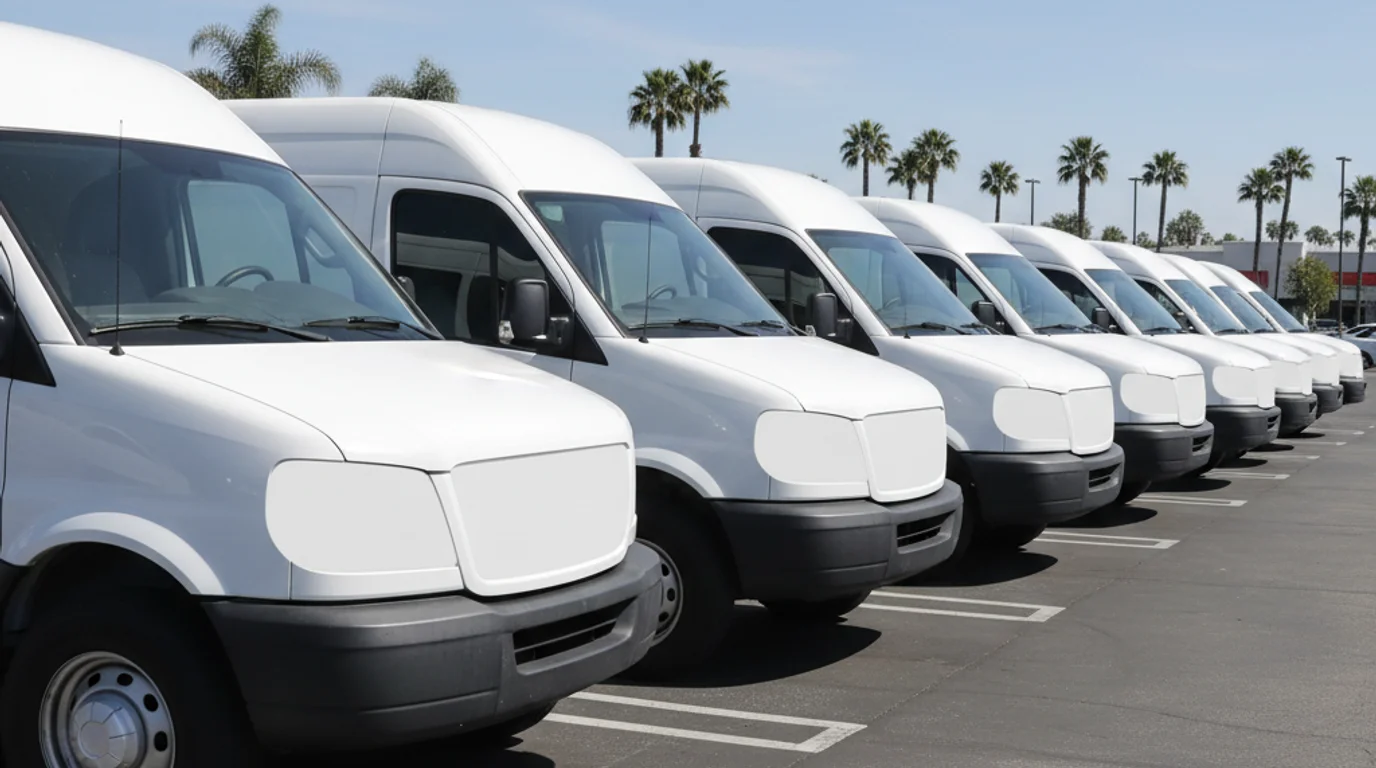
To wrap fleet vehicles without parking the whole operation, move them through the installer in controlled batches. Start with one approved vehicle, document the result, then schedule the remaining vans around actual route demand.
Why fleets stall on scheduling, not on price
A wrap quote becomes useful once every vehicle has a defined scope. Scheduling is harder because the business still needs those vehicles working.
Commercial and fleet wraps are quoted per vehicle and fleet size. Decals and lettering typically cost $250 to $1,000 per vehicle. Full commercial wraps typically cost $2,500 to $5,500. Vehicle size, film, coverage, surface condition, and design needs can change the total. Your installer confirms the written price.
The operational cost needs a separate review. A van unavailable during its busiest route can disrupt several appointments. That problem won’t appear on the wrap quote.
Start with a basic fleet inventory. Record each vehicle’s year, make, model, body configuration, assigned driver, usual territory, and lowest-demand days. Add clear photos of every side. Note existing decals, dents, peeling paint, replaced doors, or damaged trim.
San Diego County route planning needs local detail. A vehicle assigned near Oceanside or Vista shouldn’t automatically share a handoff window with one working in Chula Vista. The same applies to vehicles covering central San Diego, El Cajon, or the South Bay. Grouping them by geography can reduce unnecessary movement between field routes and the installer.
Decide what every vehicle actually needs. Some may require full fleet vehicle wraps. Others may only need doors, rear panels, decals, or updated lettering. The matched pro can quote those scopes separately.
Our commercial fleet wrap service connects businesses with vetted, insured local pros. The business contracts with and pays the selected pro directly.
Batching vehicles while the crew keeps working
A first batch can use one representative vehicle. Choose a van that matches a large portion of the fleet. It can become the working sample for placement, scale, colors, contact details, and approval.
Don’t send the next group until that first vehicle is reviewed. Check every panel in daylight. Confirm that phone numbers, web addresses, and service wording are correct. Look at the vehicle from normal street distance, not just from beside the door.
Once the design is approved, set a batch size around available spare capacity. A business with one spare van has a different limit than a fleet with several unassigned vehicles. Don’t base the batch on how many vehicles fit at the shop. Base it on how many the business can release without breaking its route plan.
A simple rollout could follow this pattern:
- Select one pilot vehicle.
- Approve its final layout and written scope.
- Release the smallest workable batch.
- Return those vehicles to service.
- Inspect and document the completed batch.
- Schedule the next vehicles.
Keep similar vehicles together where possible. Matching body styles can simplify placement review. Mixed fleets need separate templates for cargo vans, pickups, box trucks, and compact service vehicles. Even two vans from the same manufacturer may have different doors, roofs, windows, or body lengths.
Build a handoff sheet for each vehicle. Include the unit number, driver, fuel or charging instructions, key location, existing damage photos, and approved design version. The installer should also receive one contact who can approve a correction. Too many approvers can stop a batch over a small placement decision.
For routes spread across I-5, I-805, State Route 78, or State Route 94, use the route calendar before choosing handoff days. Keep vehicles serving the same territory in different batches. That prevents one part of San Diego County from losing every assigned van at once.
How long one van is actually down
A full wrap is typically planned as a one-to-two-day job. That range isn’t a scheduling guarantee. Your installer confirms the expected duration after reviewing the vehicle, film coverage, design, and surface condition.
The useful question isn’t only how long installation takes. Ask when the vehicle must arrive, when preparation begins, and when it can return to its route. Those details define the actual service interruption.
Vehicle condition matters. Wrap adhesion can lift failing clear coat, so the installer needs to assess the paint before work begins. Dents, damaged trim, old graphics, or residue can also affect the planned scope. Don’t assume every van with the same body style needs identical preparation.
Send current photos before the schedule is locked. Include close views of paint damage and previous graphics. Photos help the pro identify questions, but the final assessment may still require an in-person look.
Create a written service window for each unit. It should identify the planned drop-off, expected completion range, approval contact, and backup vehicle. Add space for the installer to record a revised expectation if the condition differs from the photos.
Partial graphics and lettering have a different scope from complete commercial fleet wrapping. Ask the installer to estimate each format separately. Don’t borrow the full-wrap duration for a decal job, or assume a smaller graphic automatically fits a particular work window.
Leave room between batches. That gap lets managers review the completed vehicles before releasing more. If a placement, spelling, or design issue appears, the next batch can be corrected before the same issue spreads across the fleet.
Same-week scheduling is available for most services, but the installer confirms the actual calendar. Fleet managers should plan around that written schedule rather than an assumed completion day.
Control the design and template version
A fleet design should become a controlled system, not a loose collection of artwork. The first approved vehicle establishes the visual direction. Every later template adapts that direction to a specific body.
Create one master design package. It should contain the logo files, approved colors, type choices, service wording, phone number, web address, and rules for each element. Keep a dated copy of every approved revision.
Then create a template for each vehicle configuration. Record the year, make, model, body length, roof style, window layout, and unit number. Don’t label a file “van final.” Use a name that another manager can understand two years later.
Set a clear information order. A passing driver should encounter the business name and core service before secondary details. Dense lists can make a vehicle harder to review. Keep optional certifications, promotions, and changing offers out unless they serve the actual campaign.
San Diego geography can affect the message without changing the whole design. A business may use one service-area line across the county, or approve different wording for North County and the South Bay. If wording changes by territory, mark that rule in the asset register. Don’t let drivers or local managers change it informally.
Version control matters during approval. Put a date and revision number on every proof. Require the decision maker to approve the exact file used for installation. Save that approval with the vehicle record.
The first completed wrap should also produce reference photos. Capture the front, rear, both sides, and close views of important alignment points. Those images help reviewers compare later batches against the approved result.
Businesses choosing between graphics coverage levels can review this San Diego commercial fleet wraps guide. A fleet manager considering a broader appearance change can also compare the scope of vinyl wrap and color change work.
Adding vehicles later and matching the film
Fleet branding rarely ends with the first rollout. Vehicles are added, reassigned, repaired, or replaced. A usable wrap program plans for those changes from the start.
Keep an asset register for every completed unit. Record the installer, installation date, approved proof, coverage scope, material specification, design version, and vehicle configuration. Ask the installer to include the film warranty in writing.
Save physical color samples when the installer provides them. For a later addition, ask the pro to compare the available material against an existing wrapped vehicle in daylight. If the original material isn’t available, request a physical comparison before approving a substitute.
Don’t assume a new van accepts an old template. Confirm its body configuration first. Door handles, hinges, windows, trim, and panel breaks may sit differently. The branding system can remain consistent while the layout changes around those features.
Inspect the paint before adding an older vehicle. Wraps are removable and protect the paint beneath, but failing clear coat can lift during adhesion or removal. The installer should assess whether the vehicle is a suitable candidate before confirming the scope.
Repairs also need records. A replacement door or damaged panel may require only part of the design. Give the installer the original artwork and reference photos. Ask for written confirmation of the material and color match before approving the repair.
Plan future orders in small groups when possible. A new cargo van, two pickups, and a repaired rear door shouldn’t automatically become one production batch. Separate templates and condition reviews can prevent avoidable corrections.
Whether you’re planning van fleet wraps or business truck wraps, consistency comes from documentation. The design file alone isn’t enough. The vehicle record, approved proof, material specification, and finished photos create the repeatable system.
When to call us
Call when your fleet needs a professional film pro to assess vehicle condition, coverage, design templates, and a workable rollout schedule. Call us at (760) 400-6557 and we’ll connect you with a vetted, insured local pro.