If you’re comparing full front PPF for an EV, request a panel-by-panel coverage map before booking. Cameras, sensors, charge-port placement, frunk seams, and lower panels can affect that map. Match the scope to your San Diego routes and the areas you want covered.
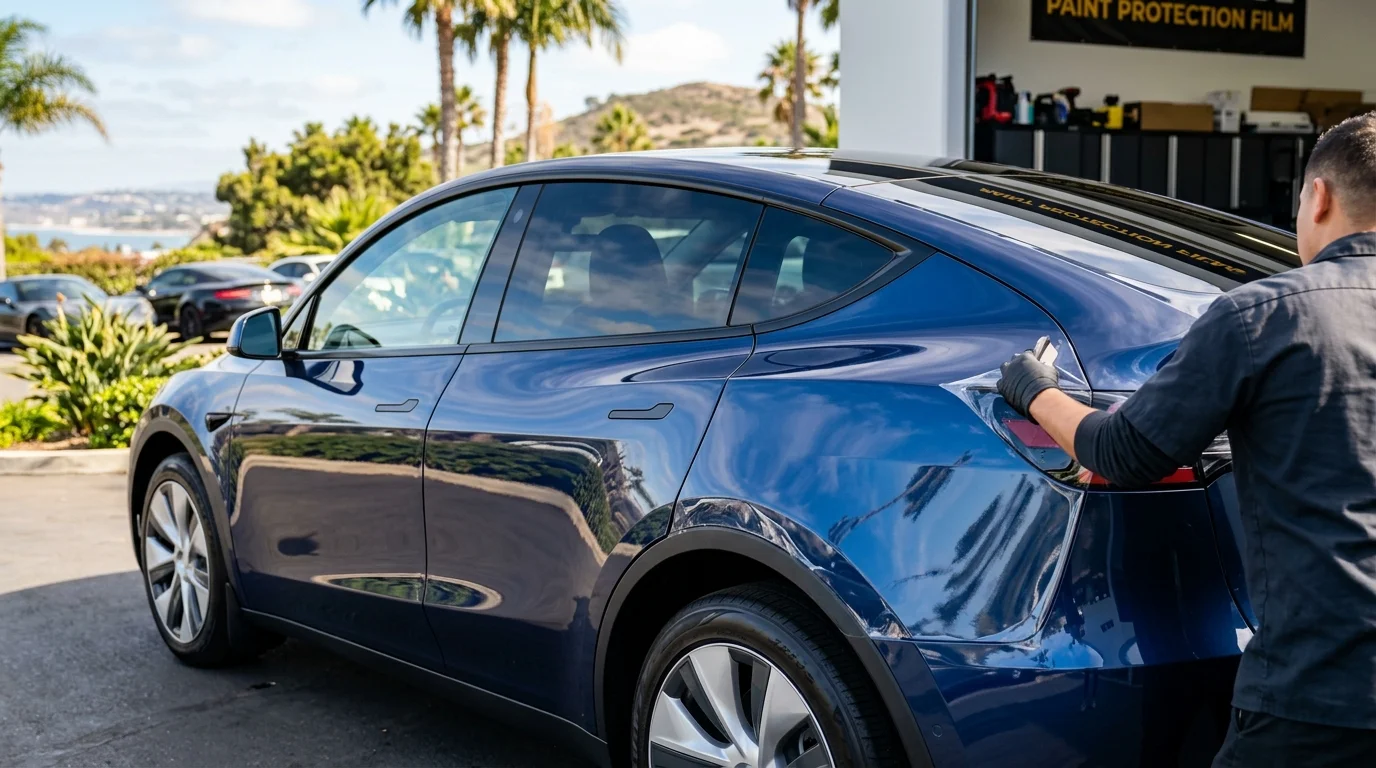
Claims about softer factory paint on EV models
EV forums often describe certain factory finishes as unusually soft. That claim shouldn’t guide your purchase without evidence for your exact vehicle. Paint Shield SD’s approved sources don’t confirm a general softness difference between EVs and other vehicles. They also don’t support naming particular models as having softer paint.
Start with the finish that’s actually on your car. Ask the installer to inspect it under clear lighting. Request written notes about existing chips, scratches, touch-up paint, repainted panels, or failing clear coat. That record separates the vehicle’s present condition from the proposed film work.
A new vehicle still deserves this inspection. Delivery condition, previous corrections, and dealership preparation can’t be confirmed from the model badge. If a salesperson or forum makes a paint-hardness claim, ask for documentation from the vehicle manufacturer. Don’t replace that evidence with an internet ranking.
The inspection also helps define preparation. Ask what will happen before film placement and whether any visible defect will remain underneath. If correction is suggested, have the pro explain which areas need it and why. Don’t assume every new EV needs the same process.
The practical buying decision is coverage, not a broad claim about EV paint. A written full-front PPF package should identify the included panels and preparation. Compare that document with your inspection notes. You’ll then know what the quote covers, regardless of unconfirmed claims about paint softness.
Sensors, cameras, and where film can’t go
There isn’t one universal EV map showing where film can’t be placed. Paint Shield SD’s approved sources don’t confirm model-specific restrictions around cameras, radar units, parking sensors, or driver-assistance hardware. Check the owner’s information from the vehicle manufacturer, then have the installer identify every relevant component in person.
Ask for a marked image of the front end. It should show the proposed film boundaries around cameras, sensor faces, grilles, badges, lights, openings, and trim. If the pro recommends covering, removing, or working around a component, ask what manufacturer guidance supports that choice.
Don’t accept “EV safe” as the complete explanation. Ask these specific questions:
- Will film cross any camera, sensor face, or optical surface?
- Will any trim, badge, camera, or sensor be removed?
- Where will seams or cutouts sit around each component?
- How will the pro check vehicle warnings after the work?
- Are any areas excluded because of the vehicle’s instructions?
These questions don’t assume that film causes a problem. They make the proposed work visible before anyone starts. They also help you compare two quotes that use the same package name but describe different boundaries.
A professional paint protection film installation should begin with the exact vehicle, not a generic diagram. Save the written scope with your vehicle records. If the manufacturer and installer give conflicting instructions, pause the booking and ask both parties to clarify. Paint Shield SD can’t confirm a model-specific restriction that isn’t supported by the manufacturer’s documentation.
Charge ports, frunks, and the panels people miss
“Full front” isn’t enough detail for an EV quote. It doesn’t tell you whether the package includes every painted edge, opening, light, mirror, or lower section you have in mind. Request a list that names each panel and each exclusion.
Begin with the obvious front surfaces. Ask whether the quote includes the bumper, hood, front fenders, headlights, mirror caps, and painted lower sections. These are coverage questions, not a universal definition of a full-front package. Different written scopes can use similar marketing names.
Next, inspect the charge-port location. If it sits outside the quoted front area, ask whether its painted door or surrounding surface requires a separate line item. Don’t assume an EV package includes that area automatically. Confirm whether the film would cover only the outer door or any painted edge around it.
A frunk creates another set of boundaries. Ask whether the quote covers the visible hood surface only. Then ask about the hood edge, the painted returns, and the surfaces exposed when the frunk opens. The pro should distinguish included exterior coverage from optional inner-edge work.
Lighting deserves its own line. Headlight coverage may not be included with painted panels. If you want it, request a separate description of the proposed material and boundaries.
Some owners also consider ceramic coating for areas outside the film scope. Ask the installer how the two services would be sequenced on your vehicle. Have the pro identify which surfaces receive film, which receive coating, and which receive neither. A simple marked diagram can prevent confusion at pickup.
Aero panels and low front ends on the freeway
Body shape matters because the actual coverage boundary follows the vehicle. If your EV has a low bumper, broad painted nose, smooth front panel, or painted lower trim, point out each surface during the inspection. Don’t assume a standard bumper template includes everything visible from the front.
Your driving pattern also belongs in the conversation. A daily I-5 trip between Chula Vista and central San Diego differs from short neighborhood driving in North Park. An I-15 commute from Escondido, an I-8 route through East County, or regular SR-52 and SR-78 travel creates another use pattern. Tell the installer where and how the vehicle is driven.
The approved claims ledger doesn’t provide road-specific chip statistics. It can’t support calling one San Diego freeway the worst for paint damage. Instead, use evidence from your vehicle. Existing marks on the bumper, hood, mirrors, headlights, and lower panels can help frame the discussion.
Parking matters too. Tell the pro whether the EV spends most days in a garage, workplace lot, driveway, or street space. Mention regular trips beyond the county and any repeated loading around the frunk. These details help the installer understand your priorities without making unsupported promises.
Ask the pro to show where the proposed film stops when viewed from several angles. Look from bumper height, from above the hood, and with the frunk open. A low panel or recessed section can disappear from a top-down diagram. The final quote should name any painted front surface that remains outside the package.
What to specify when you book
Send clear photos before the appointment, but expect the pro to confirm the condition in person. Include straight-on views of the bumper and hood. Add both front corners, the mirrors, headlights, charge-port door, frunk edges, and lower painted panels. Photograph any existing chip, scratch, repair, or lifted finish closely.
Ask for a written quote that covers these points:
- Every included panel and partial panel
- Film boundaries around cameras, sensors, badges, lights, and trim
- Any component the pro proposes removing
- Edge treatment for the hood, fenders, bumper, and openings
- Preparation before film placement
- Existing defects that will remain visible
- Excluded surfaces and separately quoted options
- The product tier and film warranty in writing
- The expected work duration and pickup plan
PPF projects have an approved broad market range of $800 to $8,000. Coverage, vehicle size, and the quoted project determine where a job falls within that range. Your installer confirms the written price. Don’t treat that broad range as a quote for your EV or as a fixed full-front price.
If an installer discusses a warranty, get its terms in writing. Paint Shield SD doesn’t issue the film or workmanship warranty. The independent pro should identify who provides each warranty, what it covers, and how a claim would be handled.
Some owners worry that aftermarket protection automatically voids a factory warranty. Under the federal Magnuson-Moss Warranty Act, a manufacturer generally can’t void a warranty merely because an aftermarket product was used, absent a showing that the product caused the failure. The FTC is the federal authority. Causation is fact-specific, so that general rule doesn’t resolve an individual warranty dispute.
Before approving the work, compare the quote with the marked coverage map. Make sure the package name, panel list, price, preparation, exclusions, and written warranty information agree. That paperwork matters more than a vague promise that the vehicle will receive “complete” protection.
When to call us
Call when you need a professional to inspect your EV, map its front coverage, and explain the written scope. This is especially useful when cameras, sensors, frunk edges, charge-port panels, or unusual lower sections complicate the quote. Call us at (760) 400-6557 and we’ll connect you with a vetted, insured local pro.