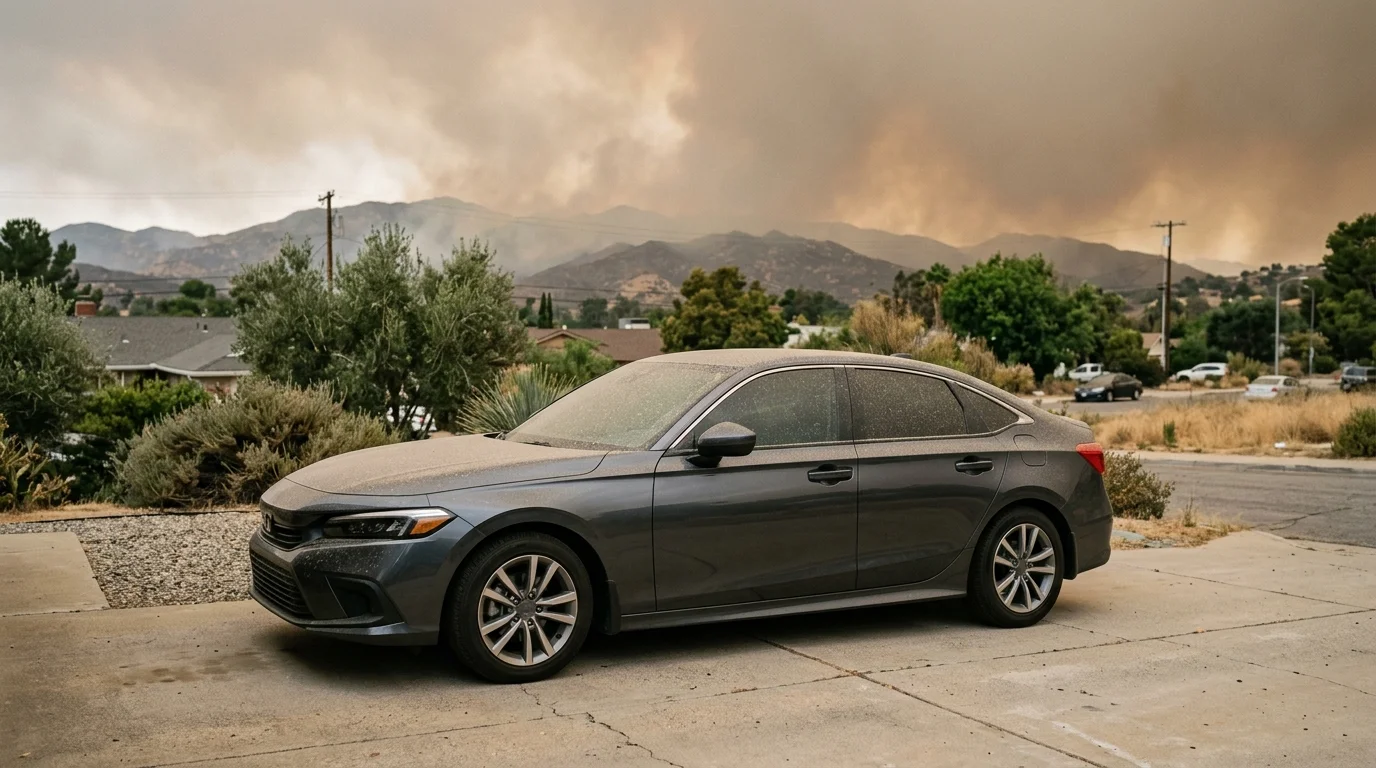
A gray layer after a San Diego fire event can tempt you to wipe first. With wildfire ash on car paint, keep dry towels off the finish and plan a low-contact wash. Start by inspecting the car, documenting its condition, and checking current local guidance.
What ash can do when it sits on paint
Ash creates an immediate contact problem. It leaves loose material between your towel and the protected surface. Dragging that material across the panel may leave marks, so a quick dry wipe isn’t a careful first move.
A ceramic coating doesn’t make a dusty panel ready for contact. It also doesn’t tell you what happened beneath the visible layer. First, the ash must be removed without unnecessary rubbing. Then the clean surface can be inspected.
That distinction separates coating maintenance from paint correction. Maintenance focuses on removing material from the surface and caring for the existing protection. Correction addresses visible defects after the paint is clean enough to assess. A dusty or uneven appearance alone doesn’t prove that correction is needed.
The approved sources for this page don’t establish a universal cleanup deadline. They also don’t support a blanket claim about how every type of wildfire ash reacts with every coating. Your car’s condition, protection history, and exposure should guide the next step.
A vehicle parked outside in Ramona may have a different ash layer from one garaged in Chula Vista. A car that traveled Interstate 8 or State Route 67 during a fire event may also need closer inspection around forward-facing panels and gaps. Those details help a professional understand the exposure. They don’t diagnose damage by themselves.
Take clear photos before cleaning. Capture the hood, roof, trunk, glass, trim, and lower panels. Include any places where the layer looks heavier. Those photos preserve the starting condition and make later comparisons easier.
What to check before touching the surface
Begin with your eyes, not your fingertips. Look across the paint from several angles. Don’t draw a line through the ash to see how thick it is.
Check the whole vehicle rather than judging one clean-looking panel. Ash can appear on horizontal surfaces, mirror caps, glass, trim, wheels, panel gaps, and around film seams. Record what you see without rubbing those areas.
Next, confirm what protection is already on the car. Review the installer invoice or maintenance record if you have it. Note whether the car has ceramic coating, paint protection film, or both. Don’t guess from shine alone.
Look for conditions that may have existed before the ash arrived. These can include scratches, chips, dull patches, loose film edges, or damaged trim. Photograph each concern separately. A before-wash record helps prevent old damage from being mistaken for a new ash problem.
Also note where the car was parked and whether ash still appears to be falling. Check official incident and emergency information before moving into a wash process. If current conditions remain unclear, pause and check again with the relevant local authority.
Your inspection should produce a short record:
- Where the vehicle was parked or driven
- Which panels carry visible ash
- Whether the car has coating or paint protection film
- Any defects or loose film edges visible before washing
- Whether current local guidance affects washing at that location
This check doesn’t require pressing on the paint. It gives the detailing specialist useful context before any cleaning begins.
For routine care after this event, our guide to maintaining a ceramic-coated car in San Diego explains how to keep a maintenance record and watch for changes between appointments.
A low-contact wash plan for coated cars
A low-contact plan begins by removing as much loose surface material as possible before a mitt or towel touches the vehicle. The exact process should reflect the coating, film, ash level, wash location, and current local instructions.
The approved sources for this page don’t provide a verified chemical formula, rinse pressure, runoff method, or wildfire-specific wash product. This guide won’t invent those details. A detailing professional should choose the products and equipment after inspecting the vehicle.
Use this process to organize the job:
-
Confirm the setting. Check current instructions for the address where the car will be cleaned. Water-use and runoff questions should go to the authority or provider responsible for that location.
-
Share the protection history. Tell the specialist when the coating or film was installed, if known. Provide any written maintenance directions from that installer.
-
Start without surface contact. Ask the professional to plan an initial no-contact removal stage. The professional should choose the method, products, pressure, and handling based on the car’s condition.
-
Reinspect before contact washing. Loose material shouldn’t be hidden beneath a mitt or towel. Let the professional decide when the surface is ready for the next wash stage.
-
Inspect again after drying. Compare the cleaned panels with your earlier photos. Note any marks, dull areas, film-edge concerns, or residue that remains visible.
Don’t treat polishing as an automatic part of ash removal. Polishing belongs to the correction conversation, and only after the clean paint has been inspected. Adding that step without an assessment can turn a maintenance visit into a different service.
A conveyor wash also introduces its own equipment, products, and contact process. Review our guide to automatic car washes and ceramic coating before choosing that route. If you can’t confirm how the wash will handle the ash-covered surface, ask a detailing specialist first.
When a professional inspection makes sense
A professional inspection makes sense when you can’t confidently separate loose contamination from a finish problem. It also helps when the vehicle has several surface types, such as coated paint, exposed trim, glass, and paint protection film.
Consider an inspection when marks remain after cleaning. The same applies when a patch still looks different under consistent lighting. Don’t assume that every remaining concern requires correction. Let the specialist identify what sits on the surface and what may be within the finish.
Film edges and seams deserve a closer look when ash remains around them. Don’t scrub an edge or try to lift it for inspection. Show the area to a professional who can assess the installed film without guessing from a photograph.
Matte or satin surfaces also warrant clear communication before cleaning begins. Tell the specialist exactly what finish and protection you have. If you don’t know, share the paperwork and photographs available.
A ceramic maintenance program is the relevant service when the goal is checking and caring for existing protection. That isn’t the same as selling you a new coating or immediately recommending correction. The condition of the clean vehicle should drive the discussion.
If you’re exploring protection after the ash has been removed, read about the ceramic coating service separately. That decision should follow inspection. It shouldn’t be used to skip cleaning or hide an unresolved paint concern.
Paint Shield SD performs no detailing, coating, or correction work. We match car owners with vetted, insured independent local pros. The car owner contracts with and pays the matched professional directly.
Where to check current San Diego advisories
The approved source set for this article didn’t include a current San Diego County ash-cleaning order, water-use rule, or chemical recommendation. None of those details could be confirmed for this page. Current conditions can also change after publication.
Before cleaning the car, check San Diego County’s official emergency information and CAL FIRE’s current incident information. Use official pages for the active event, not an old screenshot or an undated social post.
Then check the rules for the actual wash location. An address in the City of San Diego, Chula Vista, Oceanside, Ramona, or another county community may fall under a different local authority or water provider. Search the official city or county website using the address and current date.
For water-use limits, contact the water provider serving that address. For runoff questions, ask the applicable city or county public works or stormwater office. Request the current instruction directly if the website doesn’t answer your question.
This article isn’t a source for health, air-quality, chemical, environmental, or emergency instructions. If an official notice conflicts with a normal car-care routine, follow the official notice. A detail can wait until the current guidance and wash setting are clear.
Keep a record of the advisory page, date checked, and answer received. Give that information to the detailing professional. It helps the professional plan around the rules that apply where the vehicle will be cleaned.
When to call us
Call when ash remains after cleaning, the finish shows unexplained marks, or material has collected around paint protection film edges. A Ceramic Coating and Paint Protection Film pro can inspect the clean surface and explain whether it needs maintenance or a separate correction assessment.
Call us at (760) 400-6557 and we’ll connect you with a vetted, insured local pro.