Ceramic coating in San Marcos for an SR-78 commute starts with the paint you have, where the car sits, and whether the hood is already taking chips. Compare coating, correction, and film as a written scope. An auto ceramic coating San Marcos CA quote is only useful after that look.
Start with paint condition and parking routine
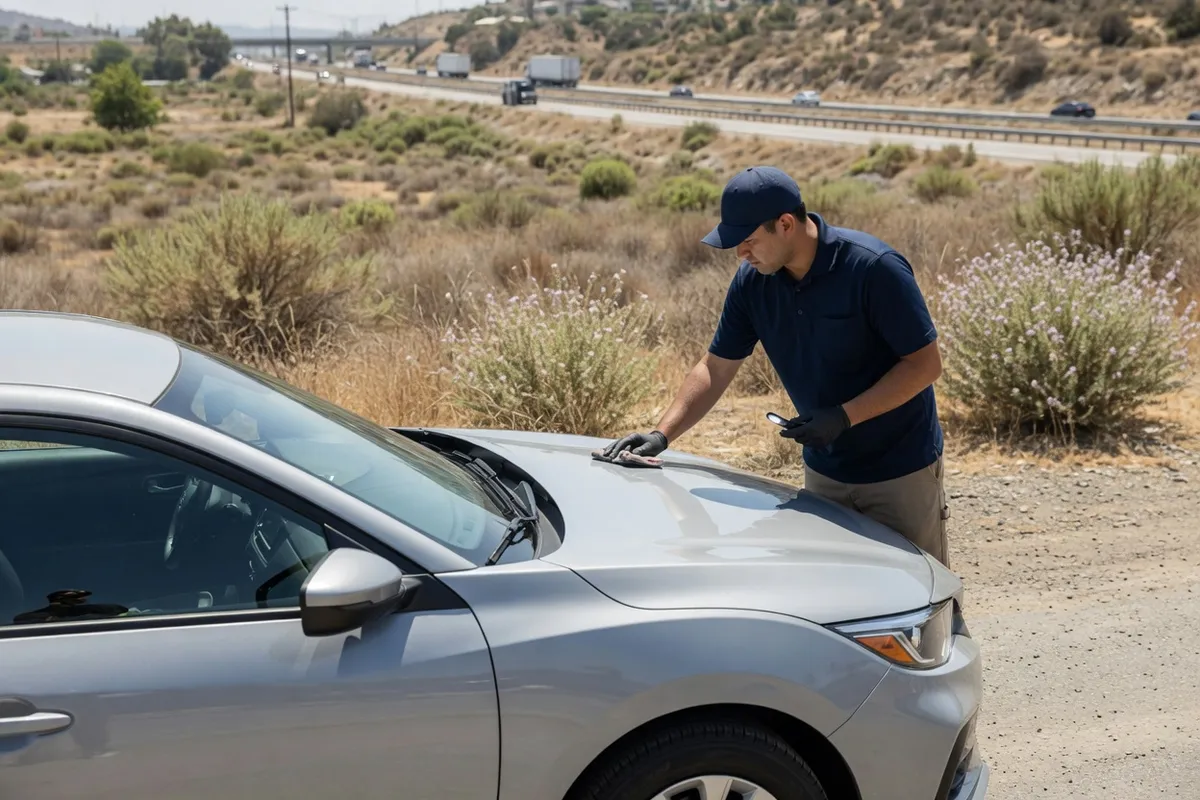
Wash the car, then look at it in open inland sun. Garage light hides fade. Walk the shoulder line on a dry panel and look along the paint, not straight down at it.
San Marcos parking is not one routine. A San Elijo Hills driveway that sits uncovered all afternoon is a UV problem. A Cal State San Marcos lot is uncovered parking plus door traffic. A garage off San Marcos Boulevard changes the conversation again. Tell the installer which of those is the real week.
Not every commuter has the same paint. A car that lives inside overnight doesn’t look like a daily driver that sits outside near campus.
What to note before you call:
- Fine wash marks on the hood, roof, and deck lid
- A dull or chalky look on horizontal panels that live in the sun
- Highway film that a rinse doesn’t fully drop
- Brake dust staining lower doors, rockers, and wheels
- Chips that already show primer, color, or metal
If the paint still feels rough after a careful wash, that’s often bonded fallout, not a scratch. Clay is decontamination, not correction. The installer decides whether clay belongs in the prep. Don’t clay a coated car without that advice.
Ceramic coating is a liquid polymer that bonds to paint and creates a hard, hydrophobic surface layer. It resists water, UV, and light chemical exposure. It doesn’t absorb rock chips. If the hood already has broken paint, coating won’t put that paint back.
How SR-78 commuting shapes protection priorities
The 78 is the east-west spine through San Marcos. A weekday that uses SR-78, then San Marcos Boulevard, then the connection toward I-15 is a highway-debris week. A week of local errands isn’t. Frequency matters more than the city name.
Highway film builds on the nose, the leading edge of the hood, and the lower front. Stop-and-go at the 78 interchanges adds brake dust on wheels and lower panels. Neither is salt air. San Marcos is inland, so UV and road film are the usual stressors.
Uncovered parking during the workday or a campus day adds a second load. Inland sun sits on the roof, hood, and deck lid. Coating is often the right conversation for that UV and wash-ease goal. It’s the wrong conversation if the real money problem is chips from the 78 at speed.
Ask yourself:
- How many days a week does the car run SR-78, and does that route include the I-15 connection?
- Where does it sit from morning to evening: garage, San Elijo Hills driveway, campus lot, or an uncovered workplace?
- Are chips already clustered on the bumper, hood, and mirror caps?
Those answers change the spend. A chip-prone hood on a highway commuter often makes full-front film the better first dollar than coating the whole car and leaving the nose exposed. A garaged car with clean leading panels and tired wash marks may need correction and coating, with film left off. The installer we match should say which of those they see.
What preparation should appear in the written scope
A useful ceramic coating quote is a prep list plus a product, not a nickname. “Full coating” means nothing until it lists panels, cleaning steps, and whether the paint will be polished.
Ask the installer to write down:
- Which painted surfaces are in, and which are out
- The wash and decontamination steps, including whether clay is in the prep
- Whether machine polishing is included, which defects they expect to improve, and which chips they will leave
- The coating product, the surfaces it covers, and the written warranty
- Whether wheels, glass, calipers, or film are included or priced separately, and on which panels
- The written price, with vehicle size and paint condition as the drivers
Ceramic coating in this market typically runs $500 to $3,000. Paint correction typically runs $300 to $1,200 depending on vehicle size and defect severity. Your installer confirms the written price.
Correction isn’t automatic. Swirls under a coating are still swirls, only shinier and harder to revisit. Extra days are common when correction is included. Ceramic coating work typically runs 1 to 2 days, and the installer confirms the schedule. Same-week scheduling is available for most services. That isn’t a same-day promise.
Push back on language you can’t verify. No hardness ratings. No year-long durability claim. No “permanent” shine. The product tier is whatever your installer recommends and puts in writing.
How coating and PPF address different concerns
Coating and film get sold as the same “protection.” They aren’t. Read the ceramic coating versus paint protection film comparison before you pick a package name.
Coating changes how the surface behaves. Water and light contamination release more easily. Washing is usually faster. Inland UV is one reason owners coat a San Marcos daily driver that sits outside. Coating still doesn’t stop a rock at highway speed.
Paint protection film is a flexible thermoplastic film that physically shields paint from chips, scratches, and road debris. Some films can self-heal minor surface marks with heat. They don’t heal punctures, deep damage, or bad paint underneath. Existing wax or coating can interfere with film adhesion, so the film installer specifies prep.
PPF in this market typically runs $800 to $8,000. Full-front coverage is often discussed in the $1,500 to $3,000 band, depending on vehicle size and film tier. Your installer confirms the written price.
For an SR-78 commuter with a chip-prone hood, ask whether full-front film is the better first purchase than coating alone. If the bumper and hood already show repeated impacts, coating the car and leaving those panels naked spends money on wash-ease while the paint that takes the hits stays exposed. Film on the nose, with a compatible coating on filmed and unfilmed surfaces when the product makers allow it, is a common split. It isn’t a rule for every car.
Wheel and caliper coating typically runs $300 to $700 when brake dust is a separate concern. That’s an add-on, not a substitute for washing wheels. If the paint is already broken, don’t treat a coating as a cheap respray.
What product and aftercare details to confirm
Ask for the product data sheet, the care sheet, and the written warranty before you compare two quotes. How long a coating lasts isn’t a number this page can publish for every San Marcos commute. Advertised years are manufacturer marketing. Prep, parking, and washing decide what you actually get. See how long ceramic coating lasts.
Confirm these aftercare points in writing:
- First-wash timing and method from the installed product’s sheet, not a forum wait
- Which soaps and wash methods are listed as compatible
- That brush tunnels are off the list; touchless is the safer automatic option if you can’t hand wash
- Whether a maintenance visit is recommended, what it includes, and the price
Ceramic maintenance visits typically run $150 to $350 depending on scope. Your installer confirms the written price. Don’t add a booster or a wax the care sheet doesn’t name.
Ceramic coating cost in San Diego explains what moves a number inside the $500 to $3,000 range. Use it to compare scopes, then have the local pro price your car. When you’re ready to request a match, start from the San Marcos ceramic coating page. That hub is the city landing. This page is the commute-scope decision. Bring notes from the sun walk, parking, and the 78 days. Independent, vetted, insured local pros do the work. Paint Shield SD matches you with them. We don’t coat or film the car ourselves. Getting matched costs you nothing.
When to call us
Call when you have looked at the paint in inland sun, you know where the car parks, and you want a written coating and film scope for an SR-78 week, not a generic San Marcos package. Call us at (760) 400-6557 and we’ll connect you with a vetted, insured local pro.