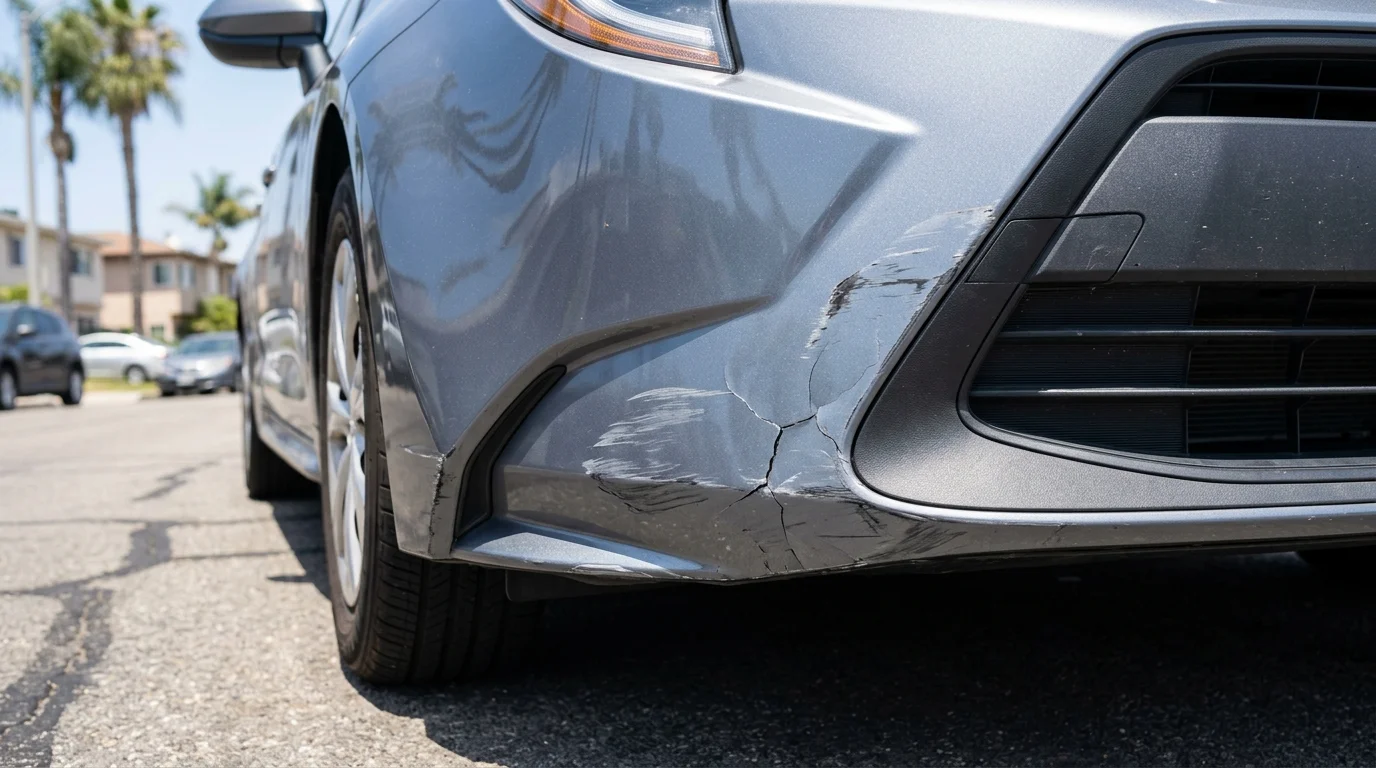
Bumper crack repair is a different job from polishing a scuff. A crack means the plastic itself has split. A scuff may be paint transfer or clear-coat only. Replacement deserves a closer look when the cover is distorted, mounting points are broken, or sensor areas are damaged. The right decision starts with an inspection behind the visible cover.
Why plastic bumpers behave nothing like metal panels
What drivers call a bumper is usually the painted outer cover. That cover can flex during a low-speed impact and then spring partly back. The visible shape may look normal even when clips, brackets, or components behind it have moved.
Metal panels behave differently. A metal door or fender can retain a shallow dent while its paint stays intact. That combination may suit paintless dent repair. A plastic bumper scuff usually needs another approach because there isn’t a metal dent to reshape.
This distinction matters after common San Diego parking mishaps. A scrape against a Mission Valley parking stop may leave low gouges. A tight curbside maneuver in North Park can leave paint transfer near a corner. Both marks can look similar from several feet away, but their repair needs may differ.
Start by identifying the damaged layer. A surface mark may be material transferred from another object. A deeper scratch can cut through clear coat and color. A gouge can remove plastic, while an impact can stretch or distort the cover.
Don’t judge the entire repair from one phone photo. Glare can hide cracks, and dirt can exaggerate light scuffs. Photos are useful for an initial conversation, but the pro should confirm the repair after cleaning and inspecting the area. If the bumper edge has separated from the body, the mounting points also need attention.
Our guide to paintless dent repair candidates in San Diego explains why intact paint and panel access matter. Those criteria apply to metal dents, not most plastic bumper damage.
Scuffs that polish out
Some bumper marks sit mainly on top of the clear coat. They may come from another car’s paint, a rubber parking guard, or a light brush against a painted post. Careful cleaning can reveal whether the original finish remains underneath.
A detailing specialist may test a small area before recommending more work. If the mark is superficial, controlled polishing may reduce or remove it. Paint correction can address defects within the painted finish, but it can’t replace missing paint or rebuild damaged plastic.
The line between a scuff and a scratch matters. A scuff may change after cleaning because transferred material comes away. A scratch remains in the finish. If it passes through the color layer, polishing alone won’t restore that missing material. Exposed or rough plastic points toward conventional repair and refinishing.
Texture changes the answer too. Gloss-painted bumper sections can sometimes be polished. Unpainted textured trim shouldn’t be treated like glossy clear coat. Aggressive polishing may flatten its texture or leave an uneven sheen.
San Diego light can make the result easier to judge. Coastal overcast in Oceanside may soften reflections, while direct inland light around El Cajon can expose haze or color differences. Inspect the cleaned area outdoors from several angles before approving a repair path.
Avoid asking for polishing simply because it sounds less involved. The goal isn’t to force every mark into the smallest treatment. It’s to preserve sound finish where possible and refinish only when necessary. A pro should explain whether the defect is transfer, clear-coat damage, missing color, or exposed plastic.
Cracks, tabs, and the mounting points behind the cover
A crack changes the discussion because the plastic itself has separated. Its location often matters as much as its length. A clean crack in an open section presents a different problem from damage beside a mounting tab, grille opening, body line, or sensor bracket.
Some bumper plastics can be repaired using a process selected for that material. The technician may inspect markings on the back of the cover before choosing a repair method. The crack still needs proper alignment, surface preparation, finishing, and paintwork. Filling only the visible face can leave the underlying split unresolved.
Mounting tabs deserve close attention. These molded points hold the cover against nearby panels and lights. A loose corner may come from a replaceable clip, a broken tab, a damaged retainer, or distortion in the cover. Those conditions can look almost identical from outside.
Ask the pro to inspect the gaps around the trunk, hatch, lights, grille, and wheel opening. Uneven gaps don’t prove hidden structural damage, but they justify a closer look. The cover may need removal before every attachment point can be checked.
Damage behind the cover also affects the decision. The visible plastic isn’t the only component involved in an impact. Brackets, an energy-absorbing section, wiring, and the reinforcement behind the cover may require inspection. Paint appearance alone can’t confirm their condition.
Cracked paint over a dented metal panel is another separate path. Paintless methods work when the paint is intact and the panel is accessible. Cracked paint, stretched metal, and plastic bumper scuffs typically need conventional repair and refinishing. The matched pro should assess which method fits instead of treating every mark as PDR.
Sensors and cameras in modern bumpers
Modern bumper covers may contain parking sensors, wiring, cameras, or mounting areas for driver-assistance equipment. The exact layout varies by vehicle. A round parking sensor visible on the cover doesn’t reveal everything installed behind it.
A light impact can disturb a bracket without leaving a dramatic exterior mark. A sensor may also remain attached while its mounting angle changes. Warning messages, inconsistent parking alerts, or a camera image that looks different should be documented for the repairer.
Don’t assume every bumper repair needs calibration. Don’t assume it never does either. The correct procedure depends on the vehicle, the equipment affected, and the manufacturer’s repair information. Ask the shop whether it checked the vehicle-specific procedure and whether scanning, aiming, or calibration appears on the written quote.
The same care applies when replacing the cover. Sensor openings and brackets must match the vehicle’s equipment. Refinishing work near those areas may also have model-specific requirements. The repairer should identify those requirements before paint or filler is applied.
Take photos of any dashboard message before turning off the car. Note whether it appeared immediately after the impact. That record helps the technician understand what changed, but it doesn’t diagnose the cause.
Protection work comes later. If the old bumper had paint protection film, tell the repairer before work begins. Film may need removal around the damaged area. After repairs and refinishing are complete, a Paint Protection Film pro can assess new coverage and confirm when the repaired finish is ready. The installer should also explain the film warranty in writing.
Repair cost vs a new cover, painted and fitted
We couldn’t confirm a trustworthy San Diego-wide price range for conventional bumper repair or replacement. Shops set their own quotes, and the damage varies too much for one figure to answer every case. Your repairer should confirm the written price after reviewing photos or inspecting the vehicle.
Compare itemized quotes, not one total against another. One estimate may cover only visible refinishing. Another may include removing the cover, repairing mounting points, replacing retainers, checking sensors, fitting the cover, and blending nearby painted areas.
Ask each shop to identify these items in writing:
- Whether the existing cover will be repaired or replaced
- Which cracks, tabs, clips, or retainers need attention
- Whether damaged components behind the cover are included
- What paint preparation and refinishing are included
- Whether adjacent panels require blending
- Whether sensor checks or calibration are required
- What part type is proposed for replacement
- What warranty the repairer provides on its work
Repair can make sense when the cover keeps its shape, attachment points remain serviceable, and the damage suits the material. Replacement may be the clearer path when plastic is badly distorted, pieces are missing, repeated repairs have weakened the area, or critical mounting locations can’t be restored properly. Those are inspection points, not a remote diagnosis.
If an aftermarket replacement part is proposed, the Federal Trade Commission is the federal authority on aftermarket products and warranties. A vehicle manufacturer generally can’t void a warranty merely because an aftermarket product was used. Whether that product caused a failure is fact-specific, so don’t treat the general rule as advice about a particular dispute.
Before approving work, ask for the final scope and price in writing. Confirm what happens if removing the cover reveals additional damage. The car owner contracts with and pays the independent pro directly.
When to call us
Call when cleaning doesn’t reveal whether the mark is transfer, damaged paint, or exposed plastic. A professional can also separate metal dent work from conventional bumper repair, then discuss paint correction or protection after the repair is complete.
Call us at (760) 400-6557 and we’ll connect you with a vetted, insured local pro.